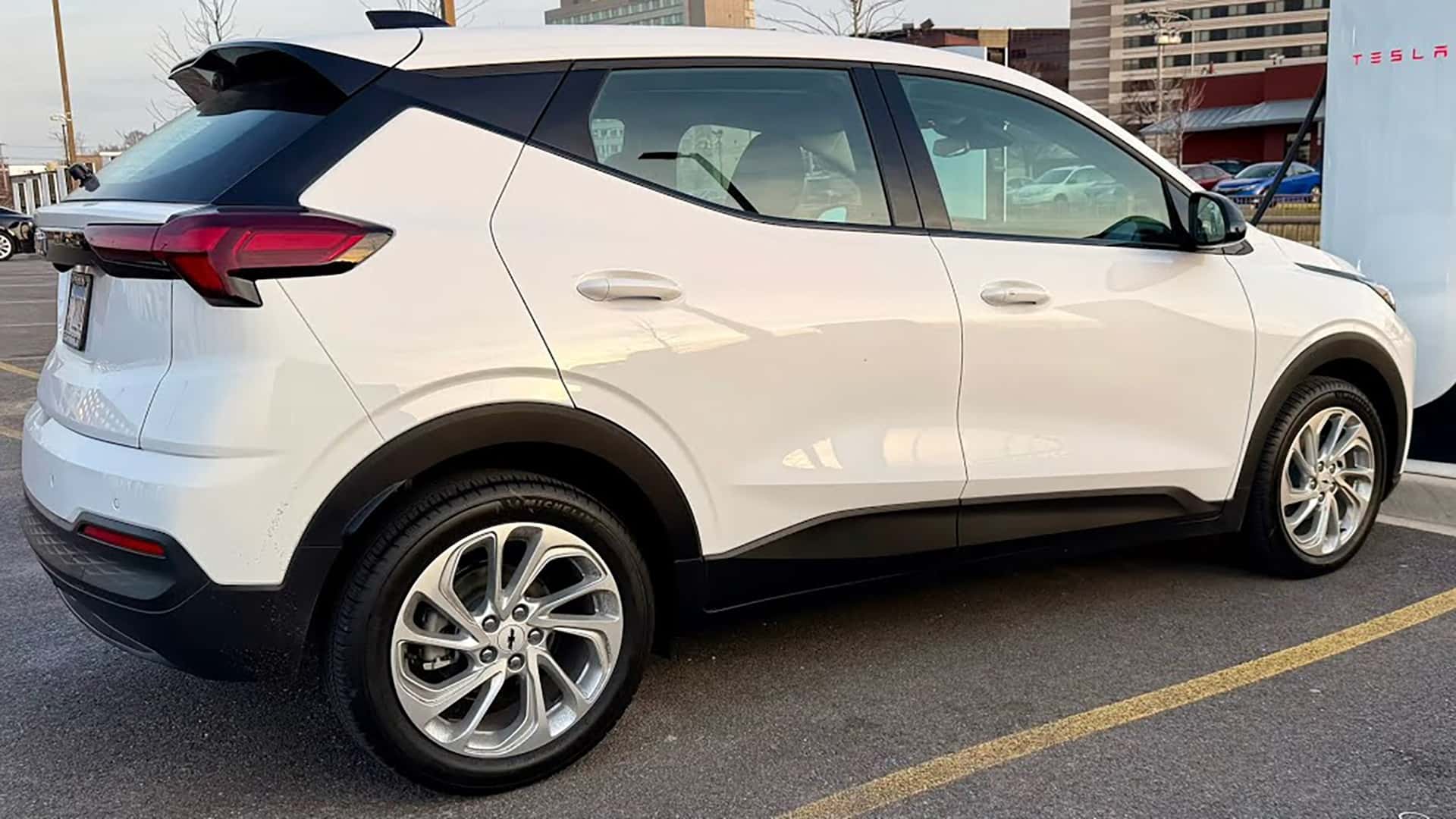
The 2027 Chevrolet Bolt EV, lauded as America’s most affordable new electric vehicle, has undergone a real-world highway range test conducted at a sustained 75 miles per hour. While the vehicle boasts an EPA-rated range of 262 miles, this figure is based on combined city and highway driving conditions. The recent test aims to provide a clearer picture of its performance during high-speed cruising.
Highway Range Test Parameters
Conducted by Joe from the EV Motoring YouTube channel, the test utilized a base-spec 2027 Bolt EV LT model. The experiment was carried out under near-perfect conditions, with an ambient temperature of 72°F and minimal wind. The driver maintained a consistent speed of 75 mph on the highway, a speed representative of typical driving in the Midwestern United States.

Test Results and Efficiency
During the test, with the battery at 50% charge remaining, the Bolt EV had covered 96 miles. The onboard system estimated an additional 117 miles of range. As the test concluded with 7% battery life left, the vehicle had traveled 183.5 miles at the steady 75 mph speed, achieving an average efficiency of 2.9 miles per kilowatt-hour (mi/kWh).
An additional 13.5 miles were driven on side streets, bringing the total observed range on a full charge to 197 miles. This figure represents a 24.8% deviation from the EPA’s official combined range rating.
Understanding Range Discrepancies
It is common for real-world highway range to differ from EPA estimates. The EPA’s testing methodology incorporates a blend of city and highway driving, and EVs generally consume less energy at lower speeds. The speed of the test itself is a significant factor; higher speeds increase aerodynamic drag, leading to greater energy consumption.
For context, typical EV range tests are often conducted at 70 mph. The decision to test at 75 mph in this instance provides valuable data for drivers who frequently travel at these higher speeds, particularly in regions where 75 mph is the standard highway limit.
Comparison with Previous Generation
The previous-generation Chevrolet Bolt EUV, on which the new Bolt EV is based, featured a 65 kWh battery pack, the same capacity as the new model but with a different nickel-rich chemistry. In a previous range test conducted at 70 mph, the 2022 Bolt EUV achieved 231 miles with an average efficiency of 3.6 mi/kWh.
Based on these figures, it is reasonable to infer that the new Bolt EV would likely achieve a comparable or better range if tested at the lower speed of 70 mph, aligning more closely with the results of the older model but likely with improved efficiency due to its updated design and battery technology.
Technological Advancements in the 2027 Bolt EV
General Motors has significantly revamped the Bolt EV for 2027, moving from the older EUV platform. Key upgrades include a more durable and cost-effective lithium iron phosphate (LFP) battery. This LFP chemistry allows for regular charging to 100% without the same cell degradation concerns associated with older battery types, maximizing the usable capacity.
Furthermore, the new Bolt EV boasts a substantially faster charging capability. With a peak rate of 150 kW, it can charge from 10% to 80% in just 26 minutes, a marked improvement over the previous model’s charging times, which often took more than double that duration.
Market Position and Future Outlook
With a starting price of $28,995, including destination charges, the 2027 Chevrolet Bolt EV positions itself as a highly attractive option for budget-conscious buyers seeking an efficient electric vehicle. Its updated features, including faster charging and LFP battery technology, enhance its appeal for both urban commuting and potentially longer journeys, despite the observed range reduction at higher speeds.
However, despite these significant improvements and its competitive pricing, the future of the 2027 Chevy Bolt EV appears limited, with reports indicating a production run of approximately 18 months. This suggests that while the current iteration offers considerable value, it may be a transitional model.