
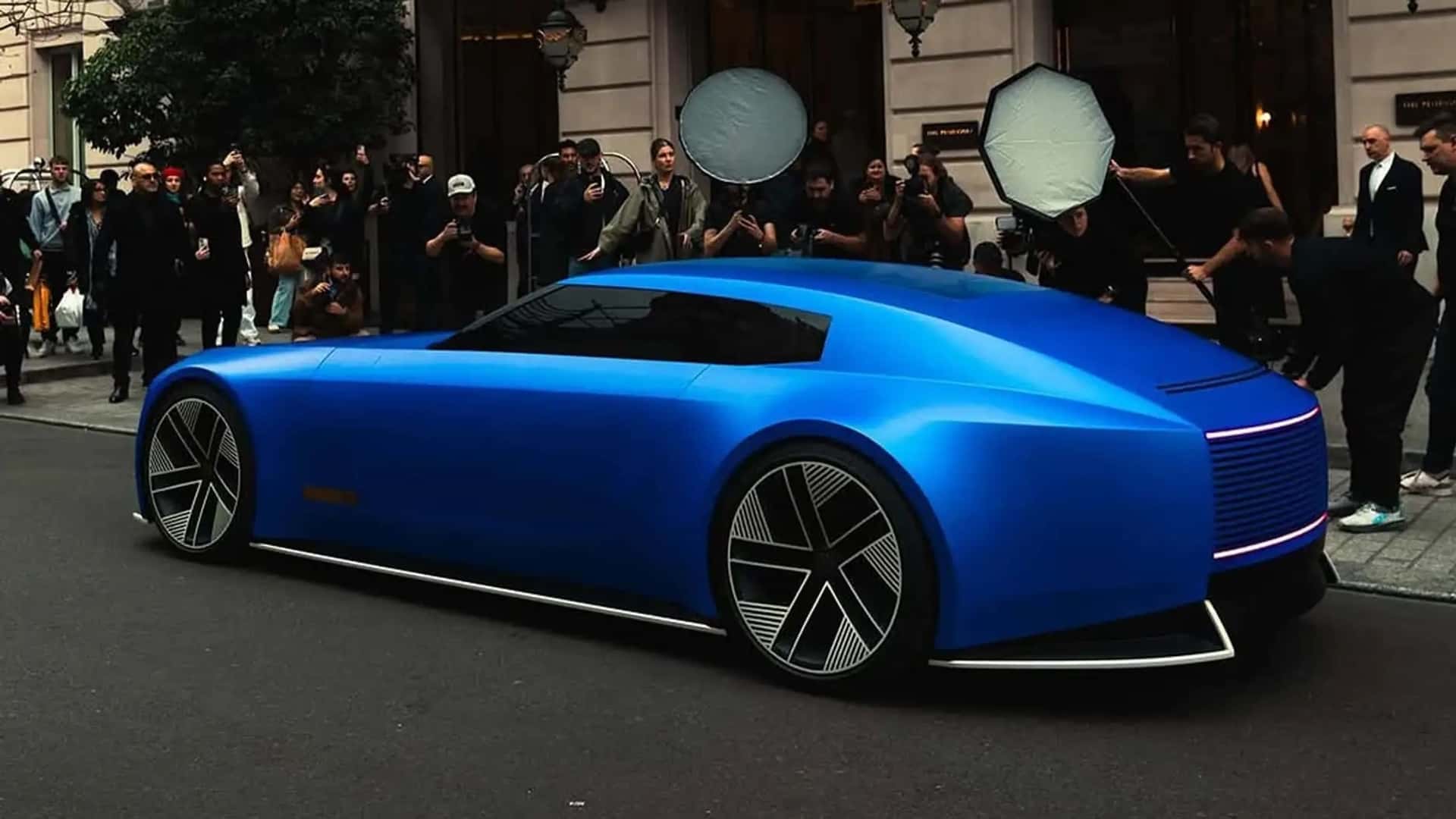
Contrary to some perceptions that the electric vehicle (EV) transition might be slowing, 2026 is poised to be a landmark year for automotive innovation. Automakers are set to introduce a significant number of new EV models, with an estimated 32 new electric vehicles slated for launch in the United States alone. This surge, coupled with substantial updates and price reductions for existing models, indicates the maturation of the EV market, offering unprecedented choice across various segments and price points.
Acura RSX: Honda’s EV Offensive Begins
The year 2026 is critical for Honda and Acura’s electric ambitions. After a cautious approach to EV development, Honda is pinning its hopes on the new 0 Series platform, its first software-defined EV architecture. The Acura RSX crossover coupe will spearhead this initiative in the first half of the year.

This compact crossover coupe will feature a dual-motor setup and will be the first vehicle to utilize Honda’s Asimo OS, complete with an integrated AI assistant and support for over-the-air updates. Anticipated to offer over 300 miles of range, the RSX faces the challenge of proving Honda’s ability to compete in a segment where rivals have years of experience.
BMW iX3: A New Era for BMW EVs
The BMW iX3 marks the debut of the company’s Neue Klasse architecture, designed from the ground up as a software-defined vehicle. This new platform aims to deliver an advanced technological experience, highlighted by a large panoramic display and a new AI assistant.
The iX3 boasts a new electrical platform promising over 400 miles of range and impressive 400-kilowatt fast-charging capabilities. This model sets the stage for potential future electric variants of the BMW 3 Series sedan and X5 SUV, though these are not expected before 2027.
Chevrolet Bolt: A Legend Reimagined
The Chevrolet Bolt holds a significant place in EV history as one of the first affordable EVs to offer a substantial range of 250 miles. However, its limitations in fast-charging and the absence of a heat pump presented challenges, particularly in colder climates.
The upcoming 2027 Bolt aims to rectify these shortcomings. It will feature upgraded software, a heat pump, 150-kilowatt fast charging, and General Motors’ first U.S.-market lithium iron phosphate (LFP) battery. LFP batteries are known for their durability and cost-effectiveness, making them an ideal choice for a practical vehicle. With a starting price expected to remain under $30,000, the new Bolt is anticipated to be a strong contender.
Ferrari Elettrica: The Maranello Marque Electrifies
The arrival of Ferrari’s first all-electric model is a significant event for 2026. While the official name is yet to be confirmed, the Elettrica is set to be revealed in the first half of the year.
Ferrari has indicated that the Elettrica will feature a quad-motor powertrain, accommodate four occupants, deliver over 1,000 horsepower, and achieve approximately 300 miles of range. Details regarding its price and driving dynamics remain under wraps, but early indications from spy shots suggest a distinctive design.
Genesis GV60 Magma and GV90 EV: Expanding the Luxury Portfolio
Genesis is stepping up its performance game with the introduction of the GV60 Magma, a high-performance variant designed to rival established German luxury brands. The Magma models will represent the pinnacle of Genesis’s performance offerings.
The GV60 Magma is slated to produce 609 horsepower, with an overboost function capable of reaching 650 hp, enabling a 0-to-60 mph sprint in just 3.4 seconds and a top speed of 165 mph. Concurrently, Genesis is expected to launch the GV90, a three-row electric SUV, which will serve as a flagship model for a brand historically focused on sedans.
Honda 0 Series SUV: A Crucial Mainstream Offering
While the Acura RSX will be the first on the 0 Series platform, the Honda 0 Series SUV is anticipated to be the more pivotal model for the brand’s EV strategy. Its crossover body style is expected to resonate more broadly with consumers than a sedan, and its Honda badging suggests a more accessible price point than the Acura variant.

This SUV is also expected to deliver around 300 miles of range. The success of the 0 Series will depend on Honda’s ability to manage pricing effectively and avoid the initial technical challenges that have affected other manufacturers’ first-generation EV platforms.
Hyundai Ioniq 6 N: Performance Sedan Electrified
Following the acclaimed Ioniq 5 N, Hyundai is set to introduce the Ioniq 6 N, a performance-oriented electric sedan. The Ioniq 5 N demonstrated that even with simulated engine sounds and gear shifts, performance EVs can be exhilarating, thanks to its 641 hp and refined chassis tuning.
The Ioniq 6 N is expected to offer an even sharper driving experience due to its lower center of gravity and reduced weight. Its rear-wheel-drive bias and Drift Mode capabilities suggest it will be a true thrill for driving enthusiasts.
Jaguar Type 00: A Bold New Direction
Jaguar is undergoing a significant transformation, shifting its focus from the competitive mainstream luxury segment to the ultra-luxury market. The Type 00 concept previews a new high-end grand tourer, marking a new era for the brand.
This new model boasts 986 horsepower and a striking design, representing the most ambitious Jaguar in recent memory. The success of the Type 00 will be a critical indicator of Jaguar’s ability to reinvent itself in the luxury EV space.
Jeep Grand Wagoneer EREV and Recon: Electrification with Versatility
The Grand Wagoneer is set to become the first Jeep offered as an extended-range electric vehicle (EREV) in the U.S. This technology allows it to operate primarily on electric power, with a gasoline engine serving as a generator for longer journeys.
Expected to utilize the Pentastar V-6 engine and a 92 kWh battery pack, the Wagoneer EREV could offer over 600 miles of total driving range. This approach aims to address range anxiety and practicality concerns, particularly for larger vehicles. Meanwhile, the Jeep Recon is positioned as an electric alternative to the Wrangler, offering off-road capabilities like 33-inch tires and locking differentials. Despite its focus on ruggedness, its 230-mile range highlights the challenges of electrifying utilitarian vehicles.
Kia EV3: Affordable EV Innovation
The Kia EV3, already available in global markets, is set to arrive in the U.S. as Kia’s competitively priced electric offering. It promises features not found in previous affordable EVs, such as available all-wheel drive, Kia’s latest software, and faster charging speeds.
The key to the EV3’s success in the U.S. market will be its pricing. Potential import tariffs from South Korea, where the EV3 is manufactured, could impact its affordability. Kia will need to navigate these challenges, whether by absorbing the costs, adjusting the price, or exploring alternative production locations.
Land Rover Range Rover EV: Luxury Meets Off-Road Prowess
An electric Range Rover promises to combine the refinement of an EV with the legendary off-road capabilities of the brand. EVs are inherently quieter and offer smoother power delivery, making them ideal for luxury travel and demanding terrains.
While specific details are limited, the Range Rover EV is expected to offer nearly 300 miles of EPA range, an 800-volt architecture for rapid charging, and impressive ground clearance. Its dual-motor setup, capable of distributing 100% torque to either wheel on an axle, is noted as a potential advantage over quad-motor designs for off-road performance.
Lexus ES: Toyota’s EV Push Intensifies
Toyota and Lexus, long considered laggards in the EV space, are accelerating their electrification efforts in 2026. The electric Lexus ES sedan will be a significant addition, serving as a direct replacement for existing gasoline and hybrid ES models.
The ES will be available in two configurations: the front-wheel-drive ES350e with 220 hp and up to 300 miles of range, and the dual-motor ES500e with 338 hp and approximately 250 miles of range. An improved software experience will be crucial for the ES to overcome the shortcomings of Lexus’s previous EV offerings.
Lucid Earth: Expanding Accessibility
Lucid has established itself with the long-range Air sedan and the capable Gravity SUV. The next frontier for the company is making its technology accessible at a lower price point with a forthcoming mid-size electric SUV, potentially named the ‘Earth’.
With a projected starting price around $48,000, this model aims to compete in a more mainstream segment. While the exact launch timeline may see slight adjustments given the Gravity’s rollout, the ‘Earth’ represents Lucid’s ambition to broaden its market reach.
Mercedes-AMG EV and Mercedes-Benz CLA/GLC/Van: A Multitude of Electric Offerings
Mercedes-Benz is launching a comprehensive suite of new EVs in 2026. The performance division, Mercedes-AMG, will debut its first EV built on a dedicated AMG.EA platform, previewed by the Concept GT XX EV. This halo sports car promises extreme performance, with the concept showcasing 1,341 horsepower and an astonishing 850-kilowatt average charging rate.
The new Mercedes-Benz CLA will represent a significant leap forward, debuting the company’s new MB.OS software experience. Offered in hybrid and EV forms, the CLA will feature around 400 miles of range, rapid charging, an AI assistant, and advanced driver-assistance systems, all starting at an estimated $48,000.
The Mercedes-Benz GLC EV, targeting the popular midsize crossover segment, will offer over 350 miles of EPA range and ultra-fast charging, alongside a redesigned interior and advanced driving assistance technologies. Additionally, Mercedes is introducing a new segment of factory-built luxury electric vans, previewed by the Vision V Concept, aiming to cater to the premium chauffeur market.
Mitsubishi Lancer EV: A Value-Oriented Competitor
Mitsubishi is entering the affordable EV segment with the Lancer EV, expected to arrive in 2026. Positioned as a value-focused alternative, it aims to compete with models like the Nissan Leaf.
The Lancer EV is anticipated to offer a similar powertrain and battery capacity to top-trim Leaf models, potentially providing up to 303 miles of range. If Mitsubishi can match or undercut the Leaf’s starting price of around $30,000, it could offer a compelling proposition, especially if it includes a lower-priced option with a smaller battery pack.
Polestar 5: A Premium Performance Contender
Despite some early challenges, Polestar is set to launch the Polestar 5, a four-door performance car designed to rival the Porsche Taycan. This model promises 884 hp and an EPA range of up to 330 miles, supported by an 800-volt architecture and 350-kW fast charging.
The crucial question for the Polestar 5’s U.S. market entry remains unresolved due to potential tariffs on vehicles manufactured in China. Its success will hinge on overcoming these import challenges.
Porsche Cayenne: Electrification Meets Innovation
Porsche’s electric models are renowned for their charging performance, and the Cayenne Electric is set to push boundaries further. It will be the first Porsche to support 400-kW fast-charging and the first production car with available wireless charging.
The Turbo model is expected to deliver up to 1,139 hp and exceptional range, with prototypes demonstrating over 350 miles of driving at highway speeds without needing to recharge. The electric Cayenne will coexist with upcoming gasoline and hybrid variants, with their respective success influencing the long-term strategy for the combustion engine version.
Ram 1500 REV: Extended Range for Trucks
Ram is shifting its strategy for its full-size pickup truck, focusing on an extended-range electric vehicle (EREV) rather than a purely battery-electric model. The Ram 1500 REV will use electric motors and a 92 kWh battery for daily driving, offering an estimated 145 miles of electric range.
A Pentastar 3.6-liter gasoline V6 will function as an onboard generator, recharging the batteries on longer trips. This EREV approach aims to provide the practicality needed for towing and long-distance travel without the range limitations of traditional EVs, though educating consumers on the EREV concept will be key to its adoption.
Rivian R2: Mainstream EV Aspirations
The Rivian R2 is arguably the most significant vehicle launch of 2026, aiming to bring the brand’s appeal to a wider audience. Rivian has established itself with desirable products, but its R1 models are out of reach for many consumers.
The R2 is designed to offer the R1’s adventurous spirit, sleek design, and advanced technology at a more accessible price, starting around $45,000 for the rear-wheel-drive version with over 300 miles of range. Its success could elevate Rivian from a niche startup to a major player in the EV market, competing directly with vehicles like the Tesla Model Y.
Slate Truck: A Customizable Utility Vehicle
The Slate truck represents a bold attempt to carve out a niche for a minimalist, customizable vehicle. With a focus on essential functionality and a lower starting price, it targets consumers seeking a blank canvas for personalization.
However, the Slate’s limited range of 150 miles and the absence of standard features like a radio or power windows may pose challenges, especially when competing against more feature-rich options like the Ford Maverick. Its success will depend on attracting a dedicated base of consumers who value its customizable nature and essentialist design.
Sony-Honda Mobility Afeela 1: Entertainment-Focused EV
The Afeela, a product of the Sony-Honda Mobility joint venture, is set to launch in 2026. It will be sold through standalone stores rather than traditional Honda dealerships.
The Afeela will offer 483 horsepower, over 300 miles of range, and 150 kW fast-charging. While these specifications are not segment-leading, Sony-Honda Mobility is betting on a premium entertainment experience to differentiate the vehicle, especially given its projected starting price of $103,000. Despite skepticism from critics regarding its specs, the brand is expanding its retail presence and planning an SUV variant.
Subaru Trailseeker and Uncharted: Expanding Electrified Crossovers
Subaru is enhancing its EV lineup with the Trailseeker and Uncharted models, building on the improved bZ4X/Solterra platform. The Trailseeker is a larger crossover positioned similarly to the gasoline Subaru Outback.
It will feature standard all-wheel drive, 375 hp, over 260 miles of range, and 8.3 inches of ground clearance, with an estimated starting price around $40,000. The Uncharted, a more compact offering akin to the Crosstrek, will provide up to 338 hp in AWD form and over 300 miles of range in its front-wheel-drive configuration for approximately $35,000.
Toyota bZ Woodland and C-HR: Diverse EV Offerings
The Toyota bZ Woodland shares its underpinnings with the Subaru Trailseeker, including a 74.7-kWh battery, a 375-hp dual-motor powertrain, and an estimated range exceeding 260 miles. Its pricing is yet to be announced, but it is expected to compete in the mid-size non-luxury EV segment, a space currently dominated by models like the Chevrolet Blazer EV.
The Toyota C-HR will be the most affordable and compact electric Toyota crossover. The front-wheel-drive version is expected to deliver up to 290 miles of range, while the all-wheel-drive model will share the 338-hp dual-motor setup with its larger siblings. A key area for improvement will be Toyota’s in-car software, particularly its ability to automatically plan charging stops on road trips.
Volvo EX60: Third-Generation Electrification
Volvo is introducing its third-generation EVs with the EX60. This new model will utilize an 800-volt platform and a significantly updated software suite, addressing issues encountered with earlier models like the C40, EX30, and EX90.
While full specifications are due for release on January 21, the EX60 is anticipated to offer up to 400 miles of range and support charging speeds of around 400 kilowatts. The significant advancements in range and charging technology suggest 2026 will be a strong year for Volvo’s electric offerings.