
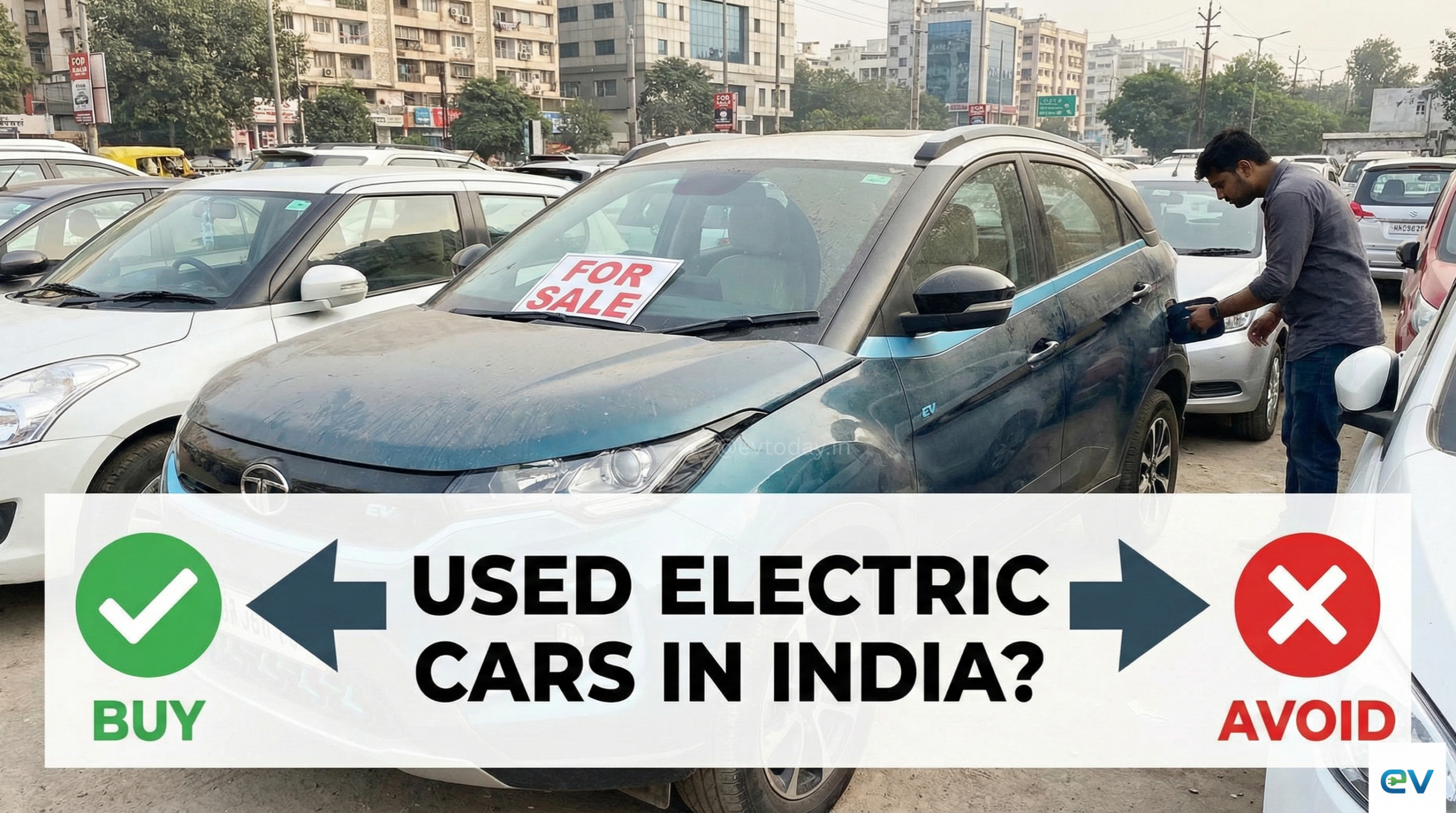
Electric vehicles are slowly becoming a part of everyday life in India, but many buyers are still priced out of new EVs. That’s why used electric cars are gaining attention — they seem cheaper, eco-friendly, and practical for urban use. But before you sign on the dotted line, it helps to understand the real situation in India in 2026 — including resale trends, battery costs, infrastructure issues, and practical tips that every buyer should know before spending lakhs of rupees.
Why Used Electric Cars Are Getting Attention in India
India’s electric car ecosystem has grown significantly in recent years. EV sales have risen from around 50,000 in 2016 to over 2 million total EV registrations by 2024, according to government data — although penetration is still lower compared with global markets.

At the same time, the share of used electric cars in the Indian used vehicle market — though still small — has started to rise. Estimates show EVs’ share grew almost fivefold from about 0.08 % in 2022 to 0.43 % in 2024.
Used EV listings on platforms like OLX, CarWale, CarDekho and others show plenty of options from brands such as Tata, MG, BYD, Mahindra and more — at very different price points.
This expanding inventory, wider awareness, and increasing charging infrastructure make used EV purchases both more realistic and more complex.
Pros of Buying a Used Electric Car in India
1. Lower Entry Price Compared With New EVs
Used electric cars typically cost significantly less than equivalent new models. For example, a 2023 Tata Nexon EV could be listed around ₹9–13 lakh in the used market, while newer or newer-trim versions can cost much more.
This price advantage makes EV ownership more accessible to many first-time buyers, especially those on a budget.
2. Lower Running and Maintenance Costs
Electric cars have fewer mechanical parts than petrol or diesel cars. This usually means:

✔ Cheaper day-to-day running cost — electricity often costs less than petrol/diesel
✔ Fewer regular maintenance items (no engine oil changes, fuel filters, spark plugs etc.)
✔ Smoother performance with fewer wear-and-tear issues
Most modern EV batteries are designed to last many years — often retaining good capacity even after multiple years of use.
3. Growing Charging Infrastructure Across Cities
India’s public charging network is expanding. Major cities like Delhi, Mumbai, Pune, Bangalore and others already have thousands of public chargers, and many fast-charging stations are coming up along highways too.
This makes daily use and moderate intercity travel more practical than in the past — though gaps remain in some regions.
Cons of Buying a Used Electric Car in India
1. Battery Life & High Replacement Cost
The most important part of an EV — the battery — gets old over time. And in India, battery replacements aren’t cheap. They can cost anywhere between ₹5 lakh to ₹10 lakh or more, depending on the model and capacity.
A used EV with poor battery health can mean reduced driving range and expensive repairs down the line. This is one of the biggest reasons buyers hesitate before purchasing a pre-owned electric car in India.
2. Rapid Depreciation and Resale Value Issues
Electric cars in India tend to lose resale value faster than petrol/diesel cars. One reason is the uncertainty around battery life and replacement cost. Another is that new EV models keep launching with better range and features, making older models appear outdated.
You may see a used EV selling for 55–70 % of its original price even after just a few years — and that can affect long-term ownership costs if you plan to sell later.
3. Older Tech and Slower Charging Compatibility
Used EVs that are a few years old may miss out on the latest features such as:
• Faster DC charging support
• Advanced driver assistance features
• Lightweight battery and higher real-world range
As technology improves fast, older models can feel dated — though they may still be practical for daily city drives.
Buy Used Ev cars From Here
Key Things to Check Before Buying a Used Electric Car in India
If you are seriously considering it, research and inspection are essential. Here are the things experts recommend:
Battery Health Report (SoH)
Always ask for a detailed battery health check or State of Health (SoH) report. This helps you understand how much capacity the battery has left.
Battery Warranty Status
Check whether the original battery warranty is still valid and whether it transfers to the used buyer. Many Indian EV warranties are tied to the first owner only and may not be valid for second buyers.
Onboard Charger & Electrical Components
Some used EVs may have electrical or charger issues, and repairs can be expensive. Experts suggest having the onboard charger and wiring inspected before purchase.
Service History and Documentation
Look for full service records. Cars with regular services at authorised service centres and clear paperwork generally offer more confidence.
Tires, Suspension & Body Condition
Basic checks like tire wear, suspension health, underbody corrosion and exterior condition still matter — just like in any used car.
Is a Used EV Right for You? Practical Analysis
Good Fit for:
✔ City drivers with predictable daily routes
✔ Budget-conscious buyers looking to enter EV ownership
✔ Those with home or workplace charging access
✔ Buyers who don’t need long highway range every day
May Not Suit:
✘ Drivers with frequent long highway trips and limited charging options
✘ Buyers who want the latest tech and safety features
✘ People who rely on strong resale value in a few years
Used EVs make the most sense for short-to-medium daily driving with reliable charging access and careful consideration of battery age.
Used EV Market Outlook in India (2026)
• The used EV market in India grew rapidly from a tiny share in 2022 to a larger base by 2024 — showing consumer interest and growing inventories.
• Listings of hundreds of used EVs across platforms show buyers now have more choice than ever.
• Experts believe 2026 will bring stabilizing used EV prices, rather than rapid drops, as inventory of 3-5 year old EVs increases and supply starts balancing demand.
These trends point to a maturing resale market where informed buyers can find good deals — but only with careful research.
Conclusion
So should you buy a used electric car in India in 2026? The honest answer is: It depends on your needs and preparation.
Used EVs can be worth it if:
✔ You want lower upfront cost
✔ You have charging access
✔ You choose a model with good battery health
✔ You understand resale trends and long-term costs
However, electrical costs, depreciation and battery uncertainties mean you should do your homework. If you check battery health, service history, warranty status and overall condition, a used EV can be a practical and economical choice — especially for city driving.
FAQs — Used Electric Cars in India
1. Are used EVs cheaper to buy than new in India?
Yes — used EV prices are significantly lower than new ones due to depreciation and rising inventory.
2. How much does an EV battery cost to replace in India?
Battery replacements can range from around ₹5 lakh to over ₹10 lakh depending on model and capacity.
3. Does battery warranty transfer to a used buyer?
Not always — many battery warranties in India are valid only for the first owner. Always verify before buying.
4. Do used EVs hold resale value?
Used EV resale values tend to be weaker than petrol cars due to battery concerns and rapid tech changes. However resale is improving gradually.
5. Are used EVs a good option for daily commuting?
Yes — if your daily range is within the battery’s capability and you have charging access, used EVs can be economical.