
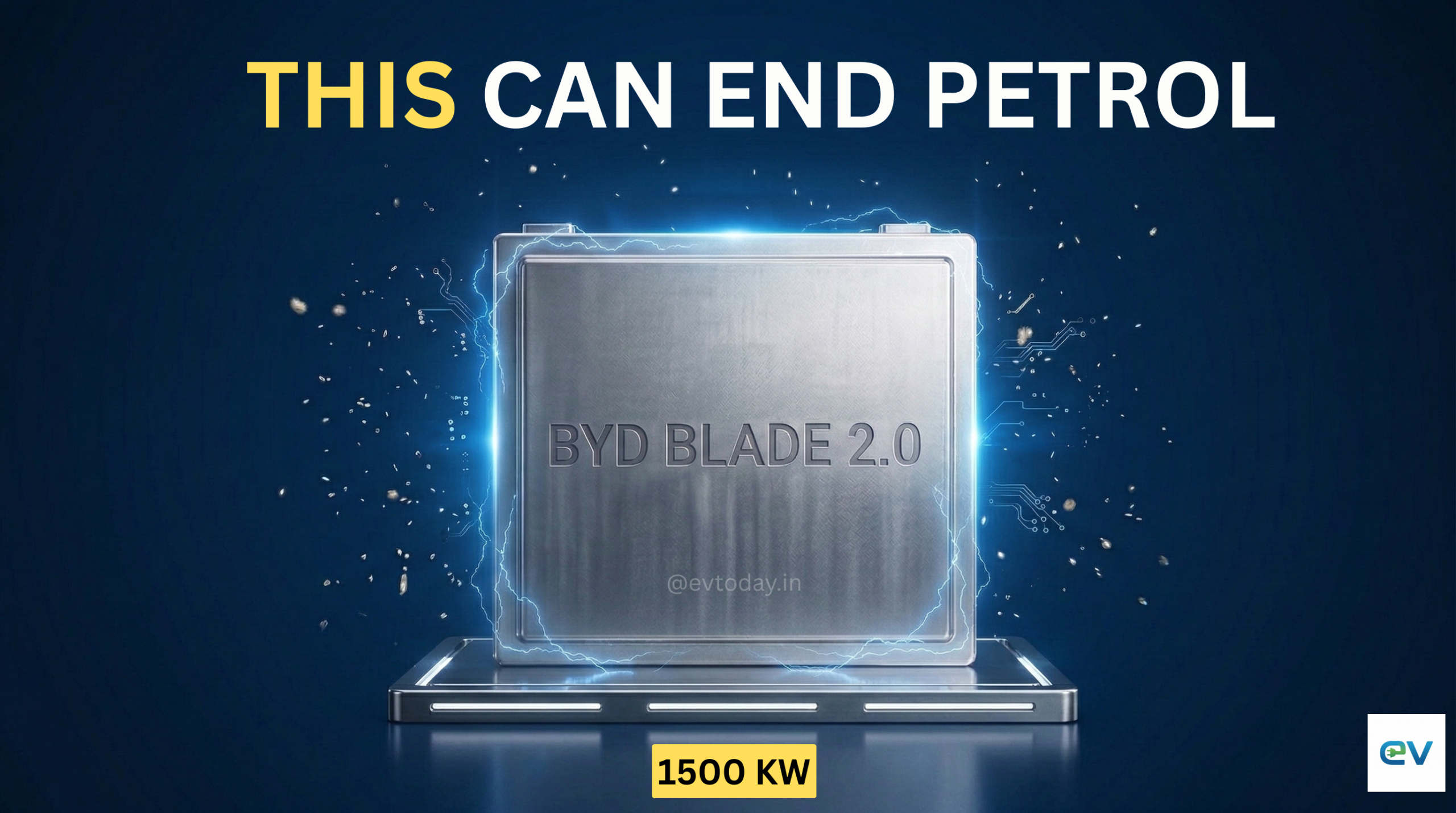
For many drivers considering an electric vehicle (EV), charging time remains one of the biggest concerns. While modern EVs can travel hundreds of kilometers on a single charge, refueling still takes longer than filling a petrol car.
Chinese automaker BYD is attempting to change that narrative with its latest innovation: the second-generation Blade Battery, combined with a new megawatt-level “Flash Charging” system. The company says the technology can charge an EV from 10% to 70% in about five minutes, bringing charging times closer to the experience of refueling a conventional car.

This announcement has sparked global attention in the EV industry, raising an important question: could ultra-fast charging batteries accelerate the shift away from petrol vehicles?
The Evolution of BYD’s Blade Battery
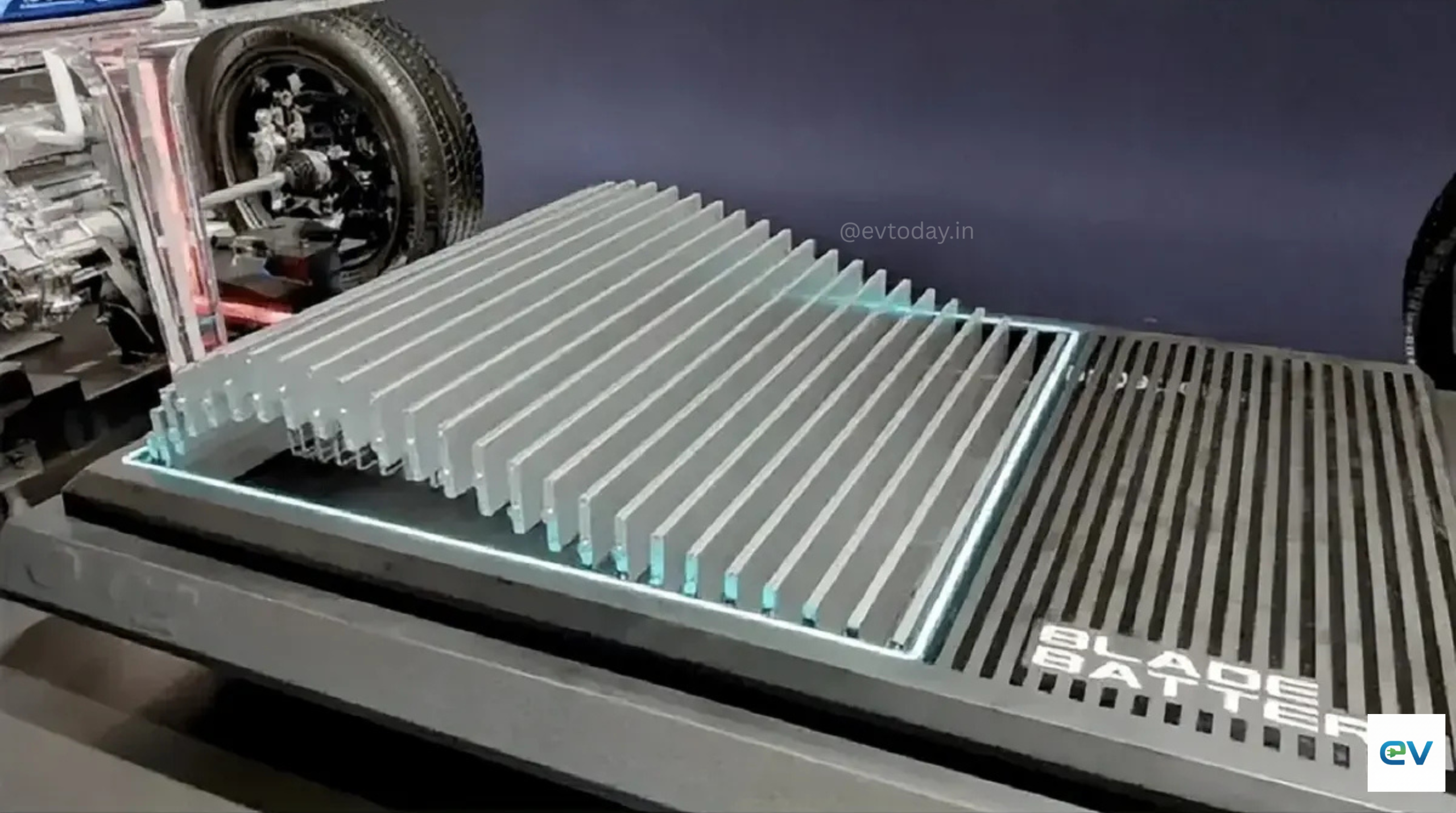
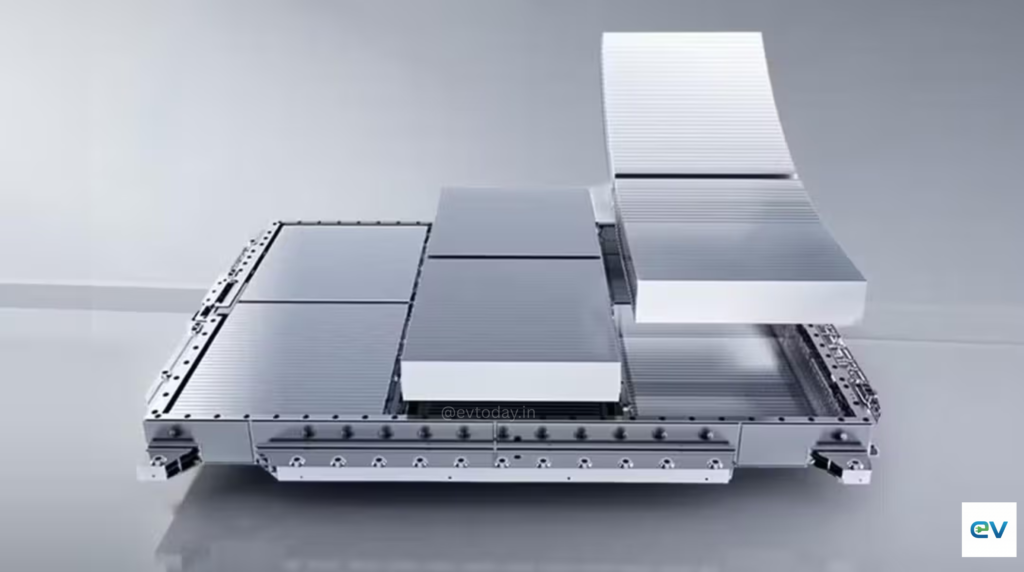
BYD first introduced the Blade Battery in 2020 as a safer and more durable lithium-iron-phosphate (LFP) battery for electric vehicles. Its long, blade-shaped cells improved heat dissipation and structural stability, helping it pass demanding safety tests that many other batteries struggle with.
Over the years, the technology became a key part of BYD’s EV lineup and was adopted by several models in China and international markets.
First-Generation Blade Battery Highlights
The original Blade Battery gained attention for several reasons:
- High structural safety compared to conventional lithium-ion packs
- Lower risk of thermal runaway or fire
- Long lifecycle and durability
- Competitive charging speeds
Even in its early version, the battery could charge from 10% to around 80% in about 30 minutes, which was considered fast for the time.
However, the industry has moved quickly. EV manufacturers now compete not only on range but also on how quickly drivers can recharge. That’s where the second-generation Blade Battery comes in.

What’s New in the Blade Battery 2.0
The updated battery pack introduces several improvements designed to address the biggest challenges in EV technology: charging speed, durability, and efficiency.
Ultra-Fast Charging Performance
The most striking upgrade is the charging speed.
According to BYD’s announcement:
- 10% to 70% charge: about 5 minutes
- 10% to 97% charge: roughly 9 minutes
- Cold-weather charging: around 12 minutes even in freezing temperatures
These speeds are made possible by a 10C charging rate, far higher than traditional EV batteries.
To put that into perspective, the technology could add hundreds of kilometers of driving range in just a few minutes, depending on the vehicle and battery size.
Improved Energy Density
Another upgrade is a modest but meaningful improvement in energy density.
The second-generation Blade Battery reportedly increases energy density by around 5% compared with the first generation.
While that number may sound small, even minor improvements can translate into:
- Longer driving range
- Better efficiency
- Smaller battery packs for the same range
Some EV models using the technology are expected to exceed 1,000 km of range under China’s CLTC testing cycle.
Real-world range would typically be lower, but the figures still represent a significant step forward.
The Megawatt “Flash Charging” Ecosystem
The Blade Battery 2.0 does not work alone. It is designed to operate with BYD’s new megawatt-level charging infrastructure, known as Flash Charging.
How Fast Is It?
BYD’s charging network can deliver up to 1,000–1,500 kW of power, far higher than most public fast chargers today.
For comparison:
- Typical fast chargers: 50–150 kW
- Many modern ultra-fast chargers: 250–350 kW
- Tesla V4 Supercharger: up to about 500 kW
BYD’s system is therefore several times more powerful than many existing charging networks.
With this power level, the company says vehicles can gain around 400 km of range in just five minutes under ideal conditions.
That’s roughly the amount many drivers travel in a week.
Charger Design and Infrastructure
BYD’s charging stations use a distinctive T-shaped overhead cable system, designed to make plugging in easier and more ergonomic.
The company has already deployed more than 4,200 flash-charging stations and plans to expand the network to about 20,000 stations in the near future.
Some stations also include energy storage systems and renewable energy sources, which help manage the high electricity demand during rapid charging.
Safety and Thermal Management
Charging a battery at extremely high speeds generates heat, which can create safety risks if not properly managed.
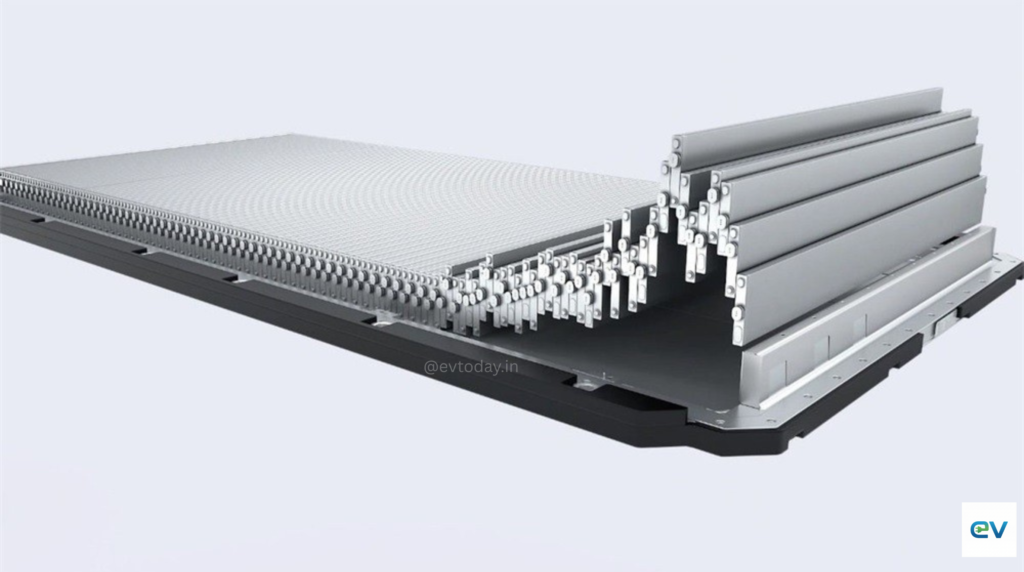
BYD says the Blade Battery 2.0 uses advanced design improvements and intelligent software to address this.
Advanced Battery Chemistry
The company redesigned several components:
- Anode materials
- Cathode materials
- Electrolyte structure
These changes help create faster lithium-ion pathways, allowing ions to move through the battery more efficiently.
Intelligent Thermal Management
The system also includes AI-driven thermal management, which continuously monitors individual battery cells.
This allows the vehicle to:
- Adjust cooling dynamically
- Maintain safe operating temperatures
- Prevent overheating during ultra-fast charging
Safety Testing
BYD claims the battery has passed several extreme tests, including:
- Nail penetration tests
- High-temperature stress tests
- Structural impact tests
In demonstrations, the battery reportedly avoided fire or smoke even under severe conditions.
Performance in Cold Weather
Cold climates have long been a challenge for EV batteries.
Lithium-ion batteries typically lose efficiency and charge more slowly in low temperatures.
However, the new Blade Battery reportedly performs well even in harsh conditions.
According to company data:
- Charging from 20% to 97% at –30°C takes roughly 12 minutes
- This is only a few minutes slower than charging at normal temperatures
That could make the technology more practical for markets with cold winters.
Which Cars Will Use This Technology?
BYD plans to introduce the new battery across several upcoming electric vehicles.
Some high-end models expected to use the system include vehicles from:
- BYD’s premium sub-brands
- The Denza lineup
- Future luxury EV platforms
Reports suggest that more than 10 new models will launch with the technology.
These vehicles span a wide price range—from mid-market EVs to luxury electric sedans and SUVs.
Key Highlights of BYD Blade Battery 2.0
- 10–70% charge in about 5 minutes
- 10–97% charge in roughly 9 minutes
- Up to 400 km of range added in five minutes
- 1,000–1,500 kW megawatt charging capability
- About 5% improvement in energy density
- Strong safety performance and thermal control
- Charging infrastructure expansion to 20,000 stations
Expert Insight: Will Ultra-Fast Charging Change the EV Market?
Fast charging has always been a critical factor in EV adoption.
Many drivers worry about:
- Long charging times
- Limited charging stations
- Range anxiety on long trips
Technologies like the Blade Battery 2.0 could reduce those concerns significantly.
If EVs can gain hundreds of kilometers of range in just a few minutes, the practical difference between charging and refueling becomes much smaller.
However, several factors will determine the real impact:
- Infrastructure availability – ultra-fast chargers must be widely deployed.
- Grid capacity – megawatt charging requires strong electrical infrastructure.
- Vehicle compatibility – cars must be designed to accept such high power.
- Cost considerations – high-power chargers are expensive to install.
Even so, the technology represents one of the most significant advancements in EV charging in recent years.
Conclusion
BYD’s second-generation Blade Battery and Flash Charging system mark an important step forward in electric vehicle technology.
By combining five-minute charging capability, improved battery safety, and longer driving range, the company aims to address some of the most common concerns about EV ownership.
While widespread adoption will depend on infrastructure expansion and real-world performance, the innovation highlights how quickly the EV industry is evolving.
As battery technology continues to improve, the gap between electric vehicles and petrol cars in terms of convenience may continue to shrink.
FAQs
1. What is the BYD Blade Battery 2.0?
It is BYD’s second-generation lithium-iron-phosphate EV battery designed for faster charging, improved safety, and better energy efficiency.
2. How fast can the Blade Battery 2.0 charge?
The battery can charge from 10% to 70% in about five minutes and reach 97% in roughly nine minutes under optimal conditions.
3. How much range can a 5-minute charge add?
BYD claims the system can add around 400 km of driving range in five minutes, depending on the vehicle and battery capacity.
4. What charging power does it use?
The technology works with megawatt-level chargers delivering up to about 1,000–1,500 kW of power.
5. Will this technology be available worldwide?
BYD plans to expand its Flash Charging infrastructure beyond China, but global availability will depend on infrastructure rollout and market conditions.