
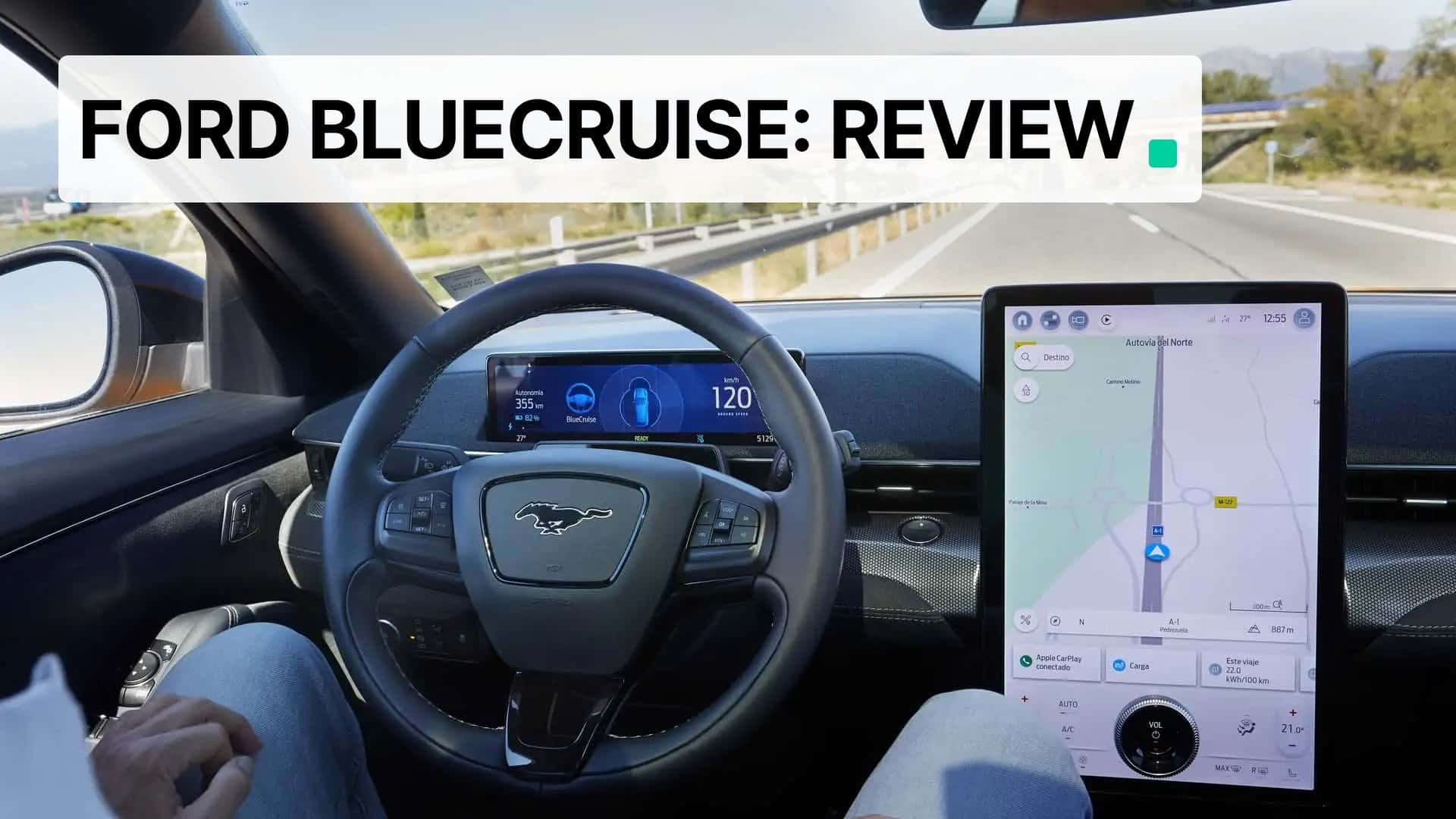
During a recent drive through upstate New York, the Ford Mustang Mach-E Rally equipped with BlueCruise 1.3 provided a noticeable reduction in driving stress. As the vehicle navigated traffic with micro-adjustments to steering, acceleration, and braking, the driver’s focus remained on the road, allowing for a more relaxed experience.
Understanding Advanced Driver Assistance Systems
While features like lane centering assist and adaptive cruise control have been around for years, they are now increasingly integrated into sophisticated packages. Ford’s BlueCruise is one such advanced driver assistance system (ADAS), comparable to systems like Tesla’s Autopilot and General Motors’ Super Cruise.
Ford states that BlueCruise enables “hands-free highway driving” on an extensive network of North American roads, encompassing 97% of controlled-access highways, referred to by the company as “Hands-Free Blue Zones.” This technology is currently available on various Ford and Lincoln models, including the Mustang Mach-E, F-150, F-150 Lightning, Expedition, Explorer, Lincoln Navigator, Nautilus, and Corsair.
BlueCruise: A Level 2 System Requiring Supervision
It is crucial to understand that BlueCruise operates as a Level 2 driver assistance system. By definition, this means continuous driver supervision is mandatory at all times. Any incidents or crashes occurring while the system is engaged remain the driver’s responsibility, as no truly unsupervised, zero-liability self-driving systems are currently available to consumers.
While some systems, like Mercedes-Benz’s Drive Pilot, offer hands-free, eyes-off capabilities on limited roadways, and Tesla has ambitions for unsupervised Full-Self Driving, these advanced systems are still navigating significant regulatory scrutiny, legal challenges, and safety concerns. Both Tesla Autopilot and Ford BlueCruise are currently under investigation by the National Highway Traffic Safety Administration (NHTSA) following fatal accidents, highlighting the ongoing complexities and controversies surrounding ADAS technology.
Automakers are investing heavily in these systems, but early iterations have sometimes fallen short of ambitious promises. It is important for consumers to temper expectations when encountering terms like “hands-free” or “self-driving” and to remain aware of the system’s limitations.
(Disclosure: Ford provided a 2024 Mustang Mach-E Rally for a one-week test drive in New York City with a full charge.)
How Ford BlueCruise Operates
At its core, BlueCruise functions by integrating adaptive cruise control with lane-centering technology. It takes over the vehicle’s steering, acceleration, and braking under specific, favorable conditions. These conditions typically include clear weather, visible lane markings, and clear signage. The system relies on pre-scanned, high-fidelity maps of highways to enable its semi-autonomous capabilities.
Ford emphasizes that BlueCruise is designed as an assistive feature, with the driver always remaining in full control and supervision. It is not intended to permit drivers to become complacent or engage in distracting activities such as using their mobile phones. The system incorporates driver monitoring to ensure attention remains directed towards the road.
Activating and Using BlueCruise
To engage BlueCruise, the lane-centering function must first be activated. This can be done via a dedicated button on the steering wheel or through the vehicle’s central touchscreen interface.
When the vehicle enters a compatible “Blue Zone”—a pre-mapped highway suitable for the system—a notification will appear on the gauge cluster. Following this, pressing the cruise control button on the steering wheel activates BlueCruise, indicated by the driver’s display turning blue. A hands-free symbol confirms that the system is engaged and the driver can supervise.
The system utilizes the Mustang Mach-E’s array of five cameras and five radars to monitor the surrounding environment. Simultaneously, the driver is expected to maintain their own observation of the road and traffic conditions.
BlueCruise as a Highway Stress Reducer
Ford’s BlueCruise demonstrates significant capability in managing slow-moving highway traffic and covering long, straight stretches of road. The adaptive cruise control feature offers four distinct distance settings, allowing drivers to select their preferred following distance from the vehicle ahead.
The smoothest operational experience with BlueCruise was observed when the adaptive cruise control was set to the farthest distance. This wider buffer provides the system’s sensors with additional reaction time, particularly when encountering unpredictable maneuvers from other drivers. Conversely, setting the closest following distance resulted in responses that felt too abrupt for comfort during heavy traffic, a setting the reviewer would not recommend.
Lane Changes and Driver Monitoring
Currently, BlueCruise version 1.3 can facilitate lane changes, but it requires driver initiation via the turn signal. The system then identifies an opportune moment to execute the change. While lane changes are executed smoothly on open roads, the system adopts a more conservative approach in traffic. Ford plans to introduce automatic lane-changing capabilities in an upcoming version of BlueCruise, expected for the Mach-E in early 2025.
The lane-centering assist is also a notable feature, maintaining the vehicle’s position within the lane with minimal side-to-side “ping-ponging.” Ford’s driver monitoring system, featuring an infrared camera behind the steering wheel, effectively tracks the driver’s eye gaze and head position. It provides warnings through the gauge cluster and mild audio alerts if it detects distraction. While occasionally perceived as sensitive, even a brief glance away from the road could trigger a warning, this vigilance is considered a positive attribute for safety.
In situations where BlueCruise detects an unresponsive driver, it escalates warnings with flashing red lights on the display and audible alerts. The system then reduces speed to approximately 5-6 miles per hour, continuing within the lane without coming to a complete stop or calling for assistance. This specific response protocol has drawn criticism from organizations like Consumer Reports, who suggest it is not the most optimal safety measure.
In contrast, competing systems such as Tesla Autopilot, GM Super Cruise, and Mercedes Drive Pilot typically bring the vehicle to a complete stop and activate hazard lights. GM and Mercedes further enhance safety by automatically contacting emergency services, while Tesla’s system only initiates a call if the airbags deploy.
The Porsche Macan Electric reportedly features a highly comprehensive emergency response system that includes audio-visual alerts, brake pumping, seatbelt tensioning, horn activation, hazard lights, interior lighting, door unlocking, and a halt before contacting assistance.
Tesla’s Autopilot requires the driver to maintain consistent pressure on the steering wheel to prevent warnings and system disengagement. The “Full Self-Driving” (FSD) package offers more advanced capabilities, including hands-off operation, but comes at a significant cost and has faced criticism for being overconfident, particularly when used on city streets.
During testing of standard Autopilot on a Model 3, the automatic steering system felt unusually resistant, requiring the driver to actively wrestle control back, which would then disengage Autopilot. Re-engagement was also a manual process.
BlueCruise, however, allows drivers to take manual control with minimal resistance. This ease of transition makes it simple to adjust lane position if the driver feels uncomfortable with the system’s actions. BlueCruise remains active during these manual steering adjustments, seamlessly resuming control once the driver returns to supervising. The system does disengage, however, if the brakes are applied.
The 2024 Ford Mustang Mach-E is equipped with BlueCruise 1.3, with Ford engineers confirming a direct upgrade to version 1.5 is planned for early 2025, bypassing version 1.4.
Areas for Improvement in BlueCruise
BlueCruise generally performed more reliably during daylight hours compared to nighttime driving, requiring fewer disengagements when ample light was available for the sensors.
The system’s lane-keeping capabilities presented a mixed performance, particularly on highways with inconsistent or patchwork markings. While the system navigated some unmarked sections smoothly, it occasionally exhibited wobbling or struggled to maintain lane discipline on sections where markings were faint or discontinuous.
Merging lanes also proved to be a challenge in certain scenarios. During transitions where wider highways narrowed, the system showed some hesitancy. In one instance, it was observed to drift over a solid white line. However, the ease of taking manual control remains a key advantage, allowing drivers to reposition the vehicle without disengaging the entire system.
Verdict: A Capable System with Caveats
The core question surrounding hands-free systems that still demand constant supervision is their ultimate utility. While the driver could theoretically perform all driving tasks themselves, the constant micro-adjustments required can be fatiguing on long journeys. However, allowing the vehicle to manage the mundane aspects of driving enables the driver to remain attentive and intervene only when necessary.
When utilized as intended—with full driver supervision—BlueCruise can enhance driving efficiency, potentially allowing for longer distances covered with fewer stops. It contributes to reducing driver fatigue and making road trips more manageable. Notably, Consumer Reports has ranked BlueCruise highly among driver assistance systems, placing it above GM’s Super Cruise and significantly ahead of Tesla’s Autopilot.
While automakers promote these systems aggressively, their value is often contingent on individual driving habits. For individuals who frequently undertake long-distance journeys, the one-time cost of BlueCruise, cited at $2,500, could offer substantial benefits by mitigating fatigue. For more occasional drivers, this investment might be less justifiable, with the standard suite of driver assistance features likely meeting their needs.
Ford provides a degree of flexibility with a complimentary 90-day trial of BlueCruise. For those who find the system beneficial, an annual subscription is available for $495. Ford is also expected to continue refining and improving the system over time.
However, a significant challenge remains in ensuring drivers are adequately trained to use these systems responsibly. The effectiveness and safety of ADAS technology are ultimately dependent on proper driver education; without it, these advanced systems risk causing more harm than good.