
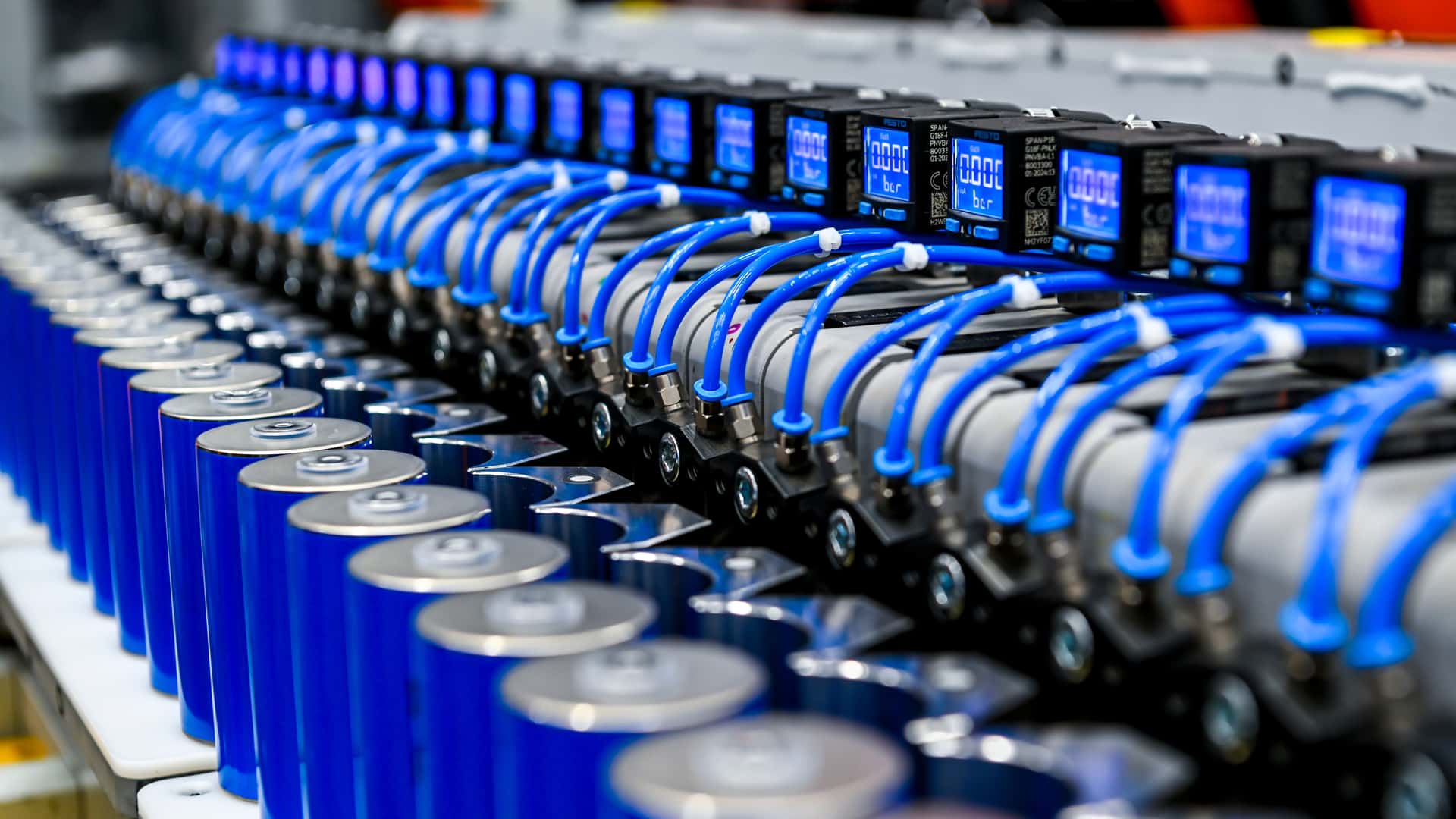
Europe is grappling with a significant challenge in its push to establish a robust local electric vehicle (EV) battery production ecosystem. Despite substantial investments and policy initiatives aimed at achieving supply chain independence, the continent is finding it increasingly difficult to compete on cost with China’s established manufacturing prowess.
Project Cancellations Signal Economic Hurdles
Recent months have seen several high-profile battery manufacturing projects in Europe either scaled back or canceled entirely. This trend underscores the economic pressures facing European automakers and battery manufacturers striving to localize production.

Porsche, for instance, began scaling back operations at its Cellforce battery division, citing that manufacturing was no longer “economically viable.” This decision reflects a broader concern about the cost-competitiveness of European-made batteries.
Adding to these challenges, Northvolt, a Swedish company once positioned as a European battery leader, filed for bankruptcy in 2024. The company cited mounting losses and significant production-related difficulties as key factors.
Automotive Cells Company (ACC), a venture backed by Stellantis, also announced the shelving of two planned battery factory projects in Germany and Italy. The company stated that the “prerequisites” for initiating these plants had not been met, signaling a reassessment of project viability.
The Competitive Edge of Chinese Battery Manufacturing
A primary factor contributing to Europe’s struggles is China’s formidable manufacturing scale, a highly mature supply chain, and the long-standing impact of state-backed incentives. This has enabled Chinese battery producers to achieve cost efficiencies that are difficult for European counterparts to match.
The shared sentiment among European automotive leaders was articulated in a joint statement by the CEOs of Volkswagen Group and Stellantis. They noted, “We are investing heavily to build an integrated European sector, essential for our technological sovereignty, but consumers legitimately expect affordable electric vehicles.” The statement continued, “However, the more prices need to be kept down, the greater the need to import the cheapest batteries.”
This statement highlights a crucial dilemma: while Europe aims for self-sufficiency, the affordability of EVs hinges on accessing cost-effective battery solutions, which are currently dominated by Chinese imports. China’s extensive control over the global battery supply chain, from raw material refining to final production, provides it with a significant cost advantage.
This dominance is particularly evident in lithium iron phosphate (LFP) battery chemistry, known for its cost-effectiveness. China’s sheer production capacity and resulting overcapacity allow it to produce batteries at a lower cost than any other region globally.
Contrasting Challenges in the US Market
While Europe faces cost-competitiveness issues, the US battery industry is experiencing delays and scaling back for different reasons. Reductions in EV demand, influenced by factors like the loss of the $7,500 tax credit and shifts in pro-EV regulations, are impacting the market.
Consequently, American companies such as GM, Ford, and Stellantis have reconsidered or redirected some battery projects, shifting focus from EV applications to stationary energy storage. Unlike in Europe, Chinese EV batteries face significant demand constraints in the U.S. due to substantial import tariffs.
Europe’s Evolving Battery Landscape
Despite the setbacks, Europe’s commitment to developing its battery manufacturing ecosystem remains. Volkswagen Group’s battery division, PowerCo, has made significant strides, ramping up production at its Salzgitter, Germany, plant. This facility boasts an annual capacity of 20 gigawatt-hours, sufficient for approximately 250,000 EVs.
However, even this localized production often relies on manufacturing tools imported from Asia, predominantly China, according to industry reports. This reliance on foreign components further complicates the goal of complete supply chain autonomy.
Policy Interventions and Future Outlook
European policymakers are actively pursuing strategies to counter this dependence. The European Union has allocated substantial funding, including €1.8 billion in interest-free loans through programs like Battery Booster, to stimulate local cell manufacturing.
Furthermore, the continent is exploring local sourcing requirements for critical battery minerals, mirroring initiatives like the U.S. Inflation Reduction Act (IRA). The IRA’s passage initially spurred a surge in U.S. battery project announcements, although subsequent policy shifts led to cancellations and significant financial losses for some companies.
Europe’s EV market, characterized by less political polarization and consistent sales growth, may offer a more stable environment for its policy frameworks to succeed. If European initiatives gain traction, they could potentially serve as a model for other regions seeking to diversify their EV battery supply chains away from China.