
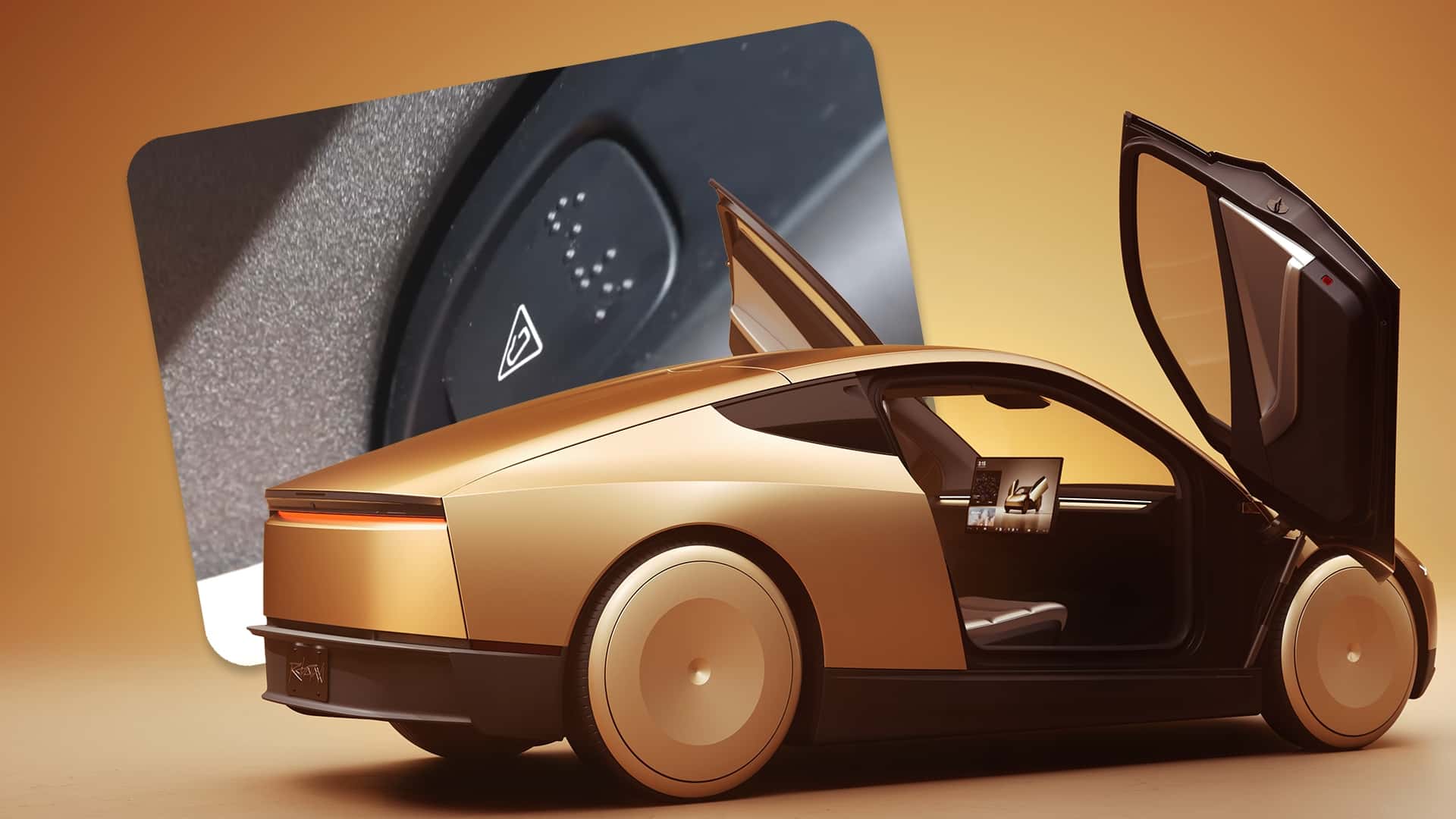
New images and details emerging from the Tesla Cybercab showcase a redesigned internal door release mechanism, potentially offering a glimpse into Tesla’s future approach to vehicle entry and exit following previous regulatory scrutiny over electronic door latches.
Evolving Door Release Technology
Door handles, often an overlooked component of vehicle design, have become a point of contention in the electric vehicle era. Automakers, including Tesla, have faced challenges and regulatory pressure concerning the reliability and accessibility of electronic door releases, particularly in emergency situations.

Last year, Tesla committed to redesigning its door handles in response to these concerns. The recent focus on the Cybercab, Tesla’s upcoming autonomous vehicle, may have revealed the first iteration of this redesigned mechanism.
Cybercab’s Innovative Door Pull
Details about the Cybercab’s door release system have surfaced through a video shared by Tesla influencers Kim Java and Josh West. The video, initially highlighted by the Tesla blog Not A Tesla App, provides a close-up look at the internal door mechanism.
While the Cybercab, like other Tesla vehicles, features a button on its central touchscreen for opening doors, a physical release remains crucial, especially for scenarios where power might be unavailable or in emergencies.
The observed door pull on the Cybercab operates by opening upward, a departure from the push-button style previously employed by Tesla. This new design appears to integrate both electronic and mechanical release functions into a single, progressive lever.
A Dual-Action Lever System
According to descriptions from the video, a brief pull on the new lever actuates the electronic release. If the operator pulls the handle further, it engages the mechanical latch. This dual-action system aims to provide a more intuitive and accessible release.
Notably, the lever is marked with the word “Open” in braille, enhancing accessibility for passengers who may have difficulty locating the release.

While the video does not demonstrate the two-stage release in action, the described functionality suggests a significant shift from Tesla’s previous designs. Historically, Tesla separated electronic and mechanical releases to prevent accidental activation of the mechanical latch, which could potentially damage the vehicle’s exterior.
Potential Industry Standard and Safety Implications
Tesla has not officially confirmed that this specific latch will be implemented in its production vehicles beyond the Cybercab. However, this marks the first time a lever-style, rather than a button, release has been observed on a Tesla, indicating a potential move towards this new dual-action design across its lineup.
Franz von Holzhausen, Tesla’s chief designer, previously spoke with Bloomberg about the company’s goal to make latches easier to use in urgent situations. He described a mechanism very similar to the one observed on the Cybercab:
“We actually have a mechanical release that’s basically right at the electronic one too, and we’re combining the two. So in the moment that you’re in a panic situation, the muscle memory to go to what you know is right there. So you just pull a little bit further on the lever, and you have the mechanical release. So that’s something that we’re working on.”

A unified, simple-to-operate button or lever system could not only streamline design and manufacturing but, more importantly, potentially save lives during emergencies. This focus on safety and accessibility aligns with increasing regulatory attention worldwide.
Addressing Past Concerns
Tesla announced its intention to redesign its door handles in September of the previous year, following a Bloomberg report that linked existing designs to several injuries. The report later cited at least 15 fatalities attributed to Tesla’s door handle configurations.
The challenge extends beyond front doors, as rear doors in some Tesla models have historically featured hard-to-find emergency releases, often concealed behind speaker grilles or under door panel trims. While Tesla has made revisions over time, the issue of accessible emergency releases is not unique to the company, with other automakers also facing criticism for complex or non-intuitive latch designs.
The move towards a more user-friendly and robust door release system is a necessary step for Tesla, driven by both safety considerations and increasing regulatory demands for enhanced vehicle safety features.
Future Outlook for Tesla Door Latches
It remains to be seen whether the redesigned latch observed on the Cybercab will be adopted across Tesla’s entire vehicle range and how it will perform under real-world conditions for everyday users. However, this potential evolution in door release technology could offer a significant improvement for those accustomed to Tesla’s distinctive, and sometimes complex, interior and exterior door access systems.