
Automakers are increasingly seeking recurring revenue streams through subscription services. However, many attempts have fallen short, with some companies controversially charging for features already physically present in the vehicle, such as performance upgrades or heated seats. This strategy has met with widespread customer disapproval, prompting even industry leaders like Volvo’s Chief Technical Officer to acknowledge the limited success potential of such monetization models.
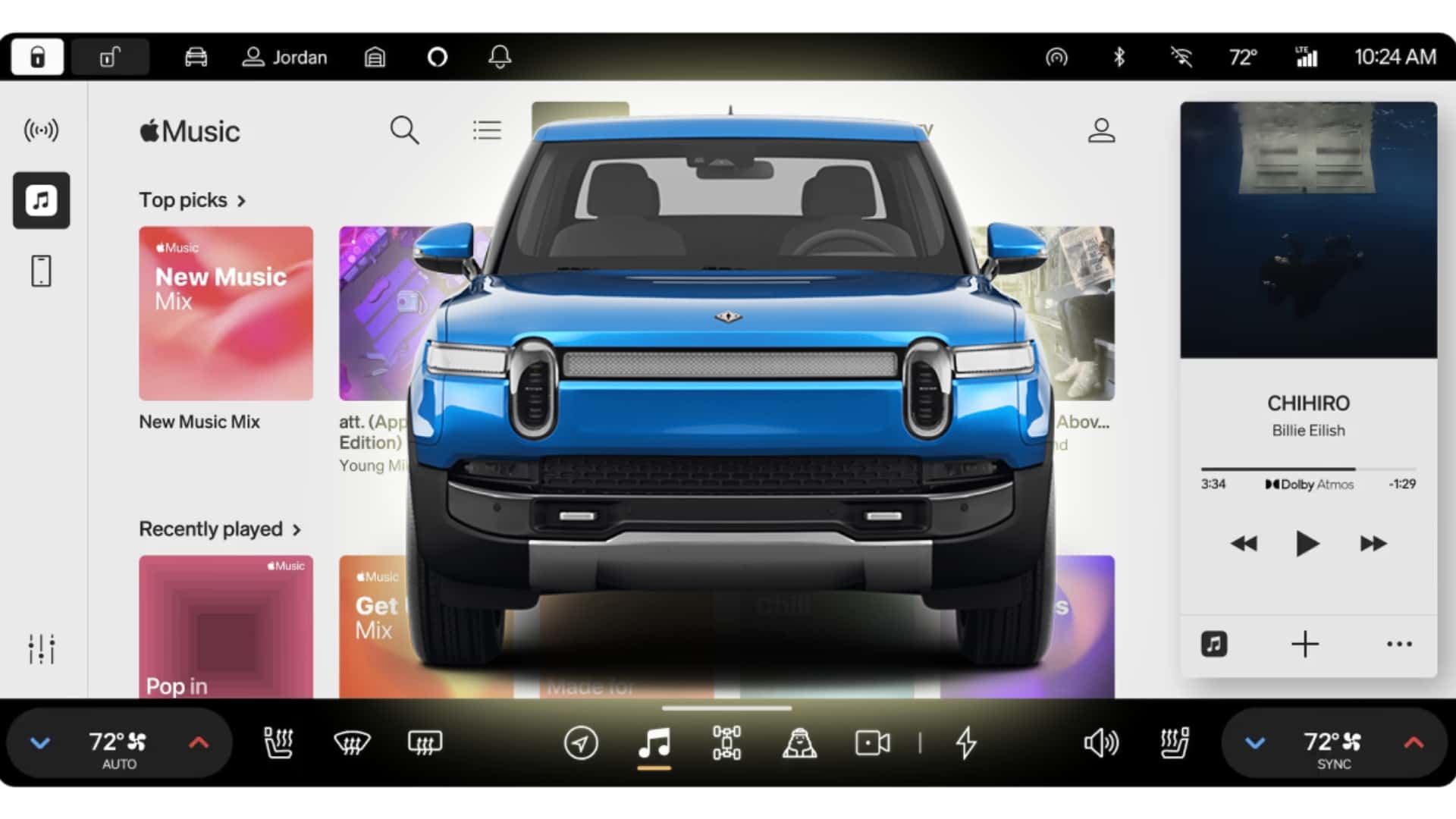
When Rivian announced its Connect+ software suite, it raised questions about whether the electric vehicle startup was following a similar path. Notably, Rivian’s native integration of Spotify, previously free, was moved behind the Connect+ paywall. While the suite also introduced Apple Music and Audible, the core question remains: is the $14.99 monthly subscription justified, especially given that alternatives like Apple CarPlay could offer similar functionalities at no additional cost?

Rethinking In-Car Software Subscriptions
The landscape of automotive software subscriptions has been fraught with challenges. Automakers face a delicate balance between offering value and demanding payment for existing or artificially limited features. The common practice of paywalling hardware that’s already installed has been a particular point of contention among consumers.
Despite the general skepticism surrounding these subscription models, Rivian’s Connect+ suite, as experienced in a 2025 Rivian R1S, offers a compelling, albeit imperfect, glimpse into the future of integrated in-car technology. The suite is available on new Rivian models and as an upgrade for first-generation R1 vehicles.
The Case Against Apple CarPlay
Rivian CEO RJ Scaringe has been vocal about his decision not to integrate Apple CarPlay into the brand’s vehicles. His rationale centers on maintaining a controlled ecosystem that prioritizes the unique Rivian ownership experience. Scaringe believes that allowing third-party systems like CarPlay to overlay the native interface detracts from the holistic user experience that Rivian aims to provide.
This stance, while controversial, is rooted in a desire for deeper system integration. Unlike CarPlay, which often operates as a separate layer, Rivian’s approach aims to embed functionalities directly into the vehicle’s operating system. For electric vehicles, this is particularly crucial for leveraging native navigation systems that incorporate essential features like charging station identification and planning—features that are often inaccessible or poorly integrated when using third-party navigation apps through CarPlay.
By foregoing CarPlay, Rivian intends to develop its own native solutions that seamlessly interact with the vehicle’s core functions. The integration of Apple Music within the Connect+ suite appears to be a significant step in fulfilling this promise, aiming to replicate and even enhance features typically found on the iPhone or desktop application.
Rivian’s Apple Music Integration: A Deep Dive
While not the first automaker to offer native Apple Music integration (Mercedes-Benz and Porsche preceded them), Rivian’s implementation stands out for its thoughtful design and execution. Unlike other manufacturers where music apps feel like afterthoughts, Rivian’s Apple Music interface mirrors the familiar branding, layout, fonts, and graphic design of the desktop and iPad versions.
This fidelity ensures that users can easily navigate playlists, search the extensive Apple Music library, and access personalized recommendations. Crucially, playlists created on other devices sync seamlessly, offering a familiar and convenient listening experience. The ability to search the entire Apple Music catalog directly within the vehicle’s interface, without needing to interact with a physical phone, represents a significant convenience factor.
The integration is designed to be unobtrusive. When not actively engaged, the Apple Music app recedes into a mini-player, allowing drivers to utilize other vehicle functions like navigation or charging tools without interruption. The user interface, with its large album art and clear icons, is designed for ease of use while driving, potentially surpassing the clarity offered by some CarPlay implementations.
During testing, the seamless transition from Rivian’s integrated system to the comparatively dated feel of CarPlay in another vehicle highlighted the effectiveness of Rivian’s approach. The experience felt less like using a detached app and more like an intrinsic part of the vehicle’s digital environment.
Areas for Improvement in Connect+
Despite the impressive integration, the Rivian Connect+ suite is not without its shortcomings. A primary concern is the search functionality within Apple Music. While the system can play music from smaller artists or custom uploads, the search feature prioritizes Apple’s official catalog, often failing to find songs readily available in a user’s personal library. This forces users to manually locate tracks within their library, a cumbersome process while driving.
Similarly, the ability to favorite songs is inconsistent, particularly for tracks not directly cataloged by Apple Music. The management of the music queue also presents challenges, being locked within the main Apple Music app and lacking an intuitive ‘add to queue’ function, which detracts from seamless playlist management.
Furthermore, the reliance on Amazon Alexa for voice commands means that while basic playback controls are functional, more complex interactions within Apple Music can revert to Amazon Music, an issue for users without an Amazon Music subscription. The absence of offline caching for Apple Music is another significant drawback, especially for a brand that markets its vehicles towards outdoor and off-grid adventures. In areas with spotty cellular service, this can lead to prolonged silences as the system attempts to re-establish a connection.
The Verdict: Is $14.99 a Month Worth It?
Despite these drawbacks, the overall experience with Rivian’s Connect+ software, particularly the Apple Music integration, is compelling enough to justify the $14.99 monthly subscription for many users. The criticisms, while valid, often feel like minor quality-of-life issues that Rivian is likely to address through software updates. The system’s responsiveness saw a marked improvement following an over-the-air update during the review period, indicating ongoing development and refinement.
The sophisticated and cohesive integration of Apple Music into the Rivian interface offers a glimpse of a highly connected automotive future, reminiscent of advanced systems found in China’s hyper-connected EVs. This level of attention to design and user experience sets it apart from many competing native integrations.
While Rivian currently offers Apple Music and Spotify, with Google Cast and YouTube support on the horizon, the potential for further native integrations of services like Soundcloud or Bandcamp is exciting. If subscription services are to become the norm, Rivian’s approach—offering deeply integrated, high-value features—is a far more appealing model than the fragmented and often frustrating nickel-and-diming tactics seen elsewhere in the industry.