Two years ago, the petrol-automatic Hyundai Exter held an advantage over the Tata Punch, primarily due to its smoother powertrain. Now, the rivalry intensifies as both sub-compact SUVs enter the ring in their CNG avatars. While they share advanced features like a dual-cylinder CNG setup, a claimed efficiency of 27km/kg, and even a sunroof, this comparison focuses on their real-world performance and, crucially, their fuel efficiency.
Interior Comfort and Ergonomics: Punch vs. Exter
The Tata Punch’s enduring popularity is no surprise, given its user-friendly design. Its high-riding stance, wide-opening doors, and easy ingress make it exceptionally accessible, particularly for older passengers. The elevated seating provides a commanding view of the road, and the visible bonnet edges enhance driver confidence. The driving experience is further complemented by light steering, easily executed gear shifts, and a light clutch. Long journeys are made more comfortable with individual front armrests and an impressive audio system.

Transitioning to the Hyundai Exter, its reputation for user-friendliness is immediately apparent. Every control, from the gearbox to the steering, feels lighter and more polished, ideal for navigating city traffic. Although its seating isn’t as high as the Punch’s, the outward visibility remains excellent, aided by a lower window line. The cabin quality and fit-and-finish are marginally superior in the Exter, though its dark, monotone theme feels less inviting. The seats, while functional, are somewhat compact and lack the supportive feel of the Punch’s seats.
Powertrain Performance: CNG Dynamics Compared
The Punch’s engine has never been its most potent feature, and this is amplified in its CNG avatar, where it feels more subdued. While it competently handles urban traffic, it begins to strain when additional power is demanded. The Punch’s true forte lies in its stability at highway speeds, offering a reassuring composure that the Exter does not quite match.
| Specifications | Tata Punch iCNG Accomplished + S | Hyundai Exter Hy-CNG Duo SX Tech |
| L/W/H | 3827/1742/1615mm | 3815/1710/1631mm |
| Wheelbase | 2445mm | 2450mm |
| Boot Capacity | 210 litres | NA |
| Engine | 3-cyl, 1199cc Petrol + CNG | 4-cyl, 1197cc Petrol + CNG |
| Power | 73.5hp at 6000rpm | 69hp at 6000rpm |
| Torque | 103Nm at 3250rpm | 95.2Nm at 4000rpm |
| Kerb Weight | 1181kg | 1093kg |
On the road, the Exter delivers an exceptionally refined experience. Its 4-cylinder engine is quieter, eager to rev, and remarkably smooth. Shorter gearing and intelligent engine calibration mean gear shifts are infrequent. The Exter pulls cleanly from low RPMs, making it highly suitable for stop-and-go city driving. In acceleration tests, the Exter Hy-CNG Duo reached 100kph from a standstill in 14.85 seconds, a full 3 seconds faster than the Punch iCNG. Furthermore, the Exter demonstrates significantly better acceleration than the Tata in mid-range roll-on tests, such as 20-80kph in third gear and 40-100kph in fourth gear.
However, the Exter feels less composed on the highway compared to the Punch, exhibiting more noticeable vertical movement over uneven surfaces. Its engine operates at a higher RPM (3,300rpm) than the Punch’s at a 100kph cruise in top gear. This also contributes to its slightly lower highway efficiency of 30.3km/kg in our tests, versus the Punch iCNG’s 31km/km. Conversely, the Exter’s superior city drivability resulted in a higher city efficiency of 22.8km/kg, compared to the Tata’s 20.7km/km. Both vehicles achieved impressive overall average fuel economy figures, closely aligning with their claimed 27km/kg rating.
| Performance and Efficiency (Tested) | Tata Punch CNG | Hyundai Exter CNG |
| Acceleration (0-100kph) | 17.85 sec | 14.85 sec |
| Rolling Acceleration (20-80kph in 3rd gear) | 16.01 sec | 13.02 sec |
| Rolling Acceleration (40-100kph in 4th gear) | 22.80 sec | 18.35 sec |
| Efficiency (City) | 20.7km/kg | 22.8km/kg |
| Efficiency (Highway) | 31.0km/kg | 30.3km/kg |
Real-World Fuel Efficiency Testing
To ascertain the actual fuel efficiency of both vehicles, a rigorous test protocol was employed. Both cars were driven until their CNG tanks were fully depleted. Subsequently, approximately 2 kg of CNG was refilled in each vehicle, and they were driven under realistic city conditions until the gas ran out. This process was then replicated for highway driving. Given the inherent difficulty in achieving identical refuelling quantities, efficiency figures were calculated based on the actual distance covered divided by the amount of gas consumed.
Features and Safety Comparison
The Tata Punch model under review is the Adventure + mid variant, while the Hyundai Exter is presented in its top-spec SX trim. For a fair comparison, all features and safety aspects are evaluated based on their respective top-tier offerings. Tata offers a wider range of variants for the Punch iCNG, with its entry-level trims being more affordable than Hyundai’s CNG options, although its higher trims are priced above the Exter.

| Features | Tata Punch iCNG Accomplished + S | Hyundai Exter Hy-CNG Duo SX Tech |
| Alloy Wheels | NA | NA |
| Projector Headlamps | YES | YES |
| Sunroof | YES | YES |
| Power Folding Mirrors | NA | YES |
| Touchscreen | 10.25-inch | 8-inch |
| Android Auto, Apple CarPlay | Wireless | Wireless |
| Auto Climate Control | YES | YES |
| Wireless Charging | NA | NA |
| Ventilated Seats | NA | NA |
| Rear AC Vents | YES | YES |
| Rearview Camera | YES | YES |
| Cruise Control | YES | NA |
| Hill-start Assist | NA | YES |
| Tyre Pressure Monitor | NA | YES |
| ESP | YES | YES |
| Airbags | 2 | 6 |
In terms of features, the Punch iCNG includes amenities such as cruise control and a larger 10.25-inch touchscreen, which are not available on the Exter. However, the Exter counters with significant safety advancements, including six airbags, a tyre-pressure monitoring system, hill-start assist, and electrically folding mirrors – all absent in the Punch.
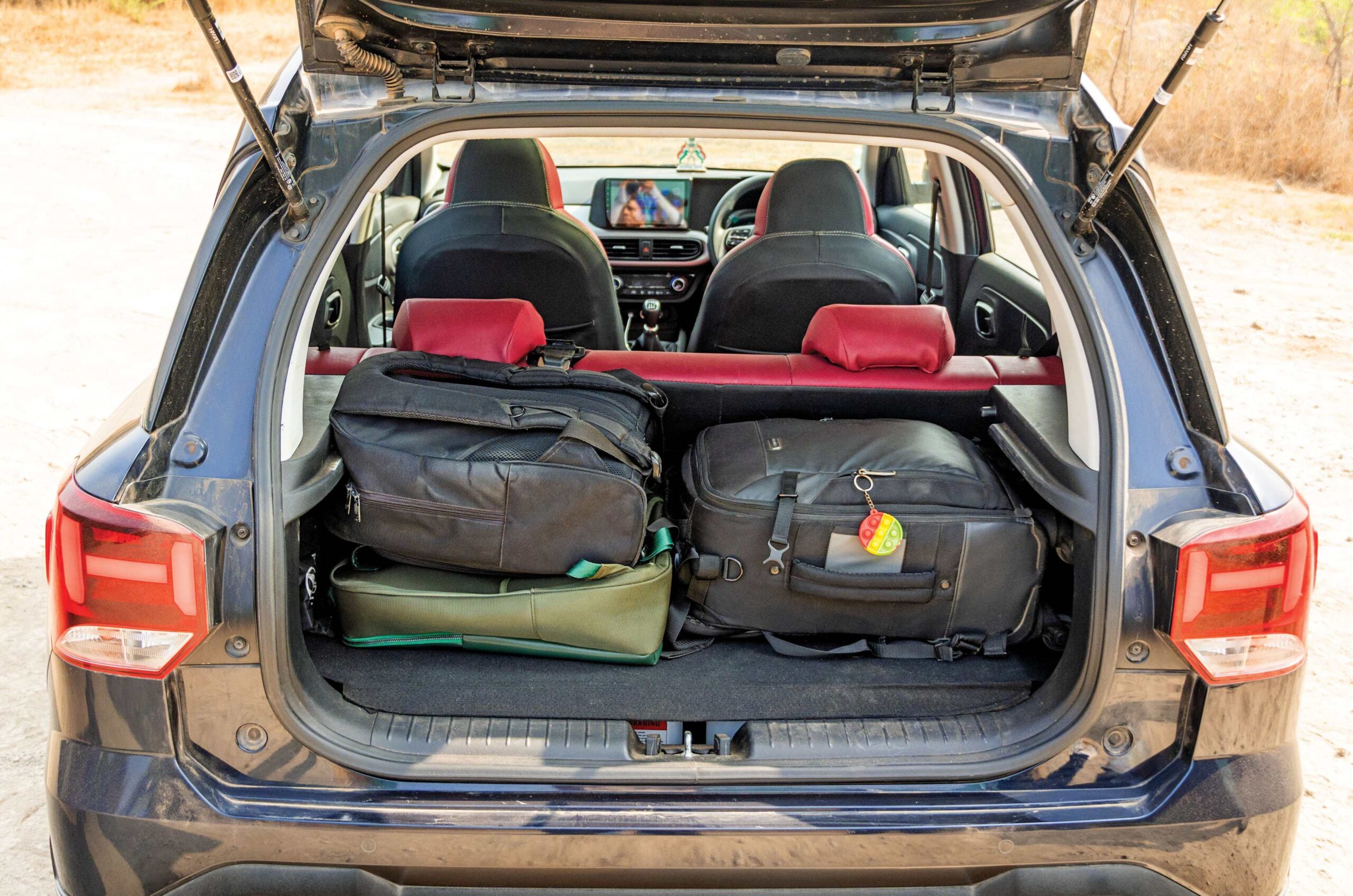
Both SUVs utilize a dual CNG cylinder setup integrated beneath the boot floor, inevitably reducing cargo space compared to their petrol counterparts. Nevertheless, the Punch’s boot appears slightly more practical, especially when the parcel shelves are removed. A key advantage for the Punch is the inclusion of a full-size spare tyre, whereas the Exter provides only a tyre repair kit.
Verdict: Hyundai Exter CNG vs. Tata Punch CNG
In summary, the Tata Punch iCNG presents a strong case for buyers prioritizing economy, compactness, and highway practicality. Its robust construction, elevated driving position, and commendable audio system are significant drawcards. However, it trails in outright performance and lacks crucial safety technologies like hill-start assist, tyre-pressure monitoring, and additional airbags. The Hyundai Exter, conversely, offers a more refined, smoother, and user-friendly city driving experience. It achieves superior fuel efficiency, boasts a more comprehensive safety suite, and manages to be more competitively priced than the Punch, despite offering more equipment.
While it may not yet dominate sales charts, the Hyundai Exter emerges as the more well-rounded package in this CNG SUV comparison. Its combination of refinement, efficiency, safety, and value makes it the outright winner.