
{
“title”: “Sony and Honda Scuttle Afeela Electric Vehicle Project Amid Shifting Market”,
“content”: “
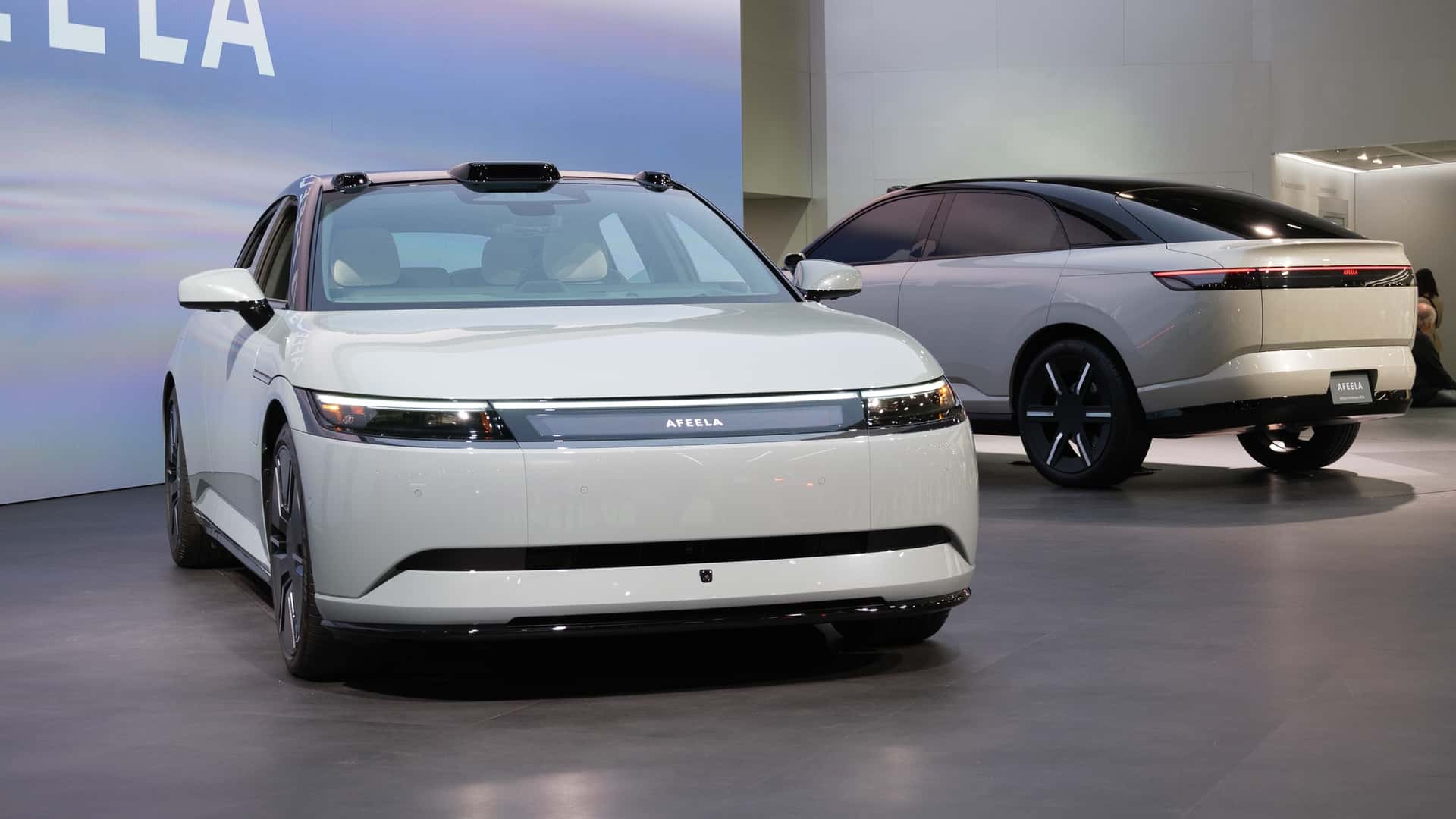
The ambitious Afeela electric vehicle project, a joint venture between Sony and Honda, has been officially canceled, marking a significant pivot for both technology and automotive giants in the rapidly evolving electric car landscape.
nn
Joint Venture Abruptly Ends Afeela EV Development
nn
Sony Honda Mobility (SHM), the entity established to bring Afeela electric cars to market, has announced the termination of its development plans for its inaugural models. This decision effectively halts the production of the Afeela 1 electric sedan, which was nearing its pre-production phase, and a planned Afeela electric SUV.
nn
The joint statement from Sony and Honda confirmed the cessation of development and launch initiatives. Production was slated to occur at Honda’s East Liberty Auto Plant in Ohio, but these plans are now defunct.
nn

The Afeela 1 sedan was on the cusp of entering production, while the second planned model, a four-door SUV, was envisioned for a potential market debut as early as 2028.
nn
Reasons Behind the Project’s Demise
nn
SHM cited “changes to the EV market” as a primary reason for discontinuing the Afeela project. A crucial factor in this decision appears to be Honda’s concurrent cancellation of its own lineup of all-new EVs, which were to be built on a bespoke architecture.
nn
These shelved Honda models included the Acura RSX, the Honda 0 Series SUV, and the Honda 0 Series Saloon. The Afeela EVs were intended to leverage certain technologies and assets from Honda’s planned vehicles.
nn
With Honda abandoning its dedicated EV platform, SHM found itself unable to utilize the underlying technology essential for the Afeela vehicles. This interdependence ultimately led to the project’s cancellation.
nn
Broader Industry Context: EV Market Slowdown
nn
The halt of the Afeela project occurs against a backdrop of increased challenges and recalibrations within the global electric vehicle sector. Several automakers have recently scaled back or canceled their EV plans, reflecting shifting consumer demand and economic pressures.
nn
Notable examples include Ford’s discontinuation of the F-150 Lightning pickup, Ram’s cancellation of its electric 1500 truck, and Tesla’s anticipated winding down of production for the Model S and Model X. The Chevrolet BrightDrop van has also been retired.
nn
Conversely, the EV market is not without its growth narratives. Companies like Rivian are introducing new models such as the R2. BMW is preparing to launch its iX3 and i3 in the U.S., while Volvo has unveiled the new EX60, and Polestar is developing a wagon variant of the Polestar 4.
nn
Afeela’s Ambitious, Yet Flawed, Value Proposition
nn
The Afeela 1 sedan, projected to be priced above $90,000, faced scrutiny regarding its market competitiveness. Its positioning as a high-tech, mid-size electric sedan with what some considered modest specifications presented challenges in an increasingly crowded and price-sensitive market.
nn
Afeela EVs were heavily promoted for their advanced technological integration. The Afeela 1, for instance, was equipped with a suite of 40 sensors, including 18 cameras, a lidar unit, nine radar systems, and 12 ultrasonic sensors, promising future capabilities for hands-off, eyes-off driving.
nn
Despite the technological aspirations, the vehicle’s core performance metrics were less compelling compared to many competitors. The sedan featured a Tesla-style NACS charging port, an estimated range of around 300 miles, and a maximum charging input of 150 kilowatts.
nn
The Afeela 1 also boasted integrated PlayStation consoles, reflecting Sony’s entertainment expertise, and aimed for supreme build quality. However, these premium features and technological promises were not enough to overcome the project’s underlying challenges and market shifts.
nn
The cancellation underscores the complexities of launching new automotive brands and models, particularly in the volatile electric vehicle segment. Factors such as platform development costs, evolving battery technology, charging infrastructure, and consumer adoption rates all play critical roles in determining the success of new ventures.
nn
The decision by Sony and Honda serves as a significant case study in the automotive industry’s ongoing transition, highlighting the risks and strategic adjustments required to navigate the future of mobility.
”
}