
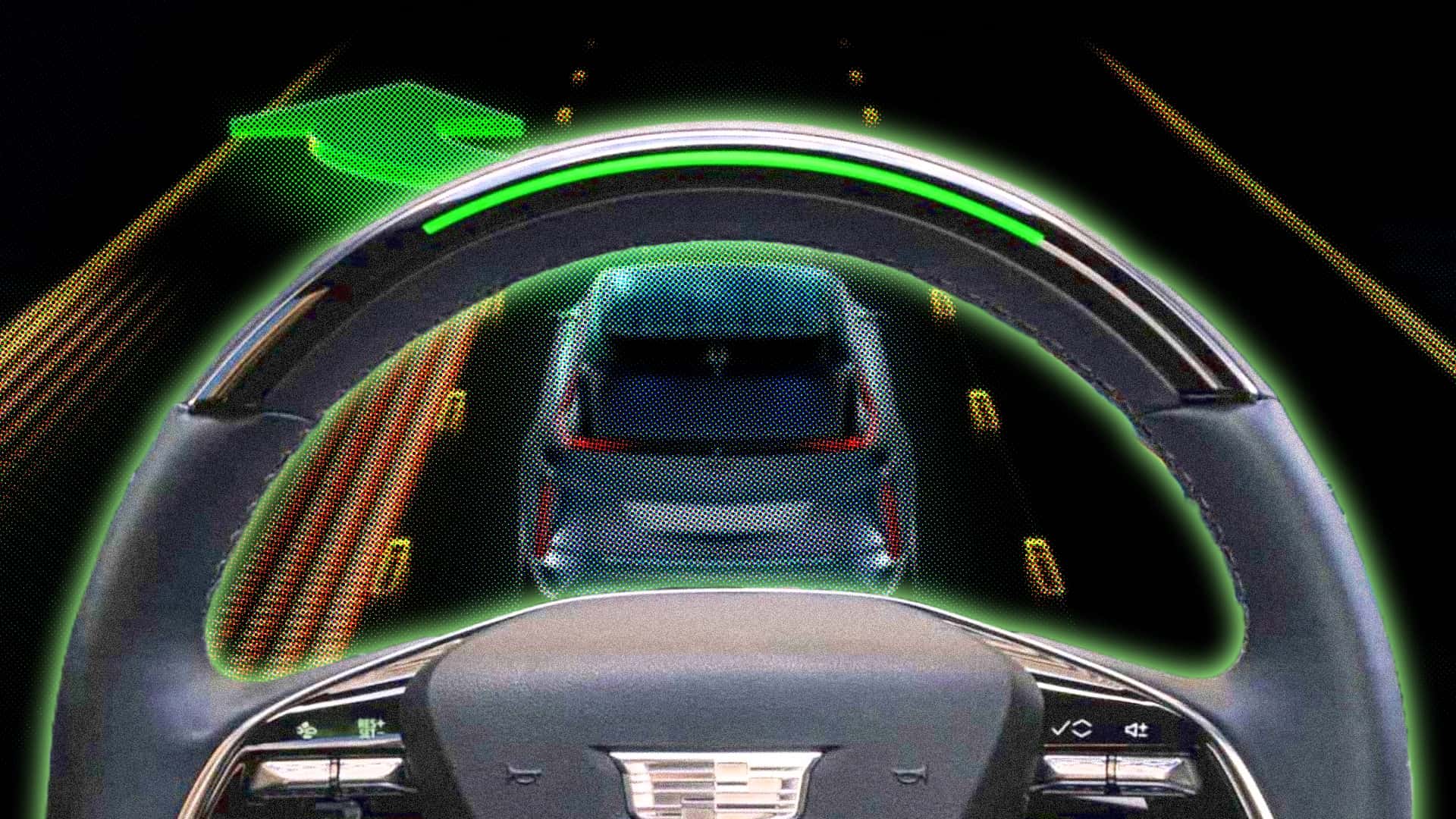
In the rapidly evolving automotive landscape, car manufacturers are pushing numerous new technologies simultaneously, but not all are destined to become mainstream. While features like integrated ChatGPT or subscription services may not resonate with the average car buyer, one advancement is proving to be a genuine game-changer: General Motors’ Super Cruise system.
The Future of Highway Travel, Hands-Free
During an extensive test of the Cadillac Lyriq, the author found GM’s hands-free driving system to be remarkably competent and exceptionally useful. The experience was so transformative that reverting to manual driving in a conventional vehicle felt surprisingly disappointing. This sentiment highlights the significant leap Super Cruise represents, offering a glimpse into the future of highway travel.
Super Cruise operates as a “hands-off, eyes-on” system, capable of managing steering, acceleration, braking, and lane changes on a continuously expanding network of pre-mapped highways. The critical requirement for the driver is to maintain attentiveness, a factor meticulously monitored by the vehicle’s internal infrared cameras.
In a market where the average car on U.S. roads is over a decade old, many drivers may be unaware of the advancements in automated driving technology. However, systems like Super Cruise are poised to become as indispensable as features like cruise control and power mirrors once were, provided they receive continued refinement.
Addressing the Tedium of Long Drives
The primary advantage of Super Cruise lies in its ability to solve a fundamental problem of highway driving: monotony and fatigue. By taking over the strenuous tasks of extended journeys, the system significantly enhances comfort and reduces driver strain. While other systems offer similar capabilities, Super Cruise is widely recognized as a leader in the field.
A recent four-hour round trip to a state park served as a practical demonstration. Local road driving was handled manually, but the long, traffic-laden highway stretches were entrusted to Super Cruise. Activation was straightforward: engage cruise control, then press the Super Cruise button on the steering wheel. A green illuminated strip on the wheel confirmed the system’s active status.
Once engaged, the Cadillac Lyriq demonstrated impressive control, maintaining its lane with precision, even on curved roads. The system smoothly adjusted speed according to traffic conditions, mitigating the stress typically associated with stop-and-go traffic. With the automatic lane change feature enabled, the Lyriq adeptly maneuvered around slower vehicles when safe opportunities arose.
Understanding Level 2 Autonomy
It’s crucial to understand that Super Cruise, despite its capabilities, is not a fully autonomous system. True self-driving cars are not yet available to consumers. Instead, Super Cruise, alongside competitors like Tesla Autopilot and Ford BlueCruise, falls under the category of Level 2 advanced driver-assistance systems (ADAS).
These ADAS features combine lane-centering and adaptive cruise control to manage steering, acceleration, and braking on highways, but always under the driver’s watchful supervision. They typically rely on cameras and sensors to interpret the road environment. Super Cruise further enhances its operation by utilizing highly detailed, 3D maps of supported roadways.
While these systems are sophisticated, they can encounter situations requiring immediate driver intervention. Mercedes-Benz’s Drive Pilot system is an exception, offering Level 3 autonomy in specific traffic jam scenarios, allowing drivers to disengage momentarily under strict conditions. Many manufacturers, including GM, Ford, and BMW, permit hands-off operation under certain circumstances, though other systems mandate hands-on engagement.
Performance and Limitations
In extensive testing, Super Cruise performed admirably for extended periods. However, the system is not infallible. There were instances where it required driver intervention, such as during lane merges, and occasional disengagements without apparent cause. While these events were manageable due to the driver’s constant vigilance, they could be startling.
Some behaviors also required attention. The automatic lane-changing feature, when engaged, sometimes resulted in the vehicle merging left and then immediately returning to its original lane, leading to its deactivation in favor of manual turn signal activation for lane changes.
Adjusting to slower traffic also presented challenges. The system occasionally delayed braking when a vehicle ahead accelerated, especially if another car was merging into the lane. This meant the Lyriq would sometimes brake later than a human driver might, which could be unnerving.
Similarly, the system sometimes navigated curves at speeds that felt uncomfortable. In situations where a human driver would anticipate and reduce speed for distant traffic congestion, Super Cruise maintained its set speed longer before eventually slowing down.
Expansion and Future Outlook
General Motors has ambitious plans for Super Cruise, aiming to expand its coverage to 750,000 miles of mapped highways across the U.S. and Canada by the end of 2025. Currently, the system operates on approximately 480,000 miles of roadways.
Despite these minor issues, Super Cruise represents a significant advancement in reducing driver fatigue and enhancing comfort. The mental energy saved by delegating the more taxing aspects of driving to the system is substantial. The experience makes it difficult to envision returning to conventional driving for long journeys.
The proliferation of these advanced driver-assistance systems is notable, with features once exclusive to luxury vehicles now becoming more accessible. Tesla’s pioneering work with adaptive cruise control and lane-centering laid the groundwork for many current systems. GM has been a strong proponent, expanding Super Cruise from its initial release on a single Cadillac model to an anticipated 22 models by the end of the current year.
While widespread adoption of hands-free highway driving technology will take time, the trajectory is clear. This gradual integration is beneficial, allowing for necessary consumer education regarding the capabilities and limitations of these systems, and addressing potential issues like distracted driving.
For the author, adaptive cruise control and lane-centering have transitioned from desirable features to essential requirements for any future vehicle purchase, underscoring their perceived value and impact on the driving experience.