
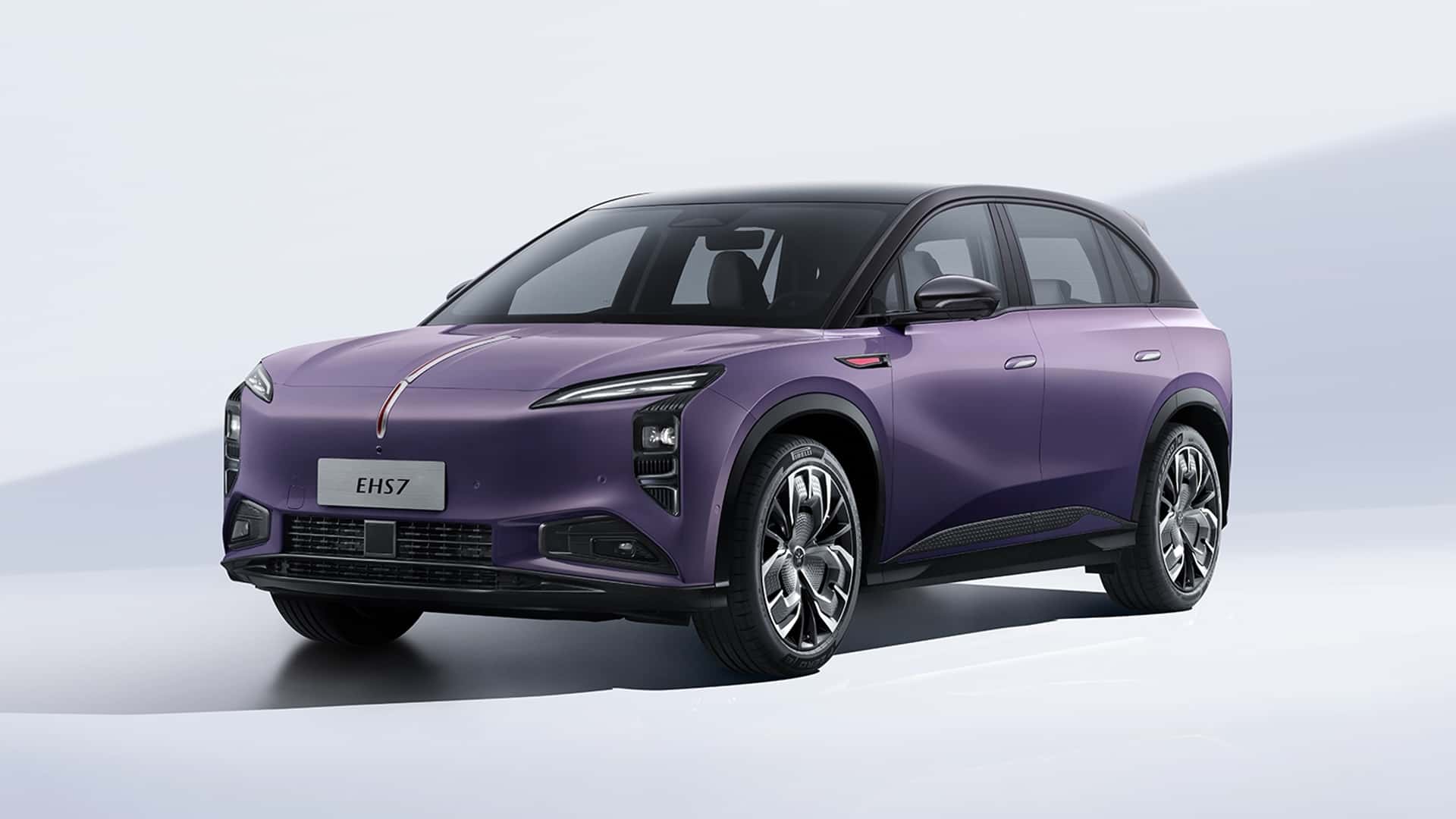
A groundbreaking battery chemistry featuring lithium and manganese is enabling electric vehicles (EVs) to achieve an unprecedented range of over 620 miles. Chinese automotive giant FAW Group has reportedly integrated this innovative battery technology into a production vehicle, signaling a significant leap forward in EV performance.
Innovative Battery Technology Promises Extended EV Range
While traditional lithium-ion batteries remain the dominant force in the electric vehicle market, advancements in alternative battery chemistries are rapidly accelerating. These new technologies aim to enhance EV capabilities, allowing them to travel further on a single charge, recharge more quickly, and offer greater longevity. The latest development from FAW Group appears to be moving these experimental breakthroughs from the laboratory to the road.

FAW Group, a major player in China’s automotive industry with established joint ventures with Volkswagen Group and Toyota, has showcased a Hongqi-branded electric crossover equipped with this novel battery. This integration marks a crucial step in bringing advanced battery solutions to consumer vehicles.
Key Specifications and Performance Metrics
The new semi-solid-state battery boasts a substantial 142-kilowatt-hour capacity. On a cell level, it achieves an impressive energy density of 500 watt-hours per kilogram. This figure is double that of current lithium-ion batteries, contributing directly to the vehicle’s exceptional range.
FAW Group estimates the vehicle’s range at 1,000 kilometers (approximately 620 miles) under the CLTC (China Light-Duty Vehicle Test Cycle) standard. It is important to note that real-world range, especially under the more stringent EPA (Environmental Protection Agency) cycle used in the United States, would likely be lower.
Factors beyond battery technology significantly influence an EV’s actual range. These include the vehicle’s aerodynamic design, overall weight, the efficiency of its powertrain, and the specific driving conditions encountered. Therefore, while the battery technology is a key enabler, the vehicle’s overall design plays a vital role in maximizing its potential mileage.
The Significance of Manganese in Battery Cathodes
A notable aspect of this new battery chemistry is its utilization of manganese. While many semi-solid-state batteries employ a gel-like electrolyte, their cathode materials often resemble those found in conventional lithium-ion cells, such as nickel-manganese-cobalt (NMC) or nickel-cobalt-aluminum (NCA) chemistries.
However, there is a growing industry-wide trend towards manganese-rich cathodes. This shift is gaining momentum globally, extending beyond China’s borders. The advantages of using manganese include its lower cost and reduced reliance on more expensive and ethically problematic materials like cobalt.

Global Trends in Battery Material Innovation
The adoption of manganese in EV batteries is not unique to FAW Group. Major global automakers are actively exploring and implementing similar strategies. General Motors, for instance, has announced plans to deploy lithium-manganese-rich (LMR) batteries in its future EV models. This move aims to decrease dependency on nickel and cobalt, both of which present supply chain challenges and carry significant price volatility.
In China, battery manufacturers are also investigating lithium iron manganese phosphate (LMFP) batteries. This development seeks to enhance the range and performance of existing low-cost lithium iron phosphate (LFP) batteries, further underscoring the strategic importance of manganese as a key component in cathode active materials.
Industry Momentum in Battery Technology
The automotive industry is abuzz with announcements regarding battery breakthroughs. BYD, another prominent Chinese EV manufacturer, has recently reported significant advancements in the cycle life and charging speed of its solid-state cells. Concurrently, a key partner of Toyota has commenced construction of a large-scale pilot production line for solid-state batteries in Japan.
While these announcements signal exciting progress, it is essential to maintain a realistic perspective. Not all projected timelines for commercialization or cost reductions may be met as quickly as initially promised. The path from laboratory innovation to mass-market adoption often involves unforeseen challenges.

The Future of EV Batteries
Nevertheless, the collective progress observed across the industry suggests a transformative decade ahead for electric vehicles. The performance benchmarks for EV batteries are poised for substantial improvement, potentially redefining consumer expectations for range, charging speed, and overall efficiency. This evolution promises to make EVs an even more compelling and practical choice for a wider audience.
The integration of novel battery chemistries, such as the lithium-manganese semi-solid-state battery developed by FAW Group, represents a critical step in this ongoing evolution. As research and development continue, the future of electric mobility appears brighter and more capable than ever before.