
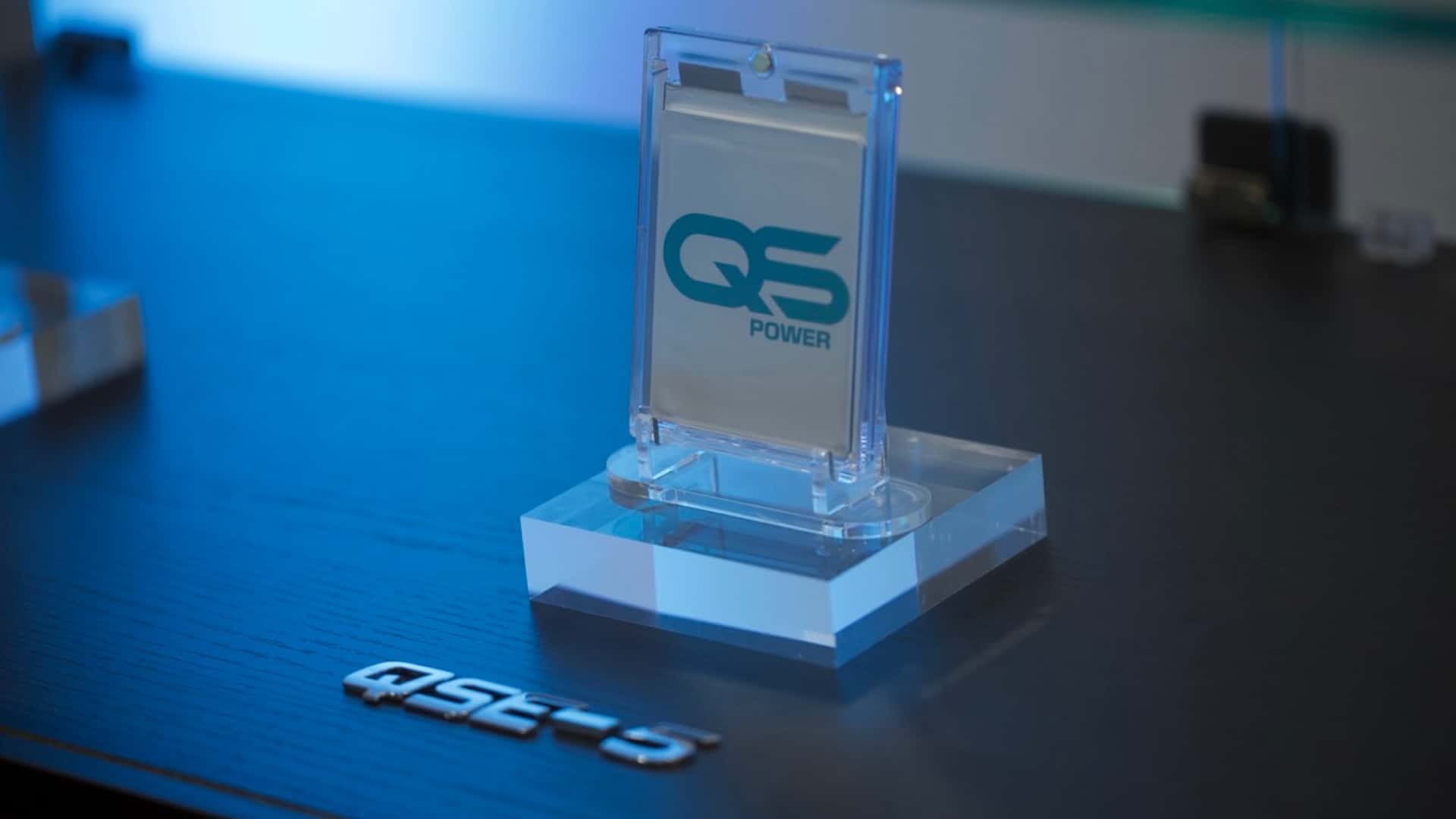
Fifteen years after its inception, California-based QuantumScape has announced a significant stride in solid-state battery technology by commencing pilot production at its San Jose facility. The company’s innovative anode-free, lithium-metal cells are designed to overcome the limitations of current lithium-ion batteries, offering potential improvements in energy density, charging speed, power output, and overall safety, which could revolutionize electric vehicles.
Pilot Production Marks Key Milestone for QuantumScape
The launch of the “Eagle Line” for pilot battery production represents a pivotal moment for QuantumScape, transitioning its technology from laboratory development to a tangible product. CEO Siva Sivaram described the event as a “Kitty Hawk moment” and an “Apollo mission launch,” underscoring its historical significance for the company.
This move is crucial as it demonstrates the viability of mass-producing solid-state batteries, a feat that has eluded many companies investing heavily in this advanced energy storage technology. While some vehicles in China utilize semi-solid-state batteries, and startups like Factorial Energy are developing similar technology for the U.S. market, no company has yet brought true solid-state batteries to mass-market vehicles.
The Path to Commercialization: Challenges and Vision
Despite this achievement, significant challenges remain. QuantumScape CTO and cofounder Tim Holme acknowledged the extensive work ahead but articulated the company’s vision: to see its batteries integrated into low-volume, high-performance vehicles by the end of the decade. Beyond automotive applications, the company also eyes future deployment in areas such as household robots and stationary energy storage systems.
“Batteries are coming online everywhere,” Holme stated. “The long-term vision is I think we’re competitive in a lot of big markets.”
Inside the Eagle Line: Manufacturing Process
The Eagle line utilizes nickel-based cathodes and specialized ceramic separators, which are laminated to create paper-thin “unit cells.” These are then stacked and assembled into 5-amp-hour batteries, QuantumScape’s initial commercial product. The automated production occurs within sophisticated machinery housed in a clean-room environment.
The immediate focus for the Eagle line is on monitoring production metrics such as output, yield, and uptime, alongside rigorous quality control of the produced batteries. The primary objective is not to achieve high-volume output but to validate and demonstrate the feasibility of automated production to potential customers.
A Licensing Model for Future Growth
QuantumScape’s business strategy centers on a licensing model rather than direct manufacturing. The company aims to empower automakers and other firms to produce solid-state batteries themselves using QuantumScape’s intellectual property. The pilot factory also serves a critical role in providing a consistent supply of batteries for testing and development by potential partners.
“I can’t tell you how important it is to actually begin to have a higher volume of cells,” commented Asim Hussain, the company’s chief business development and marketing officer. “One of the key intentions of the line is to create a repeatable manufacturing process, but also to mature our customer relationships by providing more technology to them. As a licensing company, that’s absolutely critical.”

Strategic Partnerships and Technological Evolution
Volkswagen stands as a notable investor in QuantumScape. The two companies collaborated on a demonstration vehicle, a Ducati motorcycle equipped with QuantumScape cells, unveiled at Germany’s IAA Munich auto show. QuantumScape is also engaged in discussions with other undisclosed major automotive manufacturers.
Holme indicated that QuantumScape has set performance targets for the Eagle line and plans further factory upgrades. He emphasized that achieving automated production is a major accomplishment, drawing a parallel to Tesla’s “manufacturing hell” during the Model 3 ramp-up. “If you automate too early, then the robots aren’t flexible enough to do the process you actually need, so you end up reworking, which takes a long time. It’s an important marker in the maturity of our process that we felt we knew enough to automate it,” he explained.
The Future Trajectory of Solid-State Battery Performance
Looking ahead, QuantumScape intends to scale production in collaboration with its partners and has a defined roadmap for enhancing cell performance. Holme anticipates an evolutionary path for solid-state technology, mirroring the substantial improvements seen in regular lithium-ion batteries over decades. He pointed out that early lithium-ion batteries, introduced by Sony in 1991, offered approximately one-third of the performance of today’s batteries.

“We think we’re also going to have an S-curve of improvements,” Holme said. “Some of them are incremental in the same way that lithium-ion did. Some of them are going to be more evolutionary with new materials or new architectures.”
Market Positioning and Competitive Landscape
In a market where lithium-ion batteries continue to improve and decrease in cost, QuantumScape highlights the need for differentiation based on performance. While not aiming to be the cheapest option, Hussain asserted that the company’s batteries will be competitive given their performance capabilities.
A key advantage is that QuantumScape’s technology can leverage existing cathode materials used in other batteries, including high-nickel chemistries and potentially cheaper lithium-iron-phosphate options, thus benefiting from industry-wide advancements in cost and scale.
Initial Market Entry and Long-Term Coexistence
Regarding the initial market debut, Holme clarified that the Ducati project does not necessarily indicate motorcycles as the first application. He suggested that the technology is likely to first appear in “specialized, lower volume vehicles that are ultra high-performance.”
“Just like Tesla introduced the Roadster first at high-end, but higher cost-areas, and then the Model S, and then the Model 3, I think likely new battery technologies would follow a similar pathway,” he observed.
QuantumScape is also exploring broader market applications, though Holme does not foresee solid-state batteries completely replacing lithium-ion technology. Instead, he expects a coexistence, with each type of battery serving applications best suited to its characteristics. “It’s not going to be like, one battery takes all markets,” he stated. “If you look at things like stationary energy storage, they don’t really care about volume or mass. They care about cost and longevity. If you look at mobile applications, they care a lot about volume and mass.”
The Race for Innovation: A Marathon, Not a Sprint
While the field of solid-state battery development has seen increased activity, Holme approaches the notion of being “first to market” with a long-term perspective. “That’s not the way I think about it. Like, who made the first smartphone? It wasn’t Apple. Who made the first social network? It wasn’t Facebook,” he remarked, emphasizing that sustained market leadership requires continuous innovation and improvement rather than a singular launch achievement.
“We want to go fast for a bunch of reasons. It’ll help our market cap, it’ll help the world to get better batteries. There’s a lot of reasons we want to go fast. But I don’t think race is the right framework,” Holme concluded.