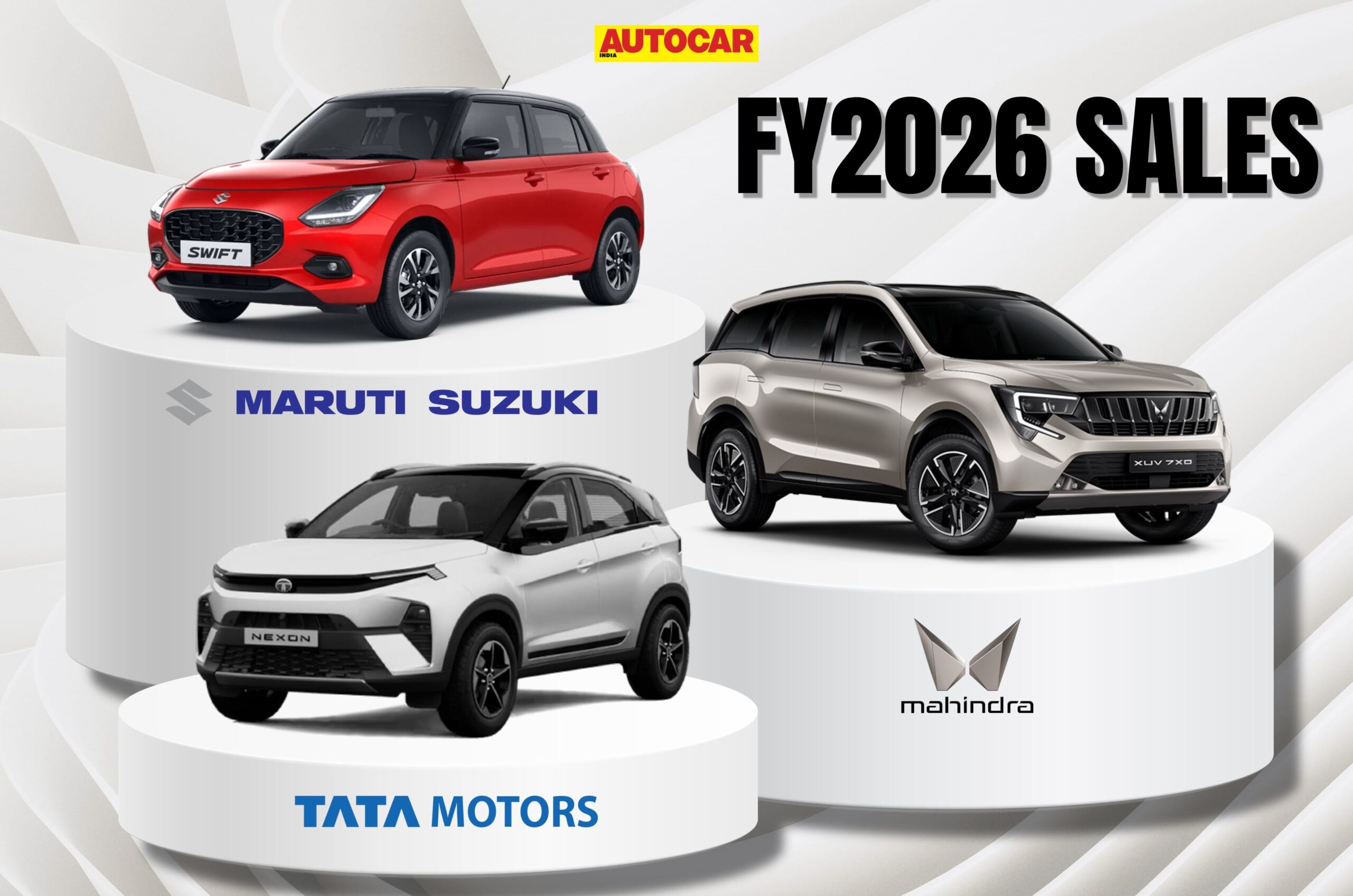
Maruti Suzuki has once again cemented its position as India’s top-selling automaker in the financial year 2026, a title it has held consistently. However, the automotive landscape has seen a significant reshuffling, with homegrown manufacturers Mahindra and Tata Motors making substantial gains, pushing perennial second-place holder Hyundai into fourth position.
Maruti Suzuki Maintains Pole Position with Robust Sales Growth
Maruti Suzuki India Limited reported impressive sales figures for FY2026, selling a total of 24,22,713 units. This represents a healthy 8 percent increase in overall volume compared to the 22,34,266 units sold in the previous financial year, FY2025. The company’s enduring success is largely attributed to its comprehensive product portfolio. This diverse range spans multiple vehicle segments and price points, from entry-level small cars like the WagonR and Swift to popular SUVs such as the Brezza and the Grand Vitara. This broad appeal allows Maruti Suzuki to cater to a vast spectrum of consumer needs and preferences across the Indian market.

The implementation of GST 2.0, which has made smaller, fuel-efficient cars even more accessible to buyers, has also provided a significant boost to Maruti Suzuki’s sales. These combined factors have enabled the company to not only maintain its leading position but also to expand its market share in a competitive environment.
Mahindra’s Aggressive Strategy Propels SUV Sales
Mahindra & Mahindra has emerged as a major gainer in FY2026, securing the second spot with a remarkable 6,60,276 units sold. This performance marks a significant 20 percent jump from its FY2025 sales of 5,51,487 units. A key driver behind Mahindra’s surge is its distinct product strategy, which focuses heavily on the SUV segment. This focused approach simplifies consumer choice and appeals strongly to a growing market segment that prioritizes ruggedness and performance.
Mahindra has also demonstrated a commitment to innovation, introducing modern electric vehicles (EVs) such as the BE 6 and BE 9e, which have quickly resonated with environmentally conscious buyers. Simultaneously, the company has kept its traditional internal combustion engine (ICE) lineup fresh and competitive, with models like the XUV 7XO garnering significant attention. Established best-sellers such as the Scorpio Classic and Scorpio N continue to be strong contributors to its overall sales volume.
Tata Motors Drives Growth with Diverse and Modern Line-up
Tata Motors has climbed to the third position in FY2026 sales, recording 6,41,587 units. This figure represents a solid 14 percent growth over its FY2025 sales of 5,56,263 units. Tata’s success can be attributed to its relatively diverse and contemporary vehicle range, which includes popular models like the Punch micro-SUV and the Nexon compact SUV. These vehicles have consistently performed well, contributing substantially to the company’s overall sales figures.
Similar to Mahindra, Tata Motors has also benefited from its expanding electric vehicle portfolio. While its EV contribution may not have been as dominant as its SUV segment in this period, it nevertheless played a role in driving overall volumes and showcasing the brand’s forward-looking approach. The company’s ability to offer a compelling mix of ICE and electric vehicles across different segments has been a key factor in its upward trajectory.
Hyundai Faces Sales Dip Amidst Shifting Market Dynamics
Hyundai Motor India experienced a slight downturn in FY2026, with total sales dipping by 2.3 percent to 5,84,906 units. This follows a stronger performance in FY2025, when the company sold 5,98,666 units. The Korean automaker’s sales champion remains the popular Creta SUV. Its compact and subcompact SUV offerings, such as the Exter and Venue, also continue to be significant volume contributors.

Additionally, fleet sales, particularly of the Grand i10 Nios hatchback and Aura sedan, are understood to have played a role in bolstering Hyundai’s overall sales figures during the financial year. However, the overall decline indicates a challenging market environment and increased competition from domestic players.
Toyota Maintains Consistency with Strong Growth
Toyota Kirloskar Motor has secured the fifth position in FY2026 sales, registering 4,06,081 units. This marks a substantial 20 percent growth compared to the 3,37,148 units sold in FY2025, mirroring the growth trajectory of Mahindra. Toyota’s performance has been bolstered by its strategic alliance with Maruti Suzuki. This partnership has enabled the introduction of badge-engineered models like the Glanza and the Urban Cruiser Hyryder, allowing Toyota to benefit from shared development costs and product synergies.
Beyond its collaborative models, Toyota’s in-house developed vehicles continue to attract a loyal customer base. Popular models such as the robust Fortuner SUV and the versatile Innova Hycross MPV consistently find strong demand in the market, contributing significantly to the company’s sustained sales momentum.