
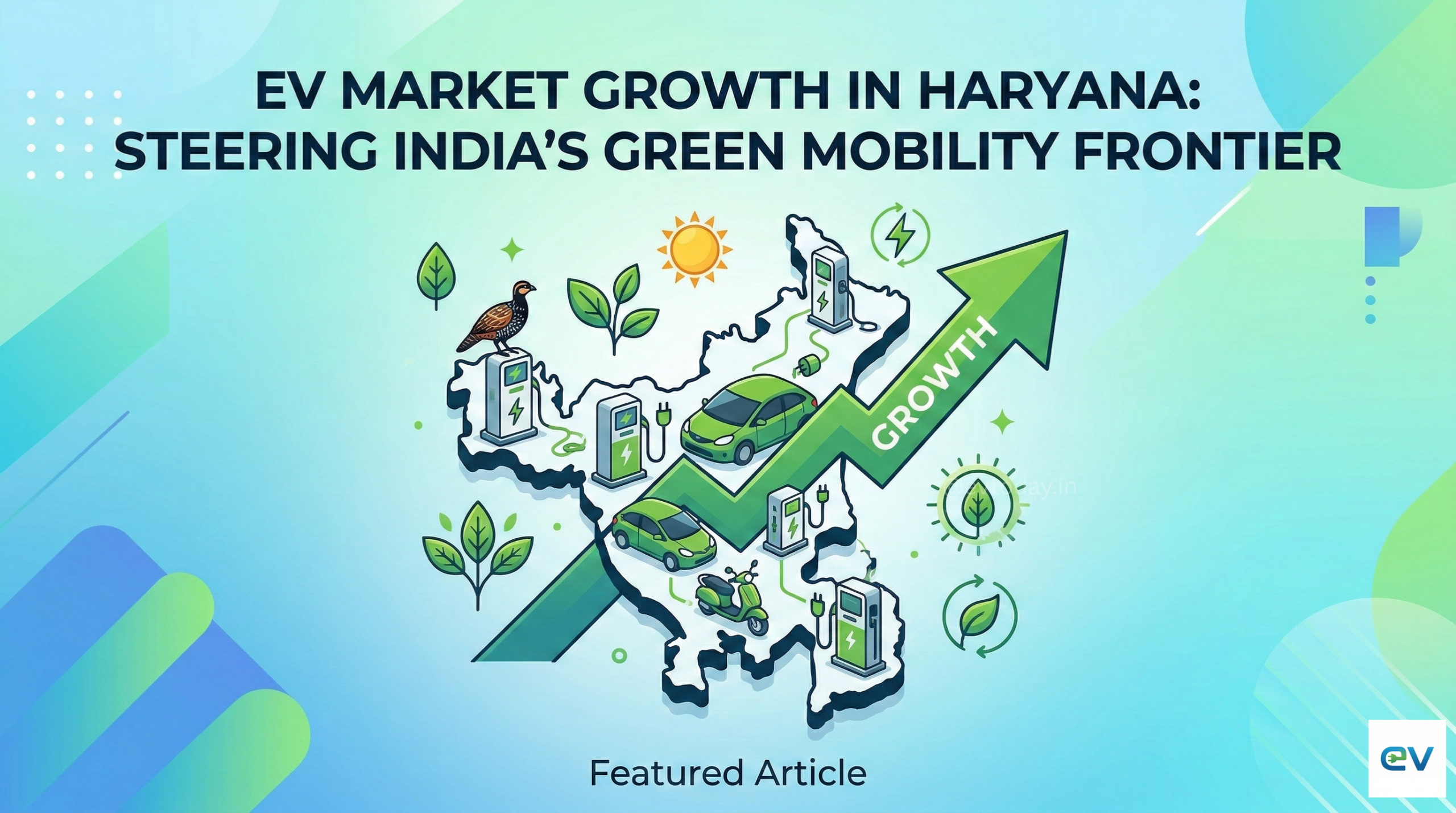
Electric vehicles are no longer a futuristic niche in India — they’ve become a central pillar of the country’s transport transformation. While national headlines often highlight metro hubs like Delhi or Bengaluru, northeastern states and industrial belts are quietly electrifying. Among them, Haryana has emerged as a strategic ground for EV adoption, infrastructure expansion, and manufacturing momentum.
From rural roads to urban expressways, Haryana’s EV journey reflects the broader shifts in India’s electric mobility landscape — shaped by policy support, rising consumer interest, charging challenges, and investment opportunities.
Haryana’s EV Ecosystem: Policy and Adoption
A Policy Framework with Purpose
Haryana’s electric vehicle ambitions are built on the Haryana Electric Vehicle Policy 2022, aimed at encouraging manufacturing and adoption of EVs across segments. The policy has sought to lower upfront costs, provide tax exemptions, and build charging infrastructure awareness.
Key components include:
- Purchase incentives including exemptions on registration fees and road tax.
- Supply-side benefits for manufacturers such as capital investment incentives and stamp duty reimbursement.
- Focus on jobs and industrial growth aligned with broader economic goals.
Despite a strong start, parts of the incentive structure (like the 15% subsidy on EVs between ₹15 lakh and ₹40 lakh) lapsed in 2024, prompting discussions on reinstatement — a step aimed at driving wider, middle-class adoption.
Market Uptake: How Fast Is Haryana Moving?
EV sales in Haryana have shown promising signs, especially in lower-cost segments:
- Registrations of electric vehicles in the state more than doubled in 2022–23 compared with the previous year — a clear indicator of early demand.
- Much of this growth has been led by two-wheelers and e-rickshaws, reflecting affordability and practical use cases.
However, while personal electric cars have grown, they still lag well behind the two- and three-wheeler segments, pointing to a gradual rather than explosive adoption curve.
Infrastructure: Building the Pathway for EVs
Charging Infrastructure: Progress and Gaps
Charging infrastructure is widely acknowledged as the backbone of EV adoption. Although Haryana has made notable efforts, it still trails some other states in the density of public chargers:
- As of late 2023, Haryana had around 454 public charging stations, accounting for about 2.9% of those in India.
This figure points to both progress and a clear need for expansion, especially across smaller towns and key highway corridors.
Haryana’s New and Renewable Energy Department serves as the nodal agency for setting up EV chargers, aligning state efforts with national standards and guidelines.
Recent Policy Push: EV Charging Station Policy 2025
Recognizing these challenges, the state introduced a new EV Charging Station Policy in 2025, designed to:
- Simplify approvals and attract investment.
- Offer lease land at affordable rates for charging hubs.
- Encourage private players, industry clusters, and community spaces to host chargers.
This is a positive sign that infrastructure expansion is no longer an afterthought but a strategic priority.

Industry and Manufacturing Momentum
Haryana is not just adopting EVs — it’s producing components. Homegrown companies are leveraging the state’s location and industrial strengths:
- Servotech, a significant EV charger component manufacturer, operates in Haryana with export potential and a growing facility.
- EV startups like Okinawa Autotech have roots in Gurgaon, highlighting how the state feeds into broader supply chains.
This industrial layer strengthens Haryana’s role in the EV ecosystem — connecting manufacturing, assembly, and deployment.
Challenges on the Road Ahead
It’s not all smooth driving:
- Charging Infrastructure Disparity: Despite progress, the geographic spread of chargers remains uneven across districts. Allocation of chargers every 50 km on highways (a policy goal) still needs full implementation.
- Consumer Awareness & Range Concerns: Range anxiety and upfront cost still deter some buyers, especially for personal cars.
- Financing and Loans: Experts suggest that alongside subsidies, collaboration with financial institutions for low-interest loans could boost consumer confidence — a tactic that has worked elsewhere.
Key Highlights: Haryana EV Market Snapshot
- EV Registrations Rising: Registrations in the state more than doubled in recent years, led by two/wheeled EVs.
- Public Charging Stations: Around 454 chargers, forming a base for expansion.
- Policy Support: Incentives under Electric Vehicle Policy 2022 and renewed focus on charging stations in 2025.
- Manufacturing Footprint: Local and national EV ecosystem firms are boosting production capacity.
- National Context: India’s overall EV adoption is rising rapidly with over 2.3 million EV sales in 2025 (8% of all new vehicles) — signaling a supportive macro environment.
Expert Insights: What It All Means
Infrastructure First: A robust charging network is essential. Haryana’s 2025 policy — especially its simplified approvals and land incentives — could be a game changer if executed swiftly.
Affordability Matters: Incentives work best when they bridge the gap between aspiration and affordability. Restoring and expanding subsidy schemes for middle-income EV buyers will be critical.
Industrial Growth: Haryana’s local manufacturing — from chargers to EV components — positions it as more than just a consumer market; it’s part of the production value chain.
Consumer Awareness: Public strategies must now focus on educating consumers and fleet operators about EV total cost of ownership, long-term savings, and environmental benefits.
Conclusion
Haryana’s EV market growth might not grab national headlines like Delhi or Bengaluru, but it represents a ground-level transformation — one where policy, infrastructure, and industry converge to push India toward cleaner transport.
From doubled registrations to an emerging charging policy and manufacturing presence, the state’s journey mirrors the evolution of India’s larger EV story — steady, strategic, and increasingly consumer-centric.
With continued focus on charging access, financial incentives, and industry partnerships, Haryana could soon become a microcosm of India’s EV future — where green transport is accessible, reliable, and economically viable for all citizens.
FAQs
1. What incentives does Haryana offer for EV buyers?
Haryana’s EV policy includes tax exemptions, registration fee waivers, and, in some phases, purchase subsidies, especially for two and three-wheelers.
2. How many EV charging stations are there in Haryana?
As of late 2023, the state had around 454 public charging stations.
3. Which EV segments are growing fastest in Haryana?
Two-wheelers and e-rickshaws have shown the most rapid adoption, with personal electric cars growing steadily but from a smaller base.
4. Is Haryana focusing on EV manufacturing?
Yes — EV component makers and EV technology firms operate in the state, contributing to the broader industry ecosystem.
5. What are the main challenges facing EV adoption in Haryana?
Charging infrastructure spread, upfront costs, and consumer awareness remain the key hurdles despite progress.