
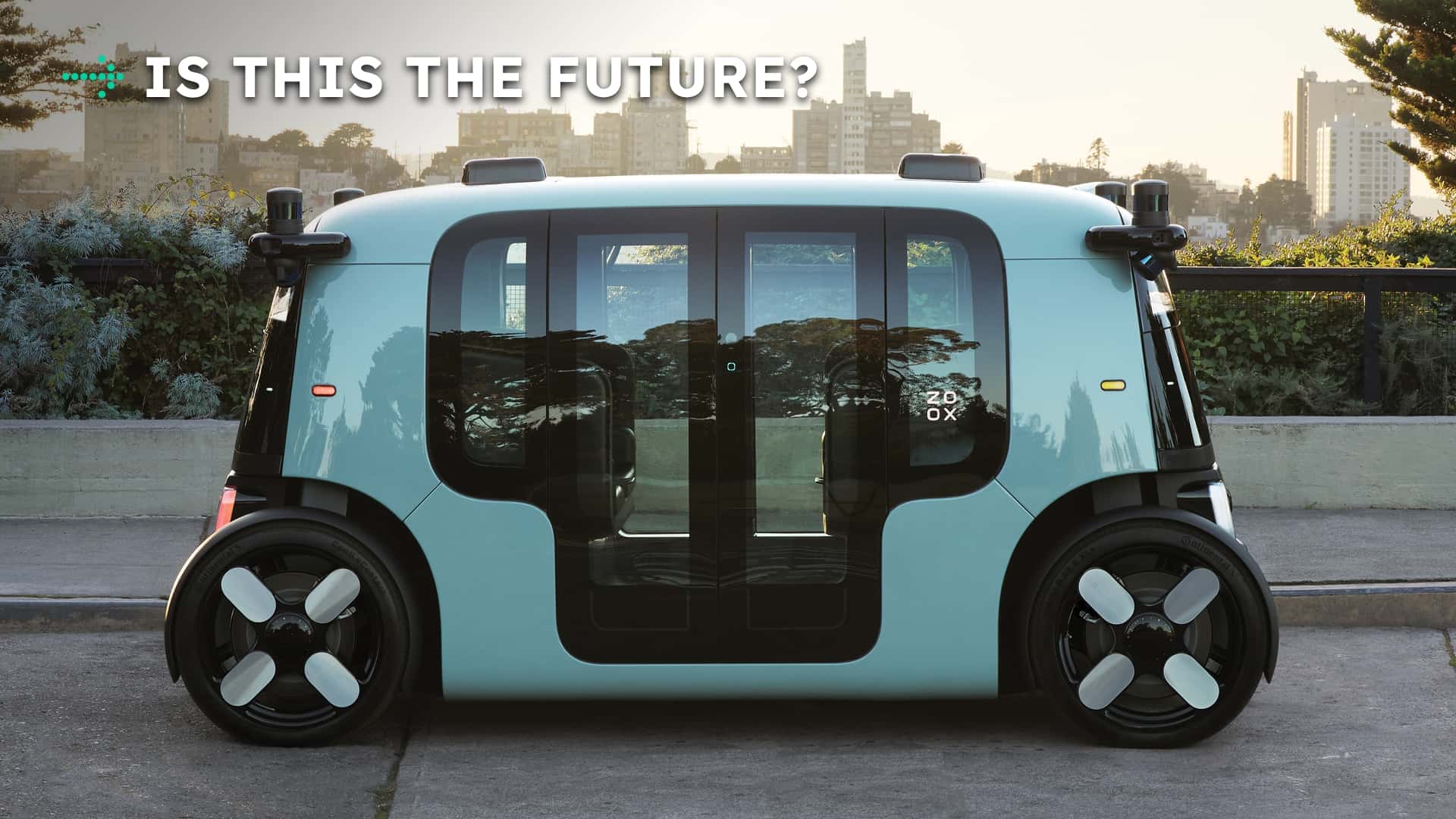
Riding in a vehicle that drives itself is an experience unlike any other. The sensation intensifies when the vehicle lacks a traditional steering wheel or pedals, and its design resembles a compact appliance rather than a conventional car. This is precisely the experience offered by Amazon’s Zoox robotaxi, a vehicle that challenges traditional notions of automotive design and functionality.
Firsthand Experience in Las Vegas
During the recent CES in Las Vegas, Abigail Bassett had the opportunity to ride in one of Zoox’s autonomous vehicles. The experience offered a glimpse into one of the most ambitious projects in the self-driving sector, potentially positioning Zoox as a significant competitor to established players like Google’s Waymo.
The Zoox Vehicle: Design and Interior
The boxy, toaster-shaped vehicle arrives at the curb, and a technician uses a tablet to open its unique sliding side doors, reminiscent of public transport. Inside, passengers are greeted by a spacious, communal cabin. Four passengers can sit facing each other, offering ample room to stretch out. The seats, an upgrade from earlier, firmer versions, provide a comfortable, albeit firm, seating arrangement.
However, the design presents some trade-offs. The vehicle lacks a traditional front or rear, and the high seating position offers limited outward visibility of the road ahead. The majority of the view comes from the side windows, which can make it challenging to anticipate potential hazards. Furthermore, the absence of a trunk means passengers must be mindful of luggage space.
Zoox’s Vision: Efficiency and Safety
Jesse Levinson, CTO and co-founder of Zoox, explained the company’s motivation for developing robotaxis. He highlighted the inefficiency of individual car ownership, where vehicles often sit idle for most of the time. Levinson stated, “People don’t really think about that because we’re so used to just car culture.” He pointed out that in the U.S., many families own multiple cars that occupy garage space rather than being utilized.
“It’s really wasteful, not just economically but also environmentally,” Levinson added. “The question is, can we use our resources more efficiently? The reason why Zoox is compelling to me is that we have the opportunity to both make a way better customer experience for moving around our cities and really utilize our resources on this planet more efficiently, all while saving lots of lives from a safety point of view.”
The Autonomous Ride: Cautious but Secure
Initiating a ride is done via an interior touchpad, which controls various functions including audio, lighting, and ride status. Once underway, the vehicle operates autonomously, adhering to speed limits and navigating traffic. The ride is characterized by conservative driving decisions, which can sometimes feel overly cautious, akin to a new driver.
In a construction zone, the Zoox vehicle stopped abruptly before a closed lane, waiting for a sufficient gap in traffic to signal and merge. This maneuver, while safe, was less efficient than a human driver might execute, potentially causing delays during peak hours.
The vehicle is equipped with a 133 kW battery pack and multiple redundancies to ensure operational safety. According to Zoox, the vehicle can operate for approximately 16 hours on a single charge and reach speeds of up to 75 mph. However, without visible gauges or a steering wheel, passengers have no direct indication of the vehicle’s speed.
Levinson commented on the integration of safety features, stating, “We’ve been able to put more safety and more redundancy and more customer features in this vehicle, knowing that we don’t have to be able to sell it for a consumer price point. We think that’s a really great product and a great service, and the best way to get this technology out there safely.”
During the ride, the Zoox navigated a traffic light scenario with a pedestrian, demonstrating patience and adherence to safety protocols. However, the scenario raised questions about how the vehicle would handle more complex maneuvers, such as a right turn on red.
The overall ride experience, while not jarring, involved some abrupt stops and a less-than-smooth traversal over potholes. These moments, combined with the vehicle’s conservative decision-making, created a sense of unease, though not outright fear. Compared to a ride with a human driver distracted by conversation, the Zoox offered a more focused and arguably safer, albeit less refined, journey.
The interior, while spacious, can become cramped with multiple passengers and luggage, especially given the lack of dedicated storage. The firm seats and the way the vehicle reacts to road imperfections contribute to a ride that is functional rather than luxurious.
Focus on Safety Amidst Challenges
Zoox attributes the cautious driving behavior to its primary focus on safety. Levinson explained, “The last few years at Zoox, we have been really focused on the safety case. You know, how do we put these vehicles on public roads with no safety driver and make sure they’re safer than a human? Now, it’s about expanding those geo fences, adding lots of great pick up and drop off locations, getting our first customers, but also making sure we can do that in a sustainable and economical way.”
Zoox has been conducting test rides in Las Vegas, Foster City, and San Francisco. The company plans to introduce limited semi-public rides in 2025, accessible initially to employees, their families and friends, and a select group of “Explorers” on an invite-only basis. A timeline for wider public availability remains undefined.
Industry Landscape and Future Prospects
Zoox’s development is occurring within a challenging and competitive autonomous vehicle market. The company has faced scrutiny regarding safety incidents involving its specialized Toyota Highlanders, leading to investigations by the National Highway Traffic Safety Administration (NHTSA) and a recall to address a sudden braking issue.
Additionally, Zoox’s practice of self-certification for its vehicles, a process unique among self-driving companies, has raised concerns among regulators. The economic viability of building bespoke autonomous vehicles is also a significant question, particularly in light of recent industry setbacks, such as the closures of GM’s Cruise and Argo AI.
Companies like Tesla are also entering the robotaxi space with their Cybercab, although timelines for its widespread deployment have historically been uncertain. Alphabet’s Waymo remains a leader, having partnered with Zeekr for its own autonomous vehicle, though its launch has faced delays.
Despite these challenges, Zoox continues to advance towards its goal of operating an autonomous taxi service. Levinson remains optimistic about the diverse approaches within the industry. “I think it’s great that there are multiple approaches out there,” he said. “Our personal view at Zoox is that the types of engineering and design and business choices you make—with a car that’s designed to sell to customers, versus a robotaxi that is really designed to be owned and operated as a fleet—are pretty different. We’ll see what happens with our fellow travelers.”