
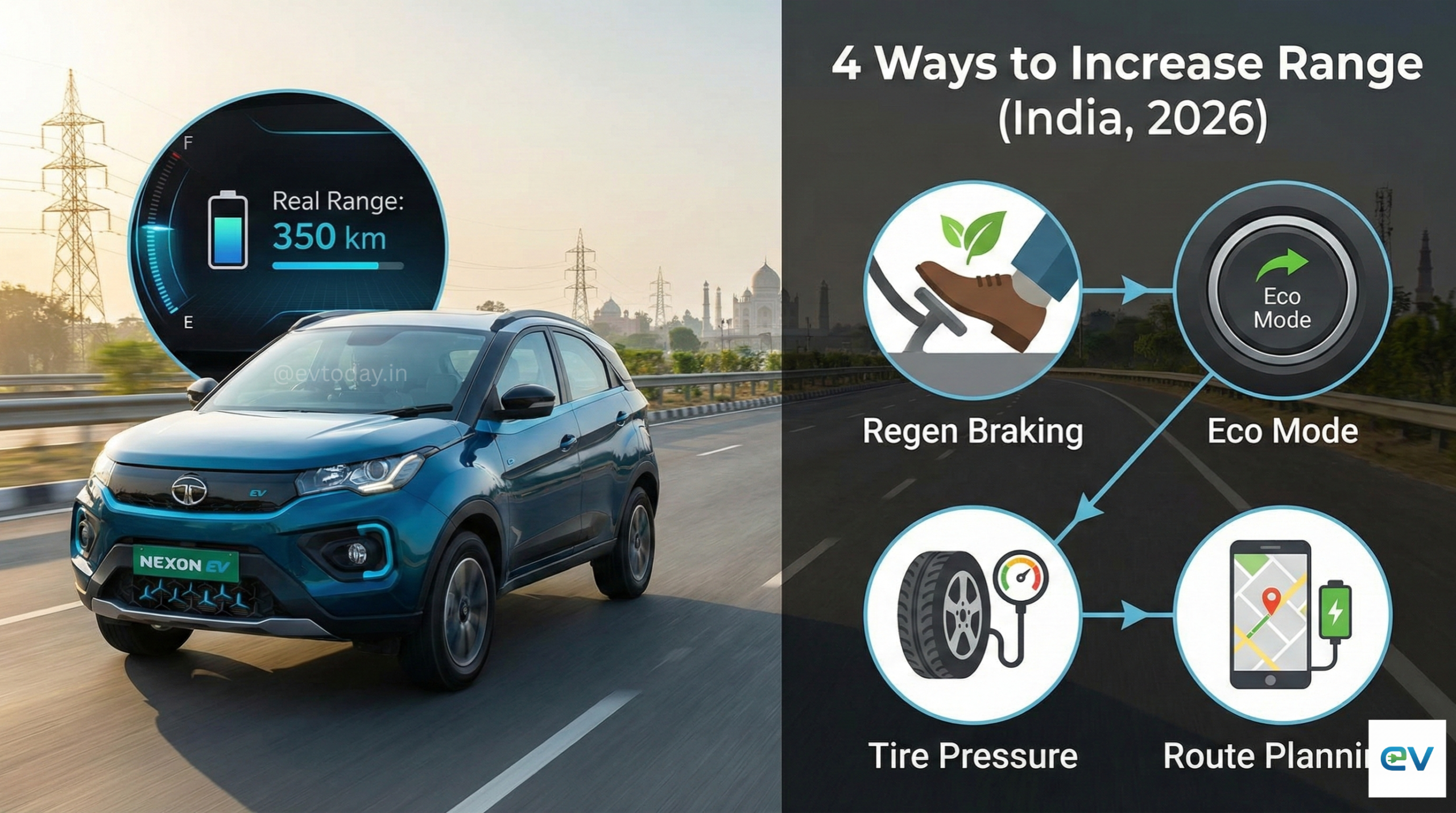
Electric SUVs are increasingly popular in India, and one name that almost always comes up is the Tata Nexon EV. But many buyers focus only on the claimed range numbers and miss the more important fact — how far it actually goes in real-world driving. In this article, we break down the Nexon EV’s real range, differences between ARAI and actual figures, battery specs, charging details, tips to improve range, and much more — so you can make a data-based buying choice.
Brief Introduction of Tata Nexon EV
The Tata Nexon EV is one of India’s best-selling electric SUVs thanks to its balance of price, range, and features. It appeals to buyers switching from petrol/diesel SUVs with a reasonable real-world electric range, strong build quality, and practical size for both city and occasional highway use. Its success also comes from Tata Motors’ widespread service network and trust in the Indian market.
Tata Nexon EV Range in KM (ARAI Claimed)
The Nexon EV comes in two battery options:
- 30 kWh (Medium Range) — Claimed ARAI range around 325 km on a full charge.
- 45 kWh (Long Range) — Claimed ARAI range up to 489 km on a full charge.
These numbers are from standard laboratory tests under controlled conditions and are intended to offer a comparable metric across cars allowed by regulatory bodies.
Difference Between ARAI Range and Real-World Range
The ARAI range is measured in a lab with ideal conditions: stable speeds, smooth roads, optimal temperature, and no extra load — much different from real life.
In actual driving, factors like traffic, air-conditioning use, highway speeds, gradients, tyre wear, and city stop-start can reduce the range significantly.
Tata Nexon EV Real-World Range (India)
Unlike the ARAI claim, real-world tests and manufacturer estimates suggest more practical figures:
- The 45 kWh long-range variant typically delivers about 350 – 370 km on a single charge in mixed city and highway driving conditions.
- The 30 kWh medium-range variant often delivers around 200 – 230 km in everyday use depending on conditions.
These real-world figures reflect normal Indian traffic, varied road conditions, and typical climate usage.

In Which Situations Does the Range Reduce?
The range will drop faster when:
- You drive at high highway speeds with little traffic regeneration.
- You climb steep or hilly roads with a heavier load.
- You run the AC/heater continuously in very hot or cold weather.
- You accelerate hard and brake late without using regenerative braking.
All of these increase energy use and lower net range.
In Which Situations Does the Range Improve?
You can stretch the Nexon EV’s range by:
- Using Eco mode or milder drive modes.
- Maintaining smooth acceleration and braking.
- Maximising regenerative braking to recover energy.
- Keeping tyres at correct pressures and reducing excess weight.
These small habits can improve range by about 5–10 % overall, which can add up big over months of daily driving.

Battery Capacity and Technology
The Nexon EV uses lithium-ion battery technology in both variants:
- 30 kWh pack in the Medium-Range model.
- 45 kWh pack in the Long-Range model.
The 45 kWh battery is currently backed by Tata Motors with an extended or lifetime battery warranty in some programmes — boosting confidence against degradation and replacement costs.
Battery Variant Comparison (MR vs LR)
| Variant | Battery (kWh) | ARAI Range | Typical Real-World Range |
|---|---|---|---|
| Medium Range (MR) | ~30 kWh | ~325 km | ~200 – 230 km |
| Long Range (LR) | ~45 kWh | ~489 km | ~350 – 370 km |
If your daily commute is under 40–60 km, even the medium range model will be practical. If you do longer city or occasional highway runs, the long-range 45 kWh version is a better choice.
Charging Time and Charging Options
Charging time depends on the charger type:
- AC Wall Box (7.2 kW) — Full charge from 10 % to 100 % in around 6–7 hours.
- DC Fast Charger (60 kW) — 10 % to 80 % in about 40 minutes.
- Slow charging via a household plug may take longer (up to 10–15 hours), so wall box/home chargers are recommended for convenience.
Home Charging Cost (India)
If your household electricity charge is around ₹8 per unit, then:
- Charging a 45 kWh battery fully costs roughly ₹360–₹400.
- With a real-world range of 350 km, the effective cost becomes about ₹1 per km — far less than fuel costs for a petrol SUV.
Tata Nexon EV Power and Performance
The 45 kWh long-range variant produces around 142 PS of power and 215 Nm of torque, and claims a 0-100 km/h time of about 8.9 seconds.
The SUV also offers modes like Eco, City, and Sport — with Sport mode giving higher responsiveness but slightly lower range.
4 Practical Tips to Increase Range
- Drive in Eco or City mode instead of Sport.
- Avoid sudden acceleration and heavy braking.
- Keep tyres properly inflated and aligned.
- Keep battery above 20 % and avoid deep discharges.
These simple steps help both your daily range and long-term battery health.
Petrol Nexon vs Nexon EV Range Comparison (Cost)
If a petrol Nexon delivers 15–17 km per litre and petrol costs around ₹100 per litre, the running cost is roughly ₹6–₹7 per km.
In contrast, the Nexon EV running cost in electricity works out close to ₹1 per km — a massive savings over time for regular city commuters.
Who Should Buy the Tata Nexon EV?
✔ You drive under 50–70 km daily most days
✔ You have home or workplace charging access
✔ You want to reduce fuel bills and running costs
✔ You value quiet, smooth driving and modern tech
If you routinely travel long highways without reliable public chargers, or value pure long-range touring performance, also consider trip planning or other EV options.
Conclusion
In India, the Tata Nexon EV remains one of the most practical electric SUVs in 2026 when you focus on real-world usage. While Tata claims up to 489 km of range, most users can expect around 350–370 km from the long-range 45 kWh version in typical city and highway driving. The medium range version delivers less but is still sufficient for many commuting needs.
Before buying, always consider your daily usage, charging availability, and driving style. Understanding these will ensure you get a car that aligns with your needs — not just the claimed figures.
FAQs
1. What is the real full-charge range of Tata Nexon EV?
In real Indian driving, the long-range 45 kWh model typically delivers around 350–370 km per charge, lower than the claimed 489 km.
2. Does AC affect Tata Nexon EV range in kilometers?
Yes — running the air-conditioner uses battery power and can reduce range by a few percent, especially in heavy use.
3. Why does Tata Nexon EV range decrease in winter?
Battery efficiency drops in colder weather and the heater draws extra power, leading to a 5–10 % reduction in range.