
Small, truly affordable electric SUVs, a segment largely absent from U.S. showrooms, are gaining traction in international markets, particularly in India. While China’s electric vehicle (EV) market often dominates headlines, India is steadily expanding its own electrification efforts, with local manufacturers leading the charge.
India’s Growing Automotive Landscape and Mahindra’s EV Ambitions
India stands as the world’s third-largest auto market by volume, trailing only China and the United States. Although its EV market is smaller than China’s, it is experiencing rapid growth, mirroring trends seen in Southeast Asian nations like Thailand and Vietnam. This burgeoning market is largely propelled by domestic automotive giants.

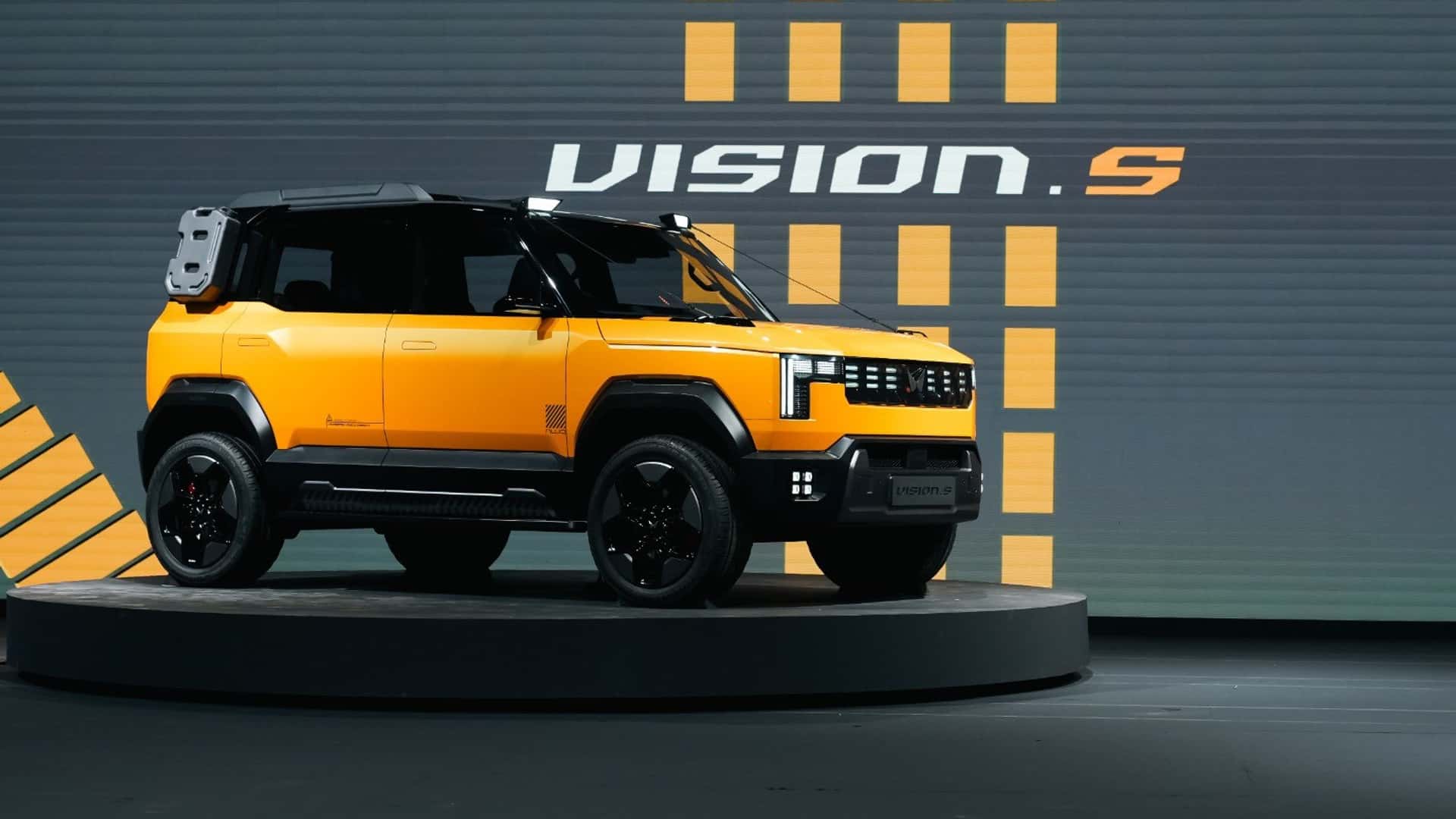
Mahindra & Mahindra, one of India’s leading automakers, recently unveiled four new electric SUV concepts. These concepts, named Vision S, Vision X, Vision T, and Vision SXT, are designed to be compact and are expected to be built on a versatile “multi-energy” platform dubbed NU IQ. This platform is engineered to accommodate both traditional internal combustion engines and fully electric powertrains.
Innovative Platform and Design Philosophy
Mahindra has not yet disclosed specific details regarding the motors or power output for these concepts. However, the company confirmed that the production models will utilize lithium-iron-phosphate (LFP) battery technology, likely sourced from China. A key innovation highlighted by Mahindra is that its new platform will reportedly be the world’s first to feature a flat floor, even in its combustion engine variants.
The NU IQ platform is designed to support both front-wheel and all-wheel-drive configurations. It is also being developed with export potential in mind, catering to left-hand-drive markets. Significant emphasis is being placed on software integration, connectivity, and advanced digital features for these vehicles. The first production model based on this platform is anticipated to launch in India in 2027.
Distinct Design Concepts for Diverse Needs
The design of the concepts, revealed on a Friday, has been a focal point. The Vision S and Vision T models bear a resemblance to iconic vehicles like the Land Rover Defender and Ford Bronco, featuring boxy proportions and a C-pillar-mounted exterior gear carrier. The Vision S is envisioned as a compact urban SUV, while the Vision T is positioned as a more capable, larger off-roader.
Local news reports suggest that the Vision T is likely to form the basis for an electric version of Mahindra’s popular Thar model, tentatively named the Thar Electric. The current Mahindra Thar is a well-regarded gasoline-powered off-road SUV in India, and its electric counterpart could be seen as India’s equivalent to Ford electrifying its Bronco. For context, electric and plug-in hybrid Ford Bronco variants exist in China but are not yet available in the U.S. market.
The Vision X concept is presented as a compact family crossover, designed for everyday utility. Meanwhile, the Vision SXT is styled as a lifestyle-oriented off-roader, characterized by features such as dual rear-mounted spare tires, robust side body cladding, and protective skid plates.
Compact Dimensions and U.S. Market Relevance
A notable aspect of these concepts is their compact size. The dimensions range from 3,990 millimeters (approximately 157 inches) to 4,320 mm (approximately 170 inches) in length. In terms of size, they align more closely with vehicles like the Chevrolet Bolt EV or the Toyota Corolla Cross, rather than the larger SUVs commonly offered in the United States.
Mahindra has a demonstrated history of successfully transitioning concepts into production vehicles. The company previously showcased two futuristic electric SUV concepts, and within two years, production versions resembling those concepts—the BE 6 and XEV 9E—were launched. These production EVs retained much of the concept’s design, with modifications primarily made for regulatory compliance.
These existing models, built on dedicated EV platforms, incorporate Qualcomm Snapdragon chipsets and offer battery pack options of 59 kWh or 79 kWh. They claim a range of up to 500 kilometers (approximately 310 miles), a figure that might be considered optimistic by Western standards, and support peak charging speeds of 175 kW.
Affordability and Global EV Market Dynamics
In India, the BE 6 and XEV 9E are priced between $25,000 and $30,000, positioning them as premium EVs within that market. However, this price bracket is significantly lower than the average EV price in the U.S., which stood at nearly $56,000 in July, according to data from Cox Automotive.

The progress of Indian automakers is notable. Companies like Tata Motors, owner of Jaguar Land Rover, and Mahindra, owner of Italian design firm Automobili Pininfarina, are making significant strides. Additionally, Bajaj Auto, a major player in two- and three-wheelers, parent to Austrian motorcycle brand KTM and Swedish brand Husqvarna, demonstrates the global reach of Indian automotive expertise.
India’s EV market, while dominated by two- and three-wheelers, is expanding. The country also boasts a substantial number of electric public transport buses, outnumbering those found in many U.S. cities, with significant deployments observed in Delhi and Mumbai.
Mahindra’s latest concepts underscore a growing trend: Indian automakers are proving that electric SUVs can be not only affordable but also stylish, technologically advanced, and feature-rich, potentially reshaping expectations for electric vehicles globally.