
Key Takeaways
- Nissan is re-entering the U.S. hybrid market with the Rogue Hybrid e-Power, slated for a late 2026 arrival.
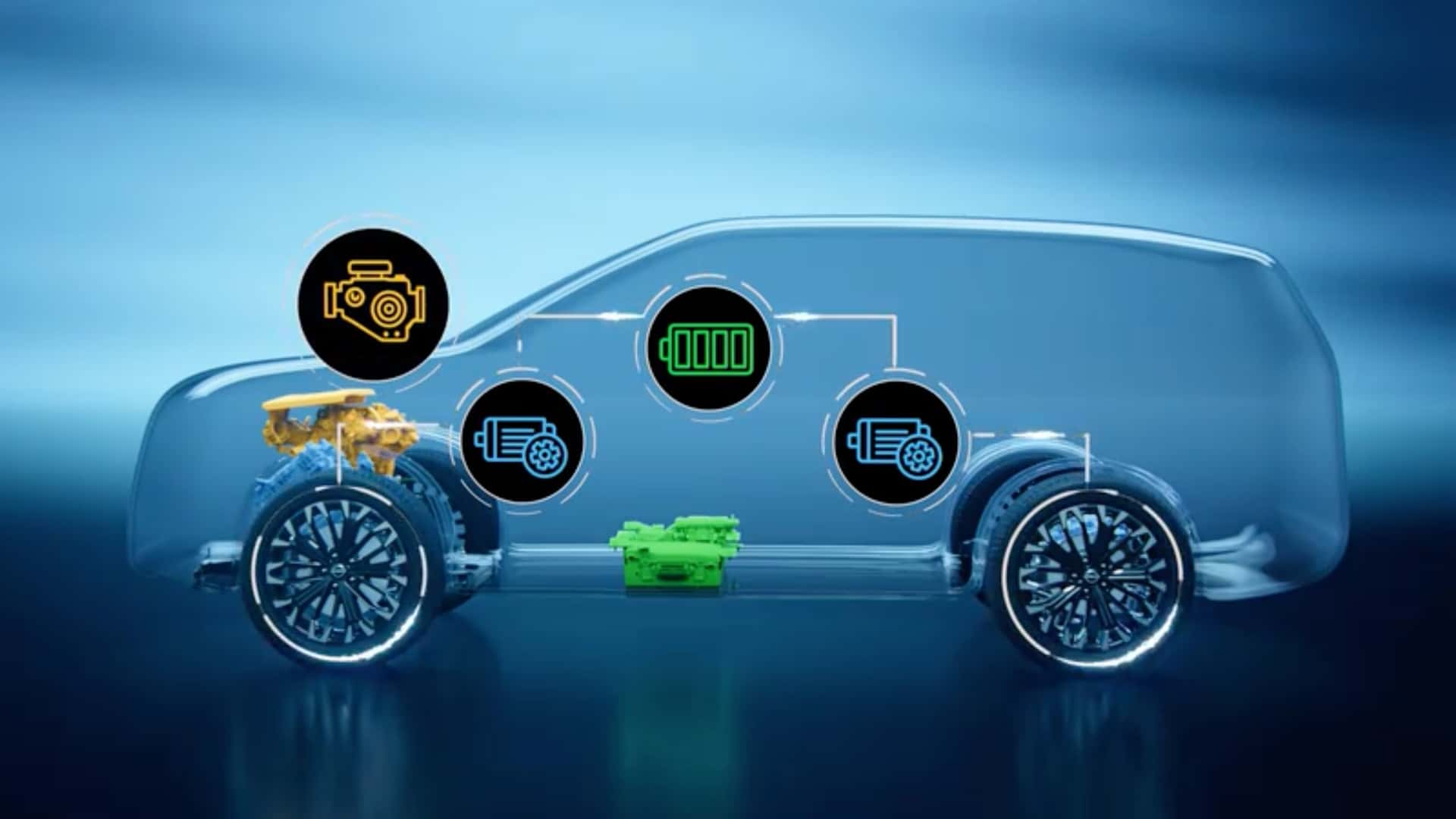
- Unlike traditional hybrids from Toyota and Honda, the e-Power system functions as a pure series hybrid, where the gasoline engine solely generates electricity to power the electric motors.
- This setup aims to provide an electric-vehicle-like driving experience with the convenience of a gasoline-powered generator, avoiding range anxiety.
- Nissan projects fuel economy exceeding 40 miles per gallon, competitive with rivals like the Toyota RAV4 Hybrid.
- The e-Power system is a critical component of Nissan’s broader turnaround strategy, addressing declining sales in key markets like China and the U.S.
Nissan’s Strategic Hybrid Re-entry with e-Power Technology
Nissan is set to make a significant return to the U.S. hybrid market with the upcoming Rogue Hybrid e-Power, a model confirmed for a late 2026 launch. This move marks a strategic pivot for the automaker, aiming to capture a segment long dominated by competitors like Toyota and Honda.
For years, Nissan has largely steered clear of offering hybrid vehicles in the United States. This absence meant missing out on substantial sales in a booming segment, as models like the Toyota RAV4 Hybrid and Honda CR-V Hybrid have achieved hundreds of thousands of sales. The introduction of the Rogue Hybrid e-Power is integral to Nissan’s ambitious turnaround plan, designed to reverse declining profits and sales in critical markets such as China and the U.S.
While the e-Power system has been available internationally for several years, including in Europe, Japan, and Australia, its arrival in the U.S. signifies a new chapter for American consumers seeking electrified vehicle options. It is important to distinguish this upcoming model from the recently introduced plug-in hybrid Rogue, which is a rebadged Mitsubishi Outlander PHEV. The forthcoming Rogue e-Power represents a novel approach to hybrid technology for the U.S. market.
Understanding the Unique Series Hybrid Architecture
The core differentiator of Nissan’s e-Power system lies in its pure series hybrid architecture. This configuration stands in contrast to the parallel or series-parallel hybrid systems commonly found in hybrids from Toyota, Hyundai, and Honda. In those conventional setups, the gasoline engine and electric motor are mechanically linked to the wheels, operating either together or independently based on driving demands.
In a pure series hybrid, the gasoline engine’s role is exclusively to generate electricity. It never directly drives the wheels. Instead, it powers an electric motor that is solely responsible for propulsion. This design principle allows the vehicle to operate much like an electric vehicle (EV) but is powered by a gasoline engine acting as an onboard generator, eliminating the need for external charging and thus avoiding range anxiety.
EV-Like Driving Experience
Ponz Pandikuthira, Chief Product & Planning Officer at Nissan Americas, elaborated on this design philosophy during an interview at the New York International Auto Show. “The biggest reason for pursuing series instead of parallel is we want the powertrain to be primarily electric,” Pandikuthira stated.
This approach leads to what some automakers refer to as extended-range electric vehicles (EREVs). However, the Nissan Rogue e-Power differs from EREVs developed by other manufacturers that focus on large battery packs and extensive pure electric range with fast-charging capabilities. The Rogue’s system prioritizes the convenience of a gasoline-powered generator.
Performance and Efficiency Projections
Nissan anticipates that the Rogue Hybrid e-Power will achieve impressive fuel economy figures. Pandikuthira projected that the vehicle will deliver fuel efficiency exceeding 40 miles per gallon. This level of performance is expected to place it directly competitive with established rivals such as the sixth-generation Toyota RAV4 Hybrid and offer an advantage over the Honda CR-V Hybrid.

While official EPA figures for the upcoming Rogue Hybrid are yet to be released, these projections indicate Nissan’s confidence in the e-Power system’s efficiency capabilities. The automaker is leveraging this technology to enhance its competitive standing in the U.S. market.
Innovative Powertrain and Mechanical Design
The e-Power system in the Rogue features an electric motor on each axle, providing the vehicle with all-wheel-drive capability. The primary generator is a modified version of the 1.5-liter, three-cylinder turbocharged engine found in the standard gasoline Rogue. This engine charges a 2-kilowatt-hour battery, which in turn powers the electric drive motors.
During testing in Japan, InsideEVs’ Interim Editor-in-Chief Mack Hogan described the system as smoother than most conventional hybrids, approaching the refinement of a pure EV. The system is designed to maintain operation even when the battery level is low. In such scenarios, the engine can directly supply power to the electric motors, ensuring uninterrupted driving performance.
The gasoline engine employed in the e-Power system is a significantly simplified version of the standard unit. High-cost components such as the variable compression turbo and other complex features have been removed to optimize cost and efficiency. This focused design ensures the engine performs its primary role effectively: generating electricity.
Efficiency and Technological Advancements
Pandikuthira emphasized the electric nature of the driving experience, stating, “The driving dynamics, the packaging, the acceleration, it’s all electric. The internal combustion engine never drives the wheels.” The absence of a traditional transmission also contributes to reduced costs and mechanical complexity.
Nissan claims that its third-generation e-Power system achieves remarkable thermal efficiency from its generator engine, reaching approximately 42%. This means nearly half of the energy derived from burning fuel is converted into useful work for moving the vehicle, a figure significantly higher than the roughly 20-25% thermal efficiency typically seen in most gasoline engines. The system’s calibration has also been enhanced for the third generation, featuring a more sophisticated algorithm designed to maintain a minimum charge level in the battery at all times.
“What we’ve done with this generation is optimize that algorithm that fills the battery and make sure the battery always has a buffer,” Pandikuthira explained. This buffer is intended to be particularly beneficial for American highways, where average driving speeds are generally higher than in Japan and Europe. However, the lack of a transmission might present a potential disadvantage at high speeds, as conventional transmissions allow engines in traditional hybrids to operate more efficiently on highways.
Nissan’s Crucial Moment in a Shifting Market
The performance of the Rogue Hybrid e-Power on U.S. interstates will be a key factor to assess later this year. Its arrival comes at a critical juncture for Nissan. With climbing gas prices and sustained demand for hybrid vehicles, the company is in urgent need of a successful product launch.
The standard Nissan Rogue saw a 11% decline in U.S. sales last year, totaling approximately 217,000 units. Despite this, it remains Nissan’s best-selling model in North America and one of the most popular SUVs nationwide. Introducing a hybrid variant addresses a key market demand and could significantly bolster the Rogue’s sales figures in the coming years.
Frequently Asked Questions
What is Nissan’s e-Power system?
Nissan’s e-Power is a unique series hybrid system where the gasoline engine acts solely as a generator to charge a battery, which then powers the electric motors that drive the wheels. This provides an EV-like driving experience without the need for plug-in charging.
How does the Nissan Rogue Hybrid e-Power differ from Toyota or Honda hybrids?
Unlike parallel or series-parallel hybrids from Toyota and Honda, the Rogue e-Power uses a pure series hybrid setup. In Nissan’s system, the gasoline engine never directly powers the wheels; it only generates electricity.
When will the Nissan Rogue Hybrid e-Power be available in the U.S.?
Nissan has confirmed that the Rogue Hybrid e-Power is scheduled to arrive in the U.S. market in late 2026.
What kind of fuel economy is expected from the Rogue Hybrid e-Power?
Nissan projects that the Rogue Hybrid e-Power will achieve fuel economy exceeding 40 miles per gallon, positioning it competitively within the hybrid SUV segment.
Is the Nissan Rogue Hybrid e-Power a plug-in hybrid?
No, the upcoming Rogue e-Power is not a plug-in hybrid. It functions as an extended-range electric vehicle (EREV) powered by a gasoline generator, meaning it does not require external charging.
What is the benefit of the e-Power system’s electric driving?
The primary benefit is an EV-like driving experience characterized by instant torque, smooth acceleration, and quiet operation. It also offers the convenience of a gasoline engine for extended range and rapid refueling, mitigating range anxiety.
Will the Rogue e-Power have all-wheel drive?
Yes, the e-Power system in the Rogue utilizes electric motors on each axle, enabling all-wheel-drive capability for enhanced traction and performance.