
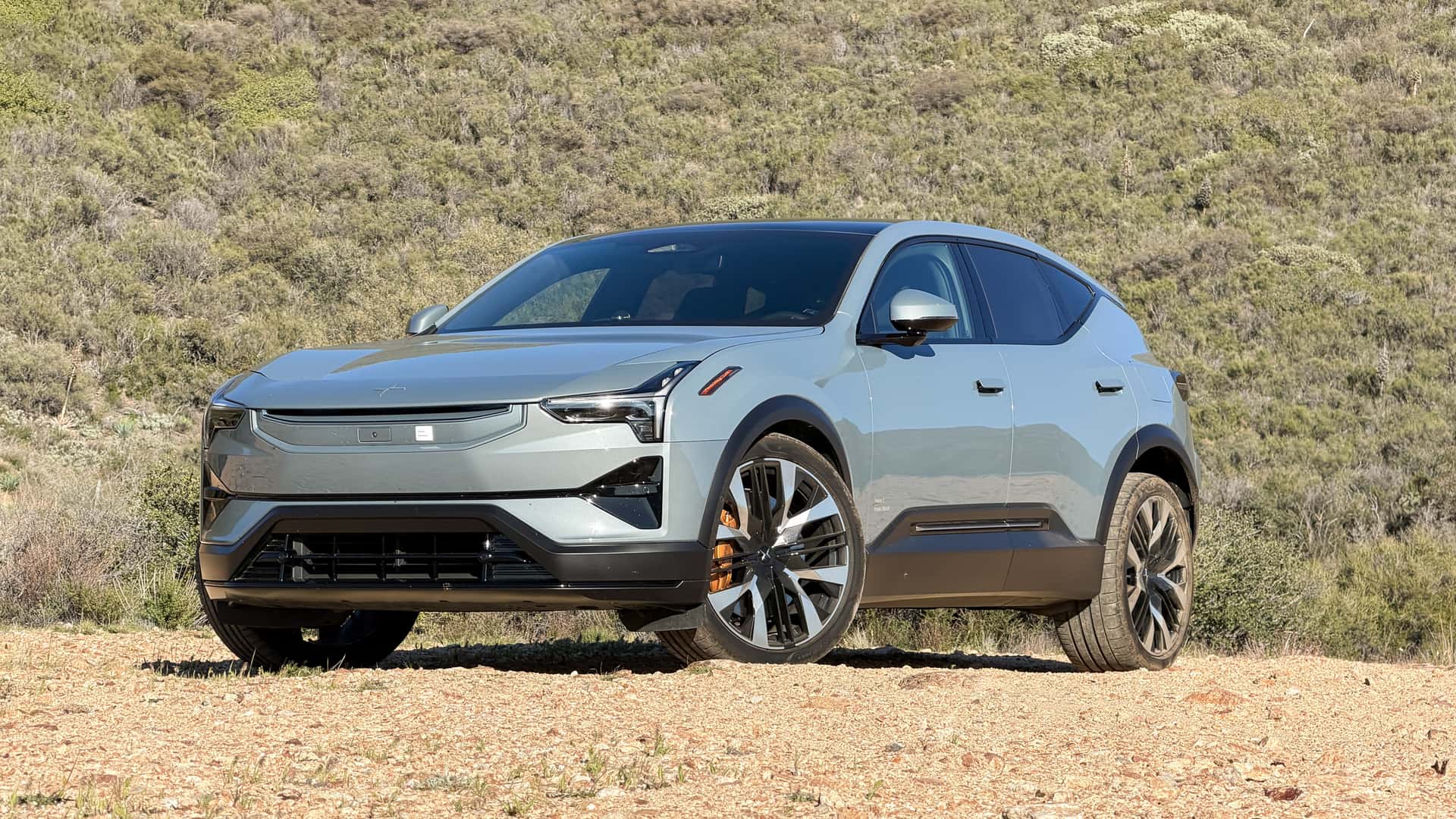
The Polestar 3, an electric SUV lauded for its driving dynamics, faces significant criticism due to a persistent lack of fundamental features and an often frustrating user interface, even more than a year after its initial launch. Despite the vehicle’s promise as a software-defined electric vehicle (EV), crucial functionalities, such as basic steering wheel controls for audio, remain unavailable, detracting from an otherwise enjoyable driving experience.
Unfulfilled Software Potential in a Promising EV
Launched in September 2024, the Polestar 3, along with its Volvo EX90 counterpart, was positioned as a groundbreaking software-defined vehicle (SDV). This designation signifies a shift in automotive manufacturing, where manufacturers maintain direct control over a vehicle’s software stack, enabling over-the-air (OTA) updates for everything from powertrain components to interior features. This approach, pioneered by Tesla, allows for continuous improvement, enhanced user experiences, and potentially lower long-term costs.
The promise of an SDV includes benefits like reduced wiring complexity, greater system interconnectivity, and the ability to update vehicle functions remotely. While brands like Mercedes-Benz and BMW are only now introducing their first SDVs, Polestar and Volvo aimed to be early adopters in the U.S. market. However, the Polestar 3 has struggled to fully realize this potential, leaving consumers with a vehicle that, despite its impressive driving capabilities, falls short in user experience.
Persistent Feature Deficiencies and Delayed Updates
A primary point of contention for the Polestar 3 is the continued absence of basic steering wheel controls for essential functions like adjusting music volume or skipping tracks. These features were physically present on the steering wheel, with buttons that could be pressed, but were inactive at launch, designated as “Coming Soon” via an OTA update. Eighteen months post-launch, these controls remain non-functional for their intended purpose. Polestar representatives have indicated that these functionalities will eventually be delivered through an OTA update, but only after the refreshed 2027 Polestar 3 model is released.
This prolonged delay for a core feature raises questions about the SDV strategy’s execution. The author notes, “If I have to wait for a mid-cycle update to get a core feature that should have been available on launch, how exactly is this a better experience?” This situation highlights a disconnect between the theoretical advantages of SDVs and the practical delivery of a polished user experience to consumers.
Frustrating Control Schemes and Interface Design
Beyond the missing features, the Polestar 3’s interior design presents its own set of usability challenges. The electric SUV features a significantly reduced number of physical buttons, a common trend in modern vehicles aimed at simplifying design and integrating functions into the infotainment system. However, Polestar’s implementation has led to compromises that negatively impact daily use.
One notable example is the driver’s window controls. Instead of dedicated buttons for all four windows, the driver has access to only two switches and a toggle button. This toggle switches the function of the existing switches between controlling the front and rear windows. The process to lower all four windows, a common action for many drivers, now requires multiple steps: operating both switches, toggling the control, and then operating the switches again. This design choice, seemingly implemented to save minimal cost, creates unnecessary complexity.
Similarly, climate and seat comfort controls, while accessible via the central touchscreen, require multiple taps and navigation through sub-menus. Unlike systems that allow for fluid finger-sliding adjustments, the Polestar 3’s interface demands precise tapping of small targets. This necessitates taking the driver’s eyes off the road for extended periods, which can be particularly problematic given the vehicle’s highly sensitive driver-monitoring system. The Polestar 3 has been observed to issue frequent alerts from this system, even during attempts to navigate its own complex controls.
The Cost of Compromise at a Premium Price Point
The Polestar 3 is positioned as a premium electric SUV, with prices ranging from approximately $68,900 to over $90,000. At this price point, consumers expect a seamless and intuitive user experience. The author argues that the compromises in the vehicle’s design and functionality are not justified by its price tag.
The core selling proposition of an SDV is meant to be a superior, continually improving software experience and potentially lower costs due to simplified hardware. However, the Polestar 3’s current iteration, with its missing features and cumbersome controls, fails to deliver on this promise. The necessity of navigating through multiple screens for basic functions, such as selecting drive modes or even opening the trunk, further adds to the driver’s cognitive load.
Signs of Improvement and Future Outlook
Despite the current frustrations, there is a clear path toward improvement for the Polestar 3. The fundamental advantage of an SDV is the ability for manufacturers to enhance the vehicle post-purchase. Polestar is already offering a free upgrade to a more powerful Nvidia Drive AGX Orin central computer for all Polestar 3 owners. This upgrade is expected to enable a smoother and more responsive software experience.
Furthermore, the upcoming 2027 model year refresh will introduce significant enhancements, including an 800-volt architecture for faster charging times and, crucially, the factory integration of functional steering wheel buttons. Polestar also indicates a broader strategic shift towards incorporating more physical controls in future designs, acknowledging the user demand for tactile feedback and intuitive operation. This move reflects a growing understanding within the automotive industry that a balance between digital integration and physical controls is key to user satisfaction.
The author concludes with a cautionary note for consumers: “you should never buy a car on a promise of what it will be like tomorrow. You have to wait until its good enough today, and treat updates as a nice bonus.” The experience with the Polestar 3 underscores the importance of evaluating a vehicle based on its current capabilities, rather than relying on future software updates to rectify fundamental shortcomings. While the Polestar 3 offers a compelling driving experience, its overall usability is significantly hampered by design choices and feature delays that detract from its premium positioning.