
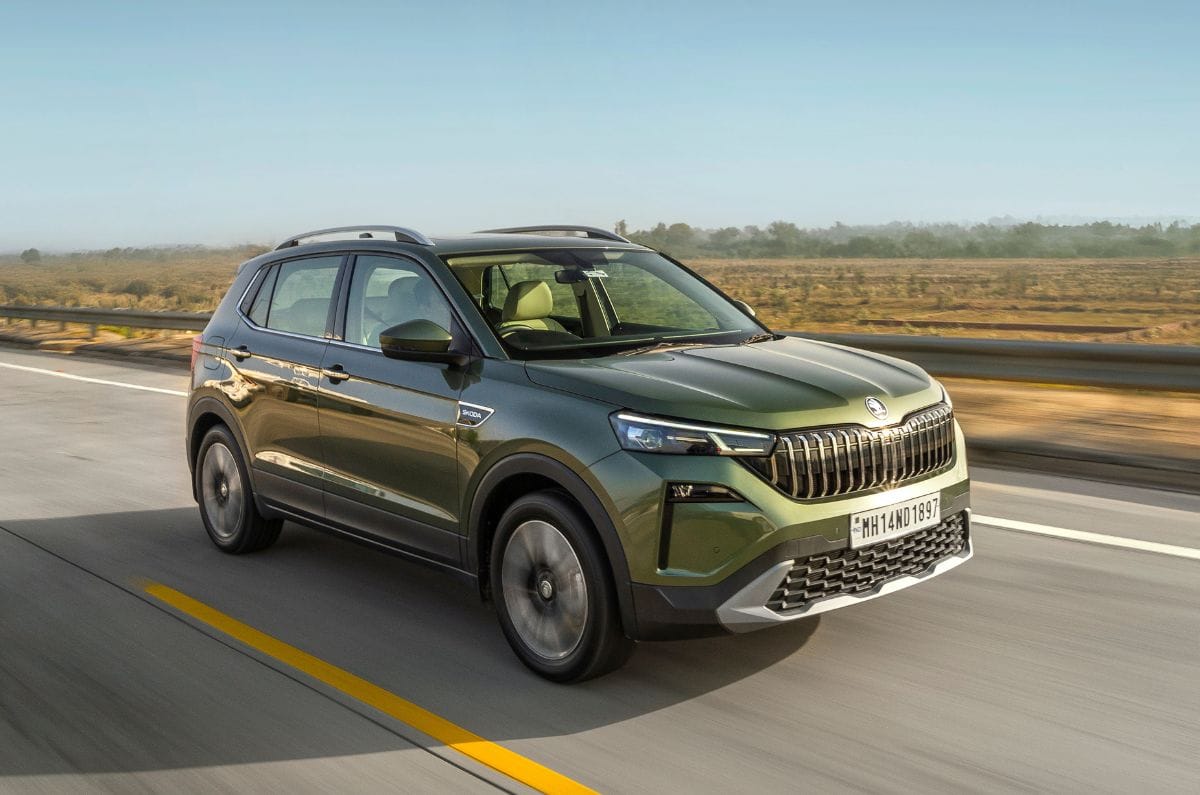
The Indian midsize SUV segment, a highly competitive arena with numerous new and updated models, has seen the Skoda Kushaq receive a significant facelift for the 2026 model year. Launched in 2021, the Kushaq’s update arrives with refreshed styling, upgraded features, and notable technical revisions aimed at maintaining its market relevance.
Skoda Kushaq Performance and Refinement
The refreshed Skoda Kushaq continues to offer two turbo-petrol direct-injection engine options: a 1.0-litre engine producing 115hp and a more potent 1.5-litre unit with 150hp. A key upgrade is the introduction of a new 8-speed automatic gearbox (AQ300) for the 1.0-litre engine, replacing the previous 6-speed unit (AQ250). Both are torque-converter units sourced from Aisin.

The 1.0-litre engine is also available with a 6-speed manual transmission. The 1.5-litre engine is exclusively paired with a 7-speed dual-clutch automatic transmission.
The new 8-speed automatic transmission contributes to reduced emissions and improved fuel consumption. While the outgoing model had a tendency to be overly eager from a standstill, the new Kushaq offers a more controlled initial rollout, though it remains somewhat responsive.
Smooth Shifts and Engaging Drive
On-the-move gear changes with the 8-speed automatic are smooth and seamless, a characteristic of torque-converter gearboxes. Manual shifts, whether via paddle shifters or the tiptronic lever, are impressively quick, exhibiting a responsiveness akin to dual-clutch transmissions.
In manual mode, the gearbox allows the engine to rev higher before automatically upshifting. In first and second gears, this occurs around 5,800rpm, while in third gear, it will hold until close to the 6,000rpm redline. This behaviour enhances driver engagement, allowing the 1.0-litre engine to deliver a decent performance level.
Initial testing recorded a 0-100kph time of 11.57 seconds for the 1.0-litre automatic variant, a notable improvement over the previous 6-speed automatic’s 13.16-second time.
Refinement Concerns and Engine Characteristics
A minor drawback is that the gear ratios in the new 8-speed transmission feel quite short. Third gear tops out at approximately 102kph. Cruising at 100kph in eighth gear results in the engine operating slightly above 2,000rpm, a higher point than ideal, bringing it closer to a rev range where the engine note becomes coarser.

At idle, particularly when the engine is cold, the characteristic rough note of a three-cylinder engine is audible. While it settles down during relaxed driving, extending the engine beyond 2,500rpm, such as during overtaking manoeuvres, exposes the coarse engine sound.
For its segment, the refinement of the smaller petrol engine could be improved. Enhanced sound insulation would significantly benefit the cabin experience, particularly at higher revs.
1.5-Litre Engine Performance
The four-cylinder 1.5-litre automatic engine remains largely unchanged, delivering strong, effortless performance and brisk acceleration. The quick shifts via the paddle shifters are as expected.
The pre-facelift model achieved a 0-100kph time of 9.54 seconds, a figure anticipated to be consistent with the updated model. This engine is arguably the preferred choice for its superior performance and smoother operation, complemented by its efficient cylinder deactivation technology.

The system deactivates two of the four cylinders during low-load cruising, with the transition being imperceptible, indicated only by a ‘2-cylinder mode’ notification on the instrument panel.
Similar to the 1.0-litre version, insulation is a point of concern, with engine noise becoming pronounced when the engine is revved hard. Road noise also penetrates the cabin easily on coarse surfaces.
Skoda Kushaq Mileage and Efficiency
Skoda claims an improvement in fuel efficiency across all powertrain options with the new Kushaq. The 8-speed automatic, as anticipated, shows a significant increase in its ARAI-certified mileage, now standing at 19.09kpl, compared to the previous 6-speed automatic’s 15.78kpl.
The 1.5-litre DSG also sees an improvement, with a claimed efficiency of 18.72kpl, up from 17.71kpl previously. Notably, the 1.0-litre automatic now offers better efficiency than the 1.5-litre DSG, a reversal from the previous configuration.
The 1.0-litre manual variant also benefits from improved efficiency, with its ARAI figure increasing from 17.88kpl to 19.66kpl.
Real-World Efficiency Observations
While a comprehensive instrumented fuel efficiency test is pending, initial drives of the 1.0-litre automatic Kushaq indicated an average efficiency of 11.7kpl on a mixed city and highway cycle. For comparison, the previous 6-speed automatic model achieved an average of 10.45kpl (8.5kpl in city conditions and 12.4kpl on highways) in our standard testing.
Skoda Kushaq Ride Comfort and Handling
The Kushaq’s ride and handling characteristics are distinctly European, featuring a firm low-speed ride that becomes more pliant at higher speeds. This translates to a noticeable firmness over sharp bumps and potholes at lower speeds.
Due to reduced cabin insulation, suspension noise is audible, contributing to the perception of a firm ride. As vehicle speed increases, the ride comfort improves, offering a more settled experience. The ride quality on the 1.5-litre variants felt marginally better than the 1.0-litre versions.
Agile Dynamics and Braking
Driving briskly on uneven surfaces demonstrated good ride control and body stability, with well-managed body roll during cornering and excellent grip levels. The steering is light and could benefit from slightly more weight at higher speeds.
The 1.5-litre variants now feature rear disc brakes, contributing to strong and confident braking performance. This addition enhances the vehicle’s overall dynamic capabilities.
Skoda Kushaq Features and Safety
While the Kushaq was not extensively equipped previously, the facelift introduces several improvements to address these shortcomings. Top-spec variants now include a panoramic sunroof, while other trims receive a single-pane unit.
Features such as alloy wheels in various designs, automatic climate control, rain-sensing wipers, a rear wash-wipe function, and an auto-dimming interior rearview mirror are now standard across the entire range, enhancing convenience and perceived value.
Digital Cockpit and Interior Updates
A new 10.25-inch fully digital instrument panel offers multiple display options, including twin dials. The Monte Carlo trim additionally features a unique single-dial display with distinct aesthetics.
The dashboard design remains largely the same, with subtle enhancements to decorative elements. The Monte Carlo edition’s interior trim is now a deeper, terracotta-like shade, offering a richer appearance compared to the pre-facelift’s blood-red hue.
The steering wheel, carried over from the previous model, provides a comfortable grip and features well-executed knurled scroll wheels that feel premium.
Innovative Rear Seat Massagers and Connectivity
The interior also boasts dual-colour ambient lighting and an on-board Google-powered AI assistant. However, the assistant’s functionality is limited, requiring a data connection from a paired smartphone, which consequently disables Android Auto connectivity.
A significant new feature is the inclusion of rear-seat massagers, a unique offering within this segment and the segment above. The decision to offer this feature exclusively for rear passengers, while front occupants have ventilated seats, might be debated. Front seats do offer ventilation, while rear seats are equipped with back massagers.
Other enhancements include 6-way power-adjustable front seats, front parking sensors, and a rear camera. The absence of a 360-degree camera and the grainy quality of the rear-view camera feed are notable omissions.
Safety Standards
On the safety front, the Kushaq comes standard with 6 airbags and Electronic Stability Control (ESC). Skoda asserts that the new model is engineered to meet a 5-star crash-safety rating, reinforcing its commitment to occupant protection.
Skoda Kushaq Interior Space and Comfort
The front-seat ventilation system offers two speeds and performs effectively. Skoda has also improved the air conditioning system’s performance, addressing previous concerns about weak cooling.
The previous fixed-displacement compressor has been replaced by a variable-displacement unit, leading to a noticeable improvement in cooling efficiency. While not tested in peak summer conditions, the need to increase fan speed or lower the temperature setting was significantly reduced.
Cabin Space and Seat Comfort
Interior space remains consistent with the outgoing model, offering adequate headroom and legroom in the rear. However, it does not feel as expansive as some newer rivals like the Tata Harrier or Kia Seltos.
The panoramic sunroof contributes to a more airy cabin ambiance. All seats are designed for comfort, offering appropriate firmness and providing a pleasant experience even after extended driving sessions.
Rear Seat Massager Functionality
The massagers are located on the two outer rear seats, targeting the lower and middle sections of the back, excluding the shoulder area. The intensity and pattern of the massage cannot be adjusted; it functions as a simple on/off feature.
While effective, the massage is on the lighter side, providing more of a back rub than a deep kneading sensation, which may appeal to users who prefer a less intense massage.
Boot Capacity and Storage
Boot space remains unchanged at 385 litres. Despite not being the largest in its class, the boot is well-shaped and capable of accommodating six cabin-sized bags with ease.
Interior storage solutions include a generously sized glove box and spacious door pockets, offering practical utility for occupants.
Skoda Kushaq Exterior Design and Engineering
The Kushaq facelift retains the previous generation’s MQB-A0-IN platform. While core sheet metal components like the bonnet, fenders, and tailgate are unchanged, the visual transformation is significant.
The front fascia features a redesigned bumper with a larger air intake and slimmer fog lights with vertical extensions. The grille is wider and incorporates segmented daytime running lamps (DRLs) that extend across its width, a design cue reminiscent of the larger Skoda Kodiaq, lending the front a distinctive appearance.
The headlights now feature an eyebrow-like DRL signature at the top, differing from the previous model’s L-shaped DRLs.
Side Profile and Rear Aesthetics
The side profile remains largely the same, distinguished by new alloy wheel designs unique to each variant, with up to six different patterns available.
The rear also maintains the existing sheet metal but presents a distinct look due to a new bumper and updated tail-light signature. The tail-lights feature a new lighting pattern and are now connected. Instead of a continuous light bar, Skoda has implemented a segmented lighting element with illuminated ‘Skoda’ lettering in the centre.
Overall, the exterior design is striking and modern without appearing excessive.
Skoda Kushaq Value for Money
The Skoda Kushaq range starts at Rs 10.69 lakh for the 1.0-litre manual Classic+ variant. This positions it slightly above entry-level models from competitors like Maruti Suzuki and Renault, while offering a more powerful engine and a more comprehensive standard equipment list.
The premium for automatic variants begins at Rs 12.69 lakh. This price gap narrows considerably in higher trims, often falling within Rs 1 lakh. It’s noteworthy that the Kushaq offers an 8-speed automatic, surpassing the gear count of many rivals in the segment.
Skoda’s decision to make the 1.0-litre engine available even on top-end trims like the Monte Carlo is a strategic advantage, catering to a broad customer base that may find this powertrain sufficient.
For those seeking enhanced performance, the 1.5-litre variants are priced approximately Rs 1 lakh higher, ranging from Rs 18.79 lakh for the Prestige to Rs 18.99 lakh for the Monte Carlo.
Competitive Pricing and Feature Updates
The pricing strategy places the Kushaq competitively within its segment. Skoda has invested significantly in this facelift, addressing aesthetics, features, and technical aspects.
However, some limitations persist. The compact overall size might not align with preferences of all Indian buyers. NVH (Noise, Vibration, Harshness) levels remain a concern, and despite equipment enhancements, notable omissions like a 360-degree camera, a branded audio system, and an Advanced Driver Assistance Systems (ADAS) suite are still absent.
Nevertheless, the Kushaq delivers essential features alongside desirable additions like the rear-seat massagers, which serve as a unique selling proposition for buyers prioritizing chauffeur-driven comfort or chauffeuring others.
The vehicle offers sufficient space and comfort for most adults. Drivers are likely to appreciate the lively and responsive nature of the car. The 1.5-litre engine provides robust performance, while the 1.0-litre engine with the 8-speed automatic offers a smooth, seamless driving experience with capable performance when needed.
The stable and secure handling further enhances the driving pleasure. In summary, while the Kushaq may not lead in every category, it provides a compelling package that keeps buyers engaged. The facelift effectively positions Skoda to remain competitive in the dynamic Indian SUV market.