
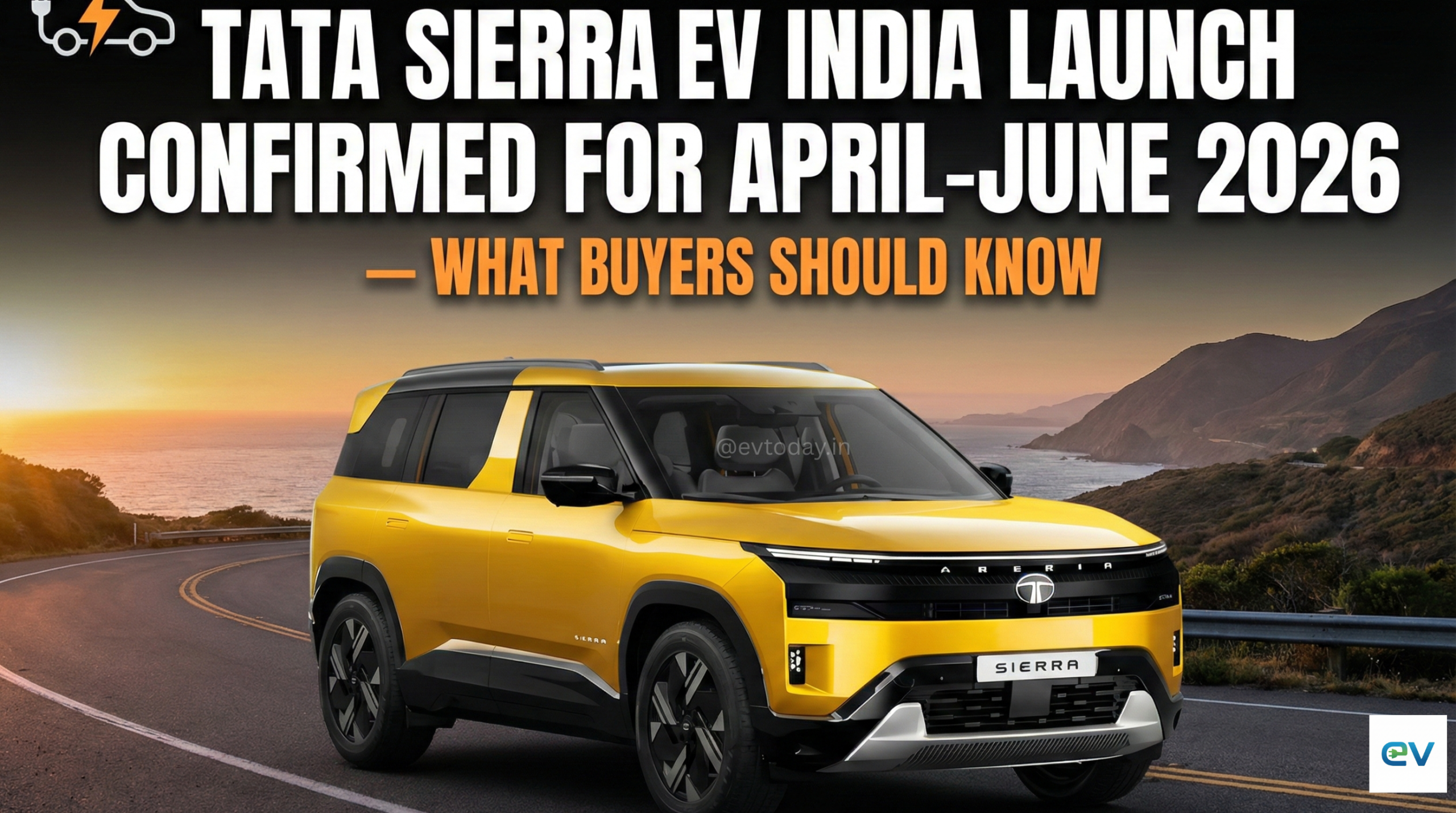
The rebirth of an automotive legend is now official. Tata Motors has confirmed that the highly anticipated Tata Sierra EV will debut in India between April and June 2026 — marking its formal entry into the electric SUV market. This announcement ended months of speculation and provided a clear launch window for one of India’s most talked-about upcoming electric vehicles.
As EV adoption accelerates in India and competition intensifies in the SUV space, the Sierra EV’s arrival is poised to make a significant impact — not just for Tata’s EV lineup but for buyers seeking a combination of style, technology, and practicality in an electric mid-size SUV.

The Sierra Nameplate Returns — Now Electric
The Tata Sierra nameplate is steeped in nostalgia, originally gaining popularity in the 1990s as one of India’s early SUV icons. After a hiatus of over two decades, Tata revived the Sierra with a modern internal combustion engine (ICE) model in late 2025, which quickly gained traction among buyers.
Now, Tata is bringing back the name in electric form, this time built on a dedicated electric vehicle architecture that aligns with the company’s broader strategy of expanding its EV portfolio across segments.
Launch Timeline and Production Plans
According to Tata Motors’ official confirmation, the Sierra EV is set to launch in India during the second quarter of 2026 — specifically between April and June. This window coincides with the first quarter of Tata’s FY2027.
Industry sources and media reports further indicate that production and assembly are expected to take place at Tata’s Sanand facility in Gujarat, the same factory producing the ICE Sierra.
This launch period gives Tata several months to build anticipation, start bookings, and possibly unveil more detailed specifications ahead of showroom deliveries.
Positioning in Tata’s EV Lineup
The Sierra EV will sit above the Tata Curvv EV and below the Tata Harrier EV in Tata’s expanding electric offerings. Both the Curvv and Harrier EVs showcase Tata’s commitment to electrification, and the Sierra EV will bridge the gap between compact and flagship electric SUVs.

- Tata Curvv EV: Compact, urban-focused electric SUV.
- Tata Sierra EV (Upcoming): Mid-size lifestyle electric SUV.
- Tata Harrier EV: Premium electric SUV with high range and performance.
This positioning suggests the Sierra EV will cater to buyers who want a more versatile and capable EV than a compact model but don’t necessarily need the full premium level associated with the Harrier EV.
Expected Specifications and Technology
While Tata Motors has not yet published the full technical details, credible industry sources and automotive analysts point to several key elements most likely to define the Sierra EV:

Platform and Powertrain
- Dedicated EV Architecture: The Sierra EV is expected to be based on Tata’s acti.ev electric platform, designed for improved range, efficiency, and performance.
- Battery Options: Expect 65 kWh and 75 kWh battery packs, similar to what’s offered on Tata’s Harrier EV, promising capable performance and competitive range.
- Range: Estimated range figures hover between 450–600 km on a full charge depending on the battery size and test cycle methodology.
- Fast Charging: Likely support for DC fast charging (e.g., 20–80% in ~25 minutes), consistent with current EV tech trends.
Drivetrain and Dynamics
A significant talking point among EV enthusiasts is the possibility of a dual-motor setup with all-wheel drive (AWD) capability — akin to Tata’s Quad Wheel Drive (QWD) in the Harrier EV.
This setup would not only enhance traction in variable road conditions but also position the Sierra EV as a more adventurous, lifestyle-oriented EV — distinguishing it from many competitors that stick to front/mid-motor, 2WD formats.

Suspension and Ride Comfort
Recent road test spottings and reports suggest the Sierra EV could feature independent rear suspension (IRS), a significant upgrade over typical beam-axle setups in this segment. IRS can improve ride comfort, handling predictability, and overall driving refinement.
Design and Feature Expectations
Though full details remain under wraps, early teasers and concept visualizations provide clues on what buyers can expect:
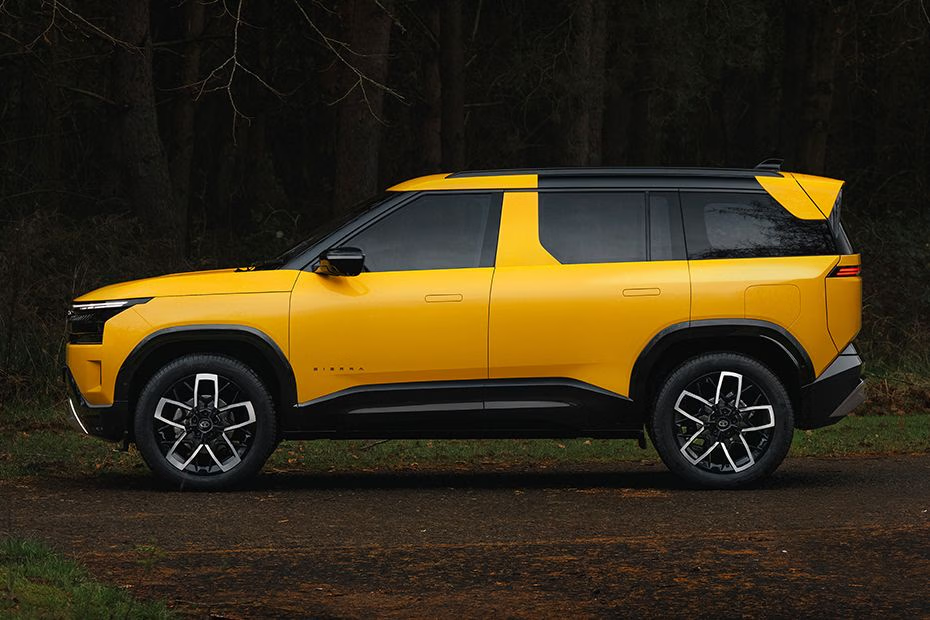
- Distinct EV Styling: A closed grille, sleek LED lighting signatures, and aerodynamic touches set it apart from the ICE Sierra.
- Premium Cabin Tech: A large digital instrument cluster, central touchscreen with connected car features, and possibly a panoramic sunroof are anticipated.
- Comfort and Safety: Features such as Level 2 Advanced Driver Assistance Systems (ADAS), connected vehicle tech, and enhanced interior space are logical inclusions for this segment.
Expected Pricing and Variants
Official pricing for the Sierra EV has not been released yet. However, market speculation and industry estimates place the electric SUV’s starting price in the vicinity of ₹18 lakh (ex-showroom), with top-end AWD and higher battery versions possibly reaching ₹24–25 lakh.
This pricing strategy, if realized, could make it one of the more competitively positioned mid-size electric SUVs in India — especially against rivals like the upcoming Hyundai Creta Electric and Mahindra BE.06.
Market Context and Competition
India’s electric SUV landscape is rapidly evolving. Beyond Tata’s own stable, several key players are gearing up with electrified offerings:
- Hyundai Creta Electric: Expected to challenge in the popular mid-size segment.
- Mahindra BE.06: Positioned as a value-oriented electric SUV.
- MG ZS EV and BYD Atto 3: Established competitors in the compact EV bracket.
The Sierra EV’s success will depend not just on range and performance but also on real-world usability, technology integration, and pricing — critical factors for Indian EV buyers today.
Expert Insight
Industry analysts view the Sierra EV as a strategic bridge in Tata’s broader EV roadmap. While affordable EVs like the Punch EV and Nexon EV draw volume, models such as the Sierra EV and Harrier EV help Tata expand its presence into premium lifestyle and mainstream family SUV segments.
The possibility of AWD and dual-motor configurations could give Tata an edge in a market where utility and rugged ability are increasingly valued alongside efficiency and range.
From a consumer perspective, the Sierra EV represents a compelling mix: nostalgic nameplate, modern EV tech, capable dynamics, and segment-appropriate pricing — all backed by Tata’s growing charging infrastructure and customer support ecosystem.
Conclusion
The confirmed April–June 2026 launch of the Tata Sierra EV marks a pivotal moment for electric mobility in India. With its blend of compelling design, thoughtful performance options, and a strategically competitive price position, the Sierra EV is shaping up to be one of the most important EV launches of the year.
As Tata Motors continues to roll out more details and final specifications ahead of launch, prospective buyers should watch for official range figures, feature breakdowns, and variant pricing — all crucial information that will determine how this SUV fares in India’s increasingly crowded EV marketplace.
Frequently Asked Questions (FAQs)
1. When will the Tata Sierra EV launch in India?
Tata Motors has confirmed the Sierra EV will launch between April and June 2026.
2. Will the Sierra EV get AWD?
Reports indicate that an all-wheel-drive (AWD) option is expected, particularly in higher trims.
3. What range can buyers expect?
Based on battery pack projections, a range of 450–600 km on a full charge is likely.
4. How much will the Sierra EV cost?
Industry estimates suggest a starting price near ₹18 lakh, going up to around ₹24–25 lakh for top variants.
5. How does the Sierra EV stack up against competition?
With its blend of range, features, and pricing, the Sierra EV is expected to be competitive with other mid-size electric SUVs from brands like Hyundai, Mahindra, MG, and BYD, especially as EV adoption continues to grow across India.