
Key Takeaways
- Donut Lab has provided new details on the Verge TS Pro Gen2 electric bike, featuring what it claims are the world’s first production-ready solid-state batteries.
- The startup asserts its solid-state technology offers high energy density and longevity, though independent validation and proof of chemistry remain elusive, leading to expert skepticism.
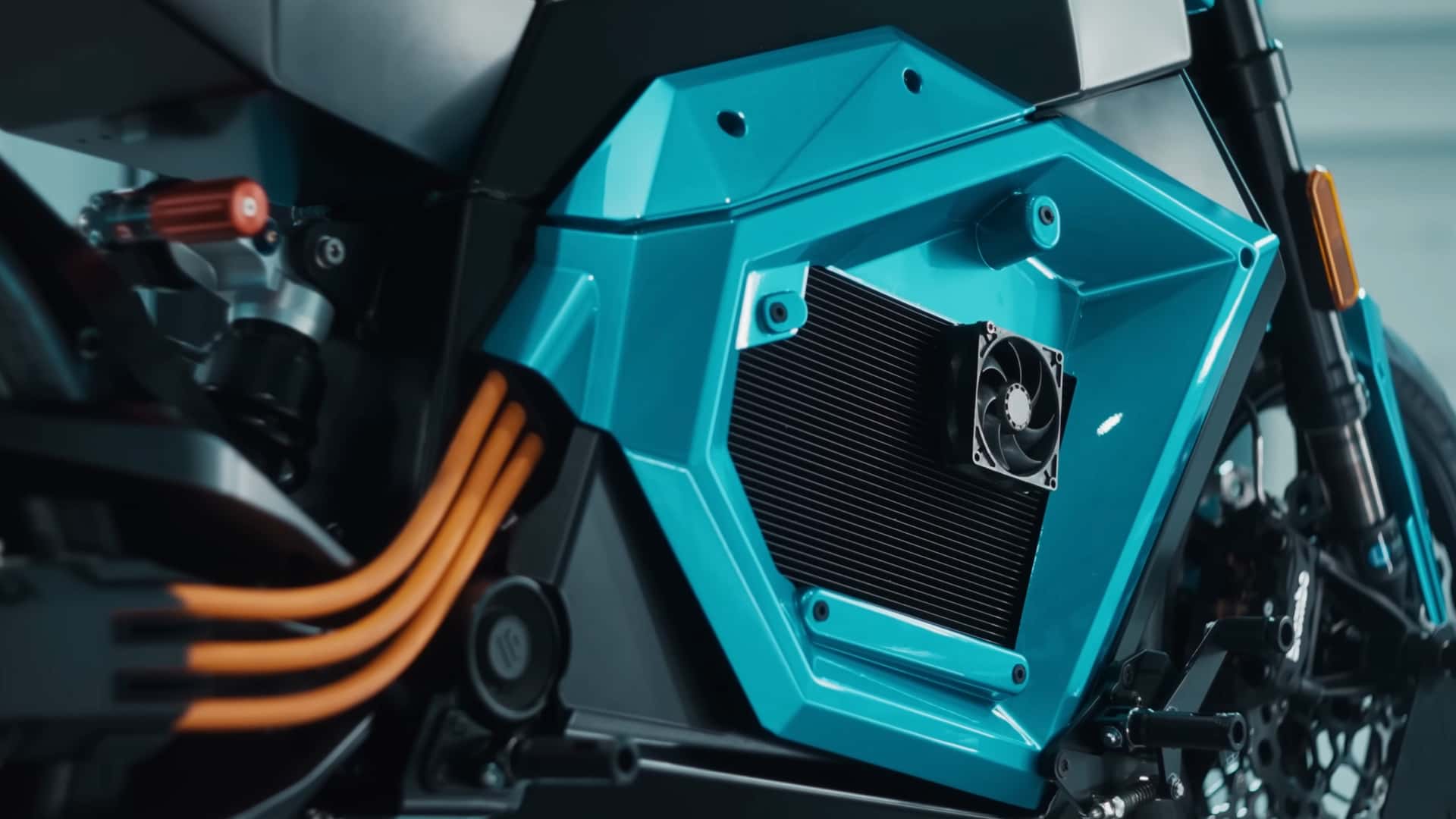
- The Verge TS Pro Gen2 employs an air-cooling system with small, PC-style fans to manage heat from its 18 kWh or 30 kWh solid-state battery packs.
- The motorcycle boasts rapid charging capabilities, reaching 80% capacity in approximately 11 minutes, positioning it as the fastest-charging electric motorcycle available.
Revolutionary Battery Tech in Electric Motorcycle
Finnish startup Donut Lab is generating significant attention with its claims of developing the world’s first production-ready solid-state battery for vehicles. The company has now released further details concerning the battery technology powering its Verge TS Pro Gen2 electric motorcycle, which it also touts as the fastest-charging electric bike on the market.
Ville Piippo, Donut Lab’s co-founder and CTO, offered a closer look at the solid-state battery pack in a recent company video. The Verge TS Pro Gen2 is presented as a showcase for this advanced battery technology, aiming to redefine electric motorcycle performance.
Unsubstantiated Claims and Growing Skepticism
Despite the advancements presented, the core chemistry behind Donut Lab’s cells remains a subject of scrutiny. The company has previously stated ambitious figures, including an energy density of 400 watt-hours per kilogram, a complete absence of rare-earth materials, and an exceptional lifespan of 100,000 charge cycles. However, a lack of supporting patents, validation results, or detailed chemical breakdowns has led to skepticism from industry experts.
While concrete proof of the claimed solid-state chemistry is still pending, Donut Lab has shared data from independent tests. The latest revelations focus on how these cells are integrated into a functional, vehicle-scale battery pack, offering insights into both the company’s technology and the engineering challenges inherent in electric two-wheelers.
Battery Configuration and Cooling System
The Verge TS Pro Gen2 is offered in two configurations: a Standard Range model with approximately 18 kilowatt-hours (kWh) of nominal capacity and a Long Range variant with around 30 kWh. Both models utilize the same physical battery enclosure size.
In the 18 kWh version, the battery pack consists of 192 individual Donut Lab cells, each rated at 94 watt-hours (Wh). The cells are arranged in a 2P 96S configuration (two cells in parallel, 96 cells in series), contributing to a maximum system voltage of approximately 400 volts (V).
The battery pack is divided into four modules stacked vertically. Heat transfer plates are strategically placed between each layer of cells to channel heat towards the exterior of the pack. This design facilitates an air-cooling system, a critical element for maintaining optimal battery performance and longevity.
On either side of the battery pack, heat sinks are integrated, coupled with small fans that bear a resemblance to those found in personal computer processors. These fans actively dissipate heat into the surrounding air, ensuring the battery remains within its operational temperature range.

“So it’s a fully air-cooled design, and a very compact design,” Piippo stated, highlighting the integrated approach to thermal management in the electric motorcycle.
Rapid Charging Capabilities
The Verge TS Pro Gen 2 is engineered for swift recharging. When connected to a DC fast charger, it can achieve a peak charging power of around 100 kilowatts (kW). This allows the battery to charge from 10% to 80% capacity in approximately 11 minutes, with a full 10% to 90% charge taking just under 15 minutes.
This peak charging power is half of the 200 kW figure previously suggested by Donut Lab. The company attributes this limitation in the motorcycle to its compact design, which precludes the use of liquid cooling systems. Donut Lab suggests that its 94 Wh cells could achieve significantly higher charging speeds, such as a zero to 80% charge in five minutes, if integrated into electric cars with more space for liquid cooling.
Even at a maximum input of 103 kW, the bike achieves a C-rate exceeding 5C. The C-rate measures how quickly a battery can charge or discharge relative to its total capacity. For the Verge TS Pro Gen 2 Standard Range with a 20 kWh maximum capacity, a 1C rate would equate to a 20 kW charging speed. Most contemporary EV batteries operate at C-rates below 4C, underscoring the advanced charging performance of Donut Lab’s technology.

Donut Lab asserts that the Verge TS Pro, equipped with its solid-state battery, is now the world’s fastest-charging motorcycle. This rapid charging translates to approximately 12 miles of range being added for every minute of charging, based on the TS Pro’s estimated total range of 217 miles.
Production Status and Future Outlook
Production for the upgraded electric bike reportedly commenced last month. However, independent testing and verification of the solid-state Verge TS Pro Gen2 are still awaited, which will be crucial for validating the company’s performance claims.
Frequently Asked Questions
What is a solid-state battery?
A solid-state battery uses solid electrolytes instead of the liquid or gel electrolytes found in conventional lithium-ion batteries. This design aims to improve safety, energy density, and charging speed.
What are the claimed benefits of Donut Lab’s solid-state battery?
Donut Lab claims their battery offers high energy density (400 Wh/kg), uses no rare-earth materials, has a lifespan of 100,000 cycles, and enables ultra-fast charging.
Why does the Verge TS Pro use PC fans for cooling?
The electric motorcycle’s compact design limits space for more complex liquid cooling systems. Small, PC-style fans are used as part of an air-cooling system to dissipate heat from the battery pack.
How fast does the Verge TS Pro charge?
The Verge TS Pro Gen2 can charge from 10% to 80% in about 11 minutes and from 10% to 90% in under 15 minutes, reaching a peak charging power of approximately 100 kW.
What is the range of the Verge TS Pro?
The Standard Range version of the Verge TS Pro has an estimated total range of 217 miles. Charging at 12 miles per minute adds significant range quickly.
Has Donut Lab’s solid-state technology been independently verified?
While Donut Lab has shared results from independent tests, experts remain skeptical due to a lack of patents and detailed chemical validation. Independent, third-party verification is still highly anticipated.
What is the C-rate, and why is it significant for the Verge TS Pro?
The C-rate indicates how fast a battery charges relative to its capacity. The Verge TS Pro’s C-rate of over 5C is considered very high, suggesting impressive charging speeds compared to typical EV batteries that are usually under 4C.