
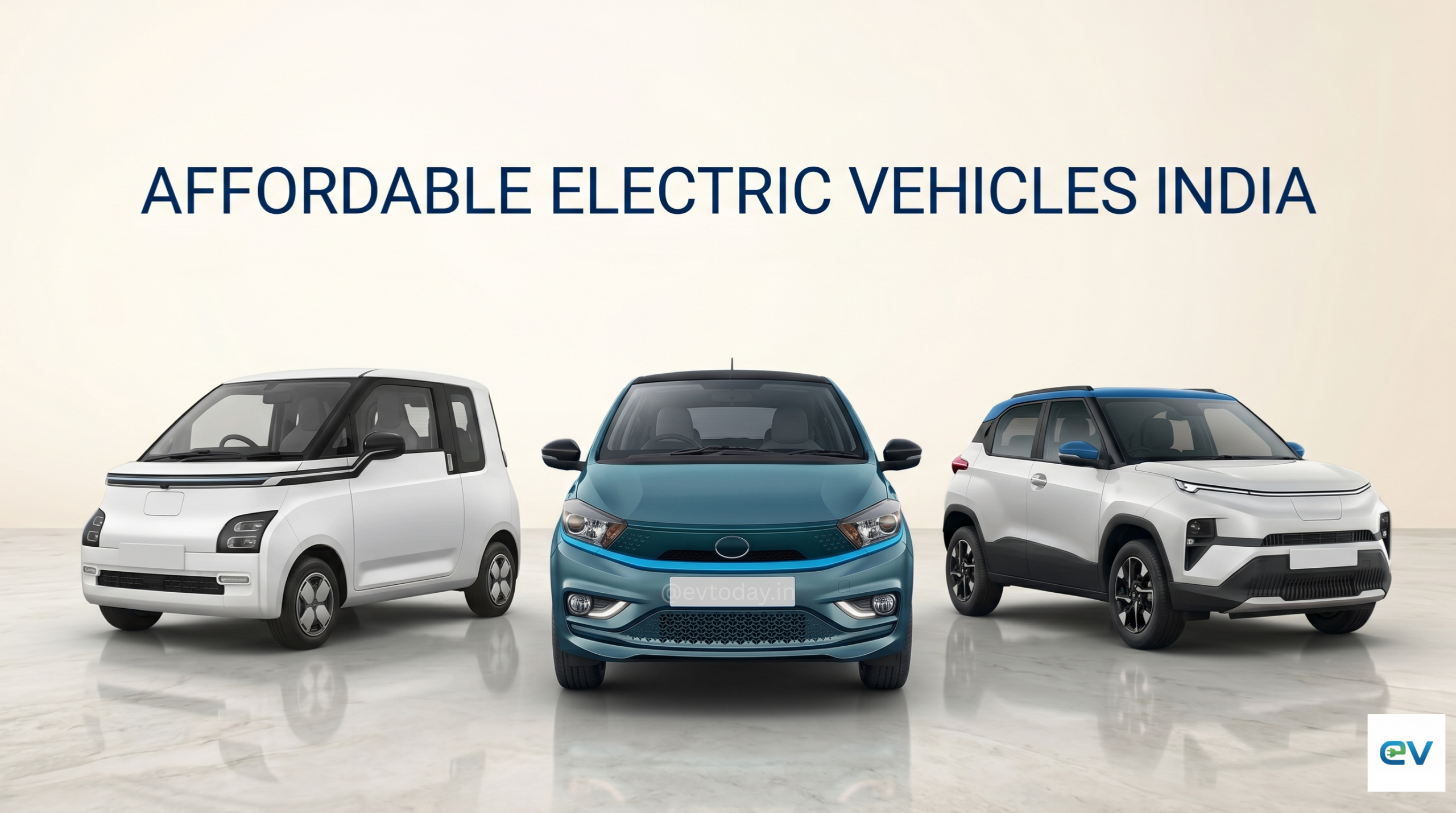
Electric vehicles have moved from curiosity to practical choice for many Indian families, especially those looking for lower running costs in crowded cities. In 2026, the segment under ₹10 lakh ex-showroom offers genuine options that suit daily commutes, small families and first-time EV buyers.
Models like the MG Comet EV, Tata Tiago EV and Tata Punch EV stand out because they balance price, range and everyday usability. These cars deliver real-world running costs of roughly ₹1 to ₹1.5 per kilometre — far below what most petrol hatchbacks demand today.
This article looks at the current landscape without hype. It covers what you actually get for your money, how far these cars go in Indian traffic and heat, and what to consider before you decide. Whether you live in a metro or a smaller town, the focus remains on honest, usable information for budget-conscious buyers.
The Current State of Affordable EVs in India
By early 2026, three main players dominate the conversation for electric cars priced comfortably under ₹10 lakh ex-showroom: the MG Comet EV, Tata Tiago EV and the entry-level Tata Punch EV. A few micro-EVs such as the Vayve Mobility Eva also appear in discussions, though they target very specific short-distance needs.
Tata and MG have refined their offerings with better battery options and features that matter in daily driving. Battery-as-a-Service (BaaS) schemes further reduce the upfront cost for some buyers, making ownership more accessible. At the same time, public charging infrastructure continues to expand slowly through schemes like PM E-DRIVE, though most owners still rely on home charging for routine use.
These vehicles work best for people who drive 50–100 km a day, mostly within city limits, and have access to a home or office charging point. They are not designed for long highway trips without planning, but for typical urban and suburban routines, they handle the job well.
MG Comet EV: Compact City Companion
The MG Comet EV remains one of the most affordable proper electric cars on sale. Its ex-showroom price starts around ₹7.50 lakh and goes up to about ₹9.99 lakh depending on the variant and features.
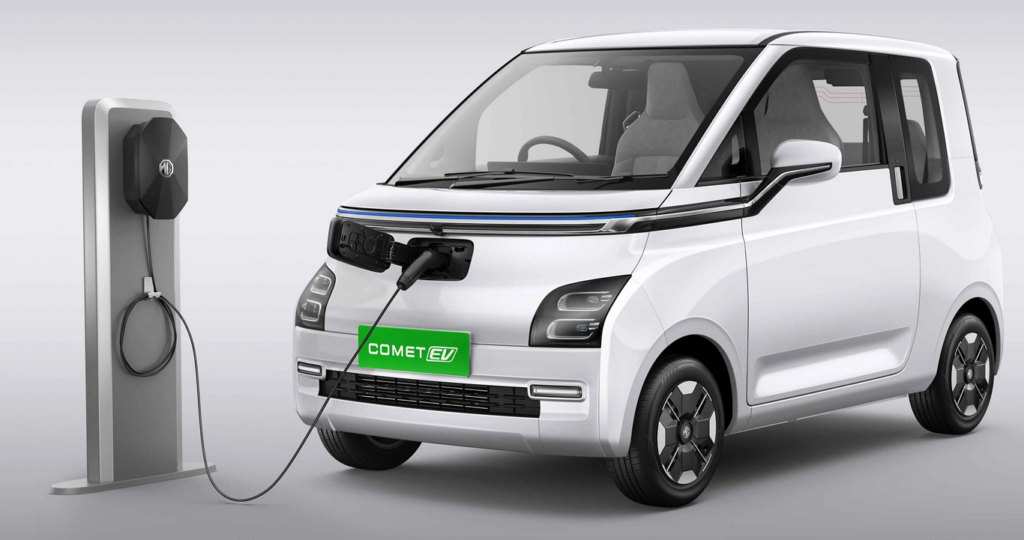
Key Specifications (as of April 2026):
- Battery: 17.3 kWh lithium-ion
- Claimed ARAI range: 230 km
- Power: Approximately 41–42 bhp
- Torque: 110 Nm
- Seating: 4 adults (best suited for small families or couples)
- Charging: Full charge in roughly 7 hours with a standard 7.2 kW AC charger; slower with a regular 15A socket
In real-world conditions — city traffic with air-conditioning on and typical Indian road surfaces — owners and testers commonly report 170–190 km of usable range. This makes it ideal for short daily runs, school drops, market visits and office commutes. Its small footprint helps in tight parking spots, and the cabin feels surprisingly premium for the price with features like a digital cluster and touchscreen infotainment.
Pros:
- Lowest entry price among mainstream options
- Easy to manoeuvre in dense traffic
- Low running costs
- Modern interior touches
Cons:
- Limited to four seats and smaller boot
- Range drops noticeably with heavy AC use or highway speeds
- Not ideal for highway cruising or carrying five adults regularly
For buyers whose driving stays mostly within 15–20 km radius and who value ease of parking and low costs, the Comet EV makes a sensible first EV.
Tata Tiago EV: Practical Everyday Choice
Many first-time EV buyers in India gravitate toward the Tata Tiago EV because it feels familiar yet modern. Ex-showroom prices begin at ₹7.99 lakh and climb to around ₹11.14 lakh for higher variants, though several base and mid variants comfortably stay under the ₹10 lakh mark.
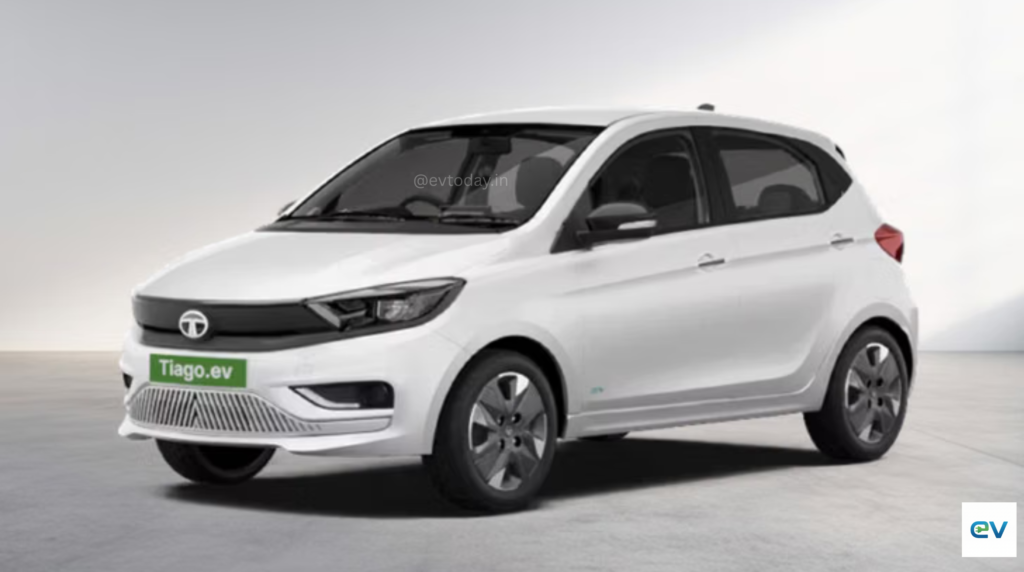
Key Specifications:
- Battery options: 19.2 kWh (mid-range) or 24 kWh (long-range)
- Claimed ARAI range: 250 km (19.2 kWh) to 315 km (24 kWh)
- Power: 60–74 bhp depending on variant
- Torque: 110–114 Nm
- Seating: 5 adults
- Charging: 10–80% in about 58 minutes with DC fast charger; full AC charge in 6–8 hours
Real-world range tests in mixed city-highway conditions typically deliver 180–220 km on the smaller battery and closer to 200–240 km on the 24 kWh pack, depending on driving style, weather and load. Many owners mention achieving consistent 190–210 km in daily use with moderate AC.
The Tiago EV offers a more conventional hatchback layout, decent boot space for a family of four, and features such as a larger touchscreen, connected car tech and good ride quality over bad roads. It feels like a natural step up from a petrol Tiago for many existing Tata owners.
Pros:
- Familiar handling and comfortable ride
- Better space and practicality than the Comet
- Strong service network across India
- Multiple battery and variant choices
Cons:
- Design is evolutionary rather than revolutionary
- Some interior plastics feel basic
- Real-world range requires careful driving to approach claimed figures
For daily commuters who sometimes carry family or luggage and want a car that feels “normal” to drive, the Tiago EV often emerges as the balanced pick.
Tata Punch EV: Small SUV with Added Confidence
Sitting at the upper edge of the budget, the 2026 Tata Punch EV facelift starts at approximately ₹9.69 lakh ex-showroom for the base Smart variant. Higher trims cross ₹10 lakh, but the entry models and BaaS options keep it relevant for this discussion.
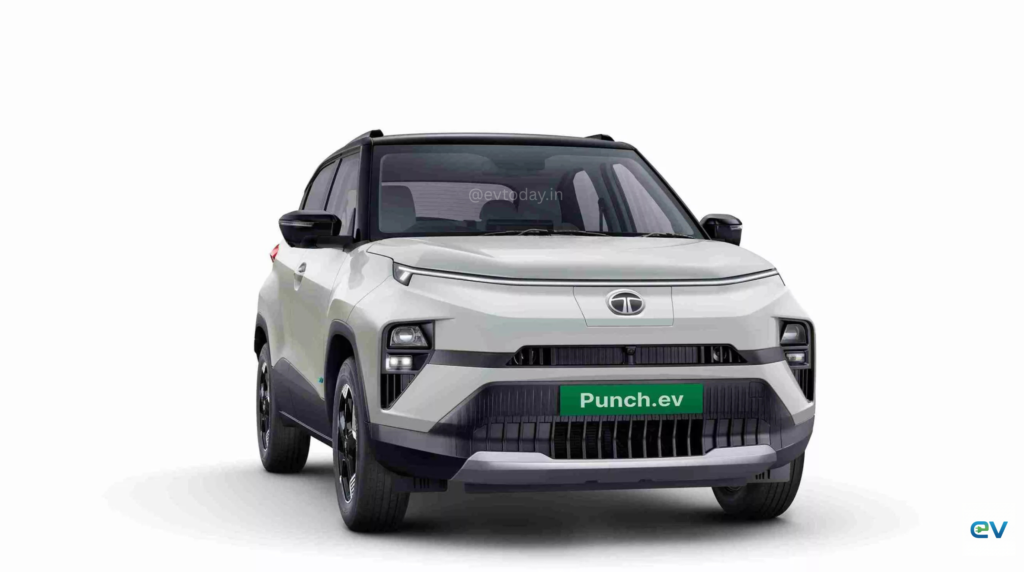
Key Specifications (facelift updates):
- Battery options: 30 kWh and larger packs in higher variants
- Claimed range: Around 315–421 km depending on pack (base variants closer to 315–370 km)
- Power: 80+ bhp in base electric motor
- Ground clearance: SUV-like stance with good approach angles
- Features: Dual 10.25-inch screens, 360-degree camera in higher variants
In real-world mixed driving, testers and owners report 230–280 km on base packs and up to 300+ km with gentler highway use on larger batteries. Its raised ride height, better suspension and commanding driving position make it more comfortable on broken roads and occasional light highway runs compared to pure hatchbacks.
The Punch EV brings crossover appeal — higher seating, easier ingress/egress and a tougher look — without jumping much in price.
Pros:
- SUV stance and better road presence
- Improved real-world usability on bad roads
- Modern feature set even in lower variants
- Strong safety credentials typical of recent Tata products
Cons:
- Price pushes closer to the ₹10 lakh limit
- Heavier vehicle means slightly lower efficiency than smaller siblings
- Waiting periods can vary by variant and city
For buyers who want a bit more versatility and don’t mind stretching the budget slightly, the Punch EV offers a noticeable step up in presence and capability.
Real-World Range vs Claimed Figures
ARAI-certified range numbers provide a useful benchmark, but Indian conditions — traffic, heat, frequent stops and air-conditioning — usually reduce usable range by 20–35%.
Expect these approximate real-world figures in 2026:
- MG Comet EV: 170–190 km
- Tata Tiago EV (24 kWh): 200–240 km
- Tata Punch EV (base): 230–280 km
Factors that affect range include aggressive acceleration, highway speeds above 80–90 km/h, heavy loads and extreme summer temperatures. Gentle driving with regenerative braking maximised and eco mode engaged helps stretch every kilometre. Most owners develop a feel for their car’s behaviour within the first few weeks.
Home Charging and Daily Practicality
For the vast majority of buyers in this price bracket, home charging remains the most convenient and economical option. A standard 15A household socket can top up these cars overnight, though a dedicated 7.2 kW AC wall box charges much faster and is worth considering.
Installation costs for a proper home charger typically range from ₹15,000 to ₹40,000 depending on your electrical setup and location. Many state electricity boards offer concessional tariffs for EV charging at residential connections.
Public charging stations continue to grow, especially along major highways and in metros, but availability and reliability still vary. Planning remains essential for longer trips. Battery-as-a-Service schemes from Tata and others can lower the initial purchase price by ₹2–3 lakh in exchange for a per-kilometre battery usage fee — a useful option if you want to reduce upfront investment.
Key Highlights
- Running Cost Advantage: Expect ₹1–1.5 per km versus ₹6–8 per km for equivalent petrol cars, translating to significant monthly savings for moderate users.
- Maintenance: Fewer moving parts mean lower servicing costs over time, though battery health monitoring and occasional software updates matter.
- Safety: Recent Tata and MG models in this segment come with multiple airbags, ABS and structural reinforcements; always check the latest Global NCAP ratings for the specific variant.
- Resale: Early EV adoption in India shows decent interest, though the segment remains young; service network strength helps.
Expert Insight and Practical Analysis
From years of observing the Indian auto market, the biggest lesson for budget EV buyers is matching the car to your actual driving pattern rather than chasing headline range numbers. A family that drives 60 km daily within the city will find even the smaller-battery Tiago or Comet perfectly adequate with overnight charging.
Consider these questions before buying:
- Do you have reliable home or workplace charging?
- How many people and how much luggage do you typically carry?
- Will you occasionally need to drive on highways or bad rural roads?
Test drives in real traffic conditions matter more than showroom brochures. Pay attention to how the regenerative braking feels, how quickly the car responds in city gaps, and whether the cabin stays comfortable with AC running.
BaaS schemes can make sense for cost-conscious buyers who prefer lower EMI, but calculate the long-term per-km cost carefully. Also, factor in state-level incentives and registration benefits, which can vary and sometimes reduce the effective on-road price noticeably.
Conclusion
Affordable electric cars under ₹10 lakh in India have matured considerably by 2026. The MG Comet EV suits ultra-compact city needs, the Tata Tiago EV offers balanced practicality for most families, and the Tata Punch EV adds SUV appeal for those who want a bit more versatility.
None of these vehicles will replace a diesel SUV for long-distance touring without careful planning, but for the vast majority of daily Indian driving — office runs, school drops, weekend errands — they deliver convenience, low costs and a quieter, smoother experience.
Take time to understand your usage pattern, test the cars thoroughly, and speak with existing owners in your city. The shift to electric mobility brings meaningful savings and simpler maintenance when the car fits your life. As charging infrastructure improves and technology evolves further, these entry-level EVs represent a sensible, forward-looking choice for budget buyers ready to make the switch.
FAQs
1. Which is the cheapest electric car under 10 lakhs in India in 2026?
The MG Comet EV starts at the lowest ex-showroom price, followed closely by base variants of the Tata Tiago EV. Actual on-road prices depend on your city and any state incentives.
2. How much does it cost to charge these cars at home?
With average residential electricity rates, a full charge typically costs ₹150–250 depending on battery size and local tariffs — far cheaper than filling a petrol tank.
3. What is the real-world range I can expect daily?
Most owners see 170–240 km of usable range in mixed city conditions. Highway driving or heavy AC use reduces this further.
4. Are there any government subsidies available in 2026?
Direct purchase subsidies have evolved under schemes like PM E-DRIVE, with more focus on charging infrastructure. Check your state transport department for current buyer incentives and registration benefits.
5. How long does the battery last?
Manufacturers typically offer 8-year or 1,60,000 km battery warranties. With proper care, modern lithium-ion packs in these cars are designed to retain substantial capacity well beyond that period.
6. Is home charging installation complicated?
Most households can start with a standard socket. A dedicated wall box is recommended for faster and safer charging and can usually be installed by a certified electrician in a day or two.