
Key Takeaways
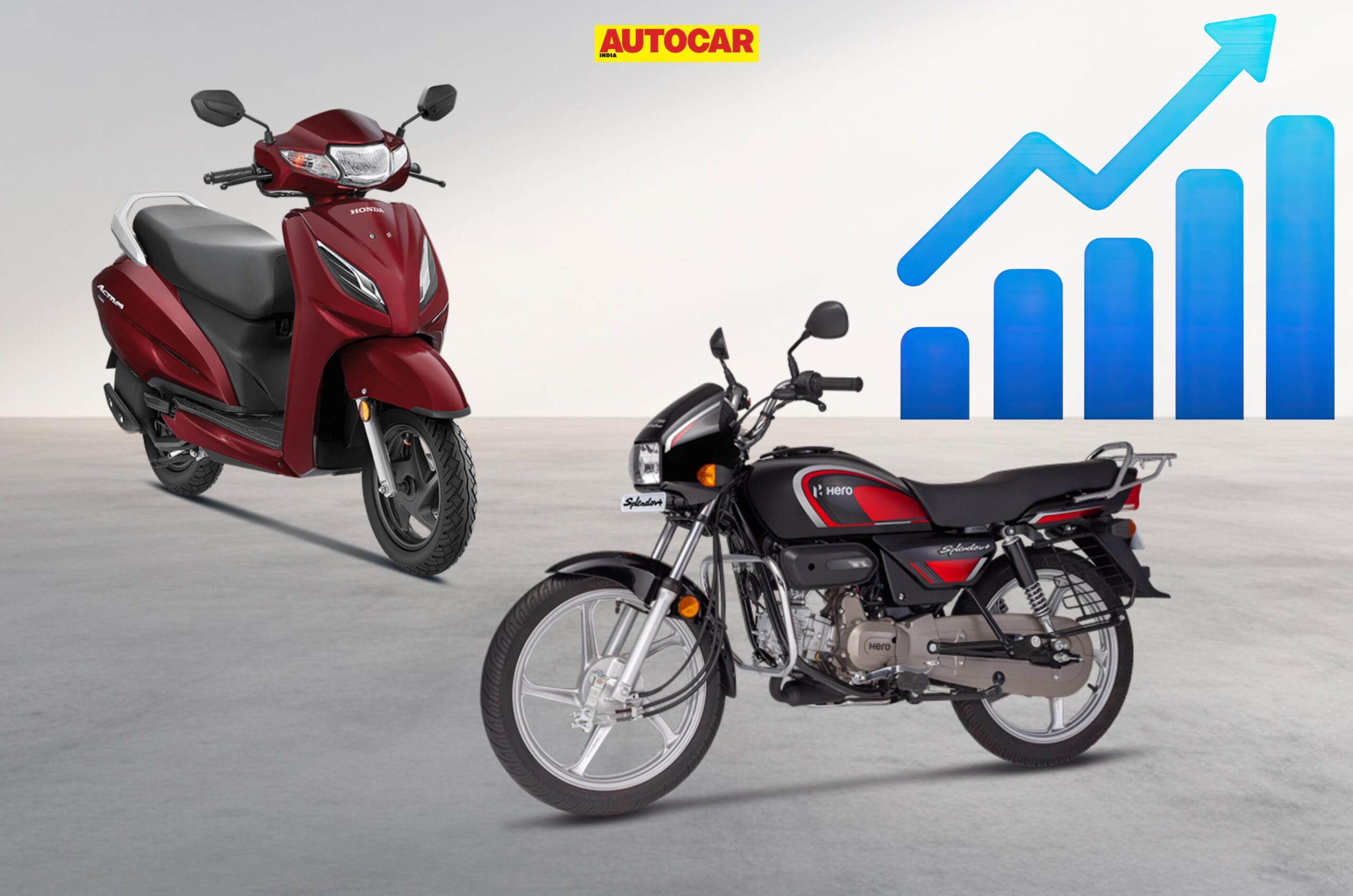
India’s two-wheeler industry has achieved a significant milestone, surpassing its pre-COVID peak sales of FY19 by the end of FY26. Total retail sales reached 21.42 million units, a 13.4% increase year-on-year. This recovery is attributed to improved affordability, stronger rural incomes, and a diverse product range. Electric two-wheeler (EV) registrations saw a 22% rise, capturing 6.5% of the total market share, with established manufacturers now dominating this segment.
Two-Wheeler Sales Recover Beyond Pre-Pandemic Levels
After a seven-year period of gradual recovery, India’s two-wheeler sector has finally outshone its pre-COVID sales figures from FY19. In the fiscal year 2026, the market retailed a robust 21.42 million (2.14 crore) units. This represents a substantial 13.4 percent increase compared to the previous year, signaling a strong resurgence in consumer demand across various market segments.
Several key factors have underpinned this long-awaited recovery. Enhanced affordability, particularly for entry-level buyers, coupled with improved cash flows in rural economies, has played a crucial role. Furthermore, manufacturers have broadened their product portfolios, introducing a wider array of models that cater to a diverse consumer base, from daily commuters to performance enthusiasts.
FY26 Sales Trajectory: A Tale of Two Halves
The first half of FY26, spanning from April to August, witnessed subdued sales performance. Most months recorded only low single-digit growth. This cautious market sentiment was largely influenced by uncertainty surrounding potential Goods and Services Tax (GST) revisions, prompting many consumers to defer their purchase decisions.
However, the market dynamics shifted significantly in the latter half of the fiscal year. From September onwards, demand experienced a notable uplift. The confirmed GST revisions improved vehicle affordability and boosted consumer confidence. The ensuing festive season further catalyzed sales across all two-wheeler categories.
Industry Leaders and Emerging Trends in FY26
The competitive landscape within the Indian two-wheeler market saw distinct shifts during FY26. Hero MotoCorp successfully retained its dominant leadership position. Meanwhile, TVS Motor Company emerged as the most significant gainer in market share among the top five manufacturers.
In the rapidly evolving electric mobility sector, registrations for electric two-wheelers saw a substantial increase of 22 percent, reaching 1.40 million (14 lakh) units. Consequently, the share of EVs in the overall two-wheeler sales pie climbed to approximately 6.5 percent. This trend underscores a steady, albeit gradual, transition towards electrification, even amidst intermittent supply chain challenges.
A significant development in the electric two-wheeler market was the shift in leadership. Established automotive players have now regained prominence, surpassing newer, specialized EV manufacturers. This indicates a maturing market where brand trust and established networks are increasingly valued.

Hero MotoCorp Consolidates Market Dominance
Hero MotoCorp successfully maintained its preeminent position in India’s domestic two-wheeler market throughout FY26. Despite facing intense competition, particularly from Honda Motorcycle & Scooter India (HMSI), Hero managed to widen its lead over its Japanese rival in both retail and wholesale dispatches.
On the retail front, Hero MotoCorp sold 6.08 million units, establishing a lead of 721,000 units over Honda, which recorded 5.36 million units. This marks a notable increase from FY25, when the gap between the two stood at just 655,000 units. Hero’s domestic market performance remains the cornerstone of its overall leadership, contrasting with Honda’s strategy, which includes a significant contribution from its export business.
In terms of wholesale dispatches, Hero MotoCorp registered 6.07 million units in the domestic market. This extended its lead to over 300,000 units compared to Honda’s approximately 5.75 million units. This widening gap from the previous year’s figure of around 286,000 units suggests a stabilization and strengthening of Hero’s market position after a period of heightened competitive pressure.
Splendor’s Enduring Appeal and Post-GST Boost
Hero’s sustained market leadership was significantly bolstered by the consistent demand for its commuter motorcycle lineup. The Splendor series, in particular, continues to be a volume driver, especially in rural and semi-urban areas. The positive impact of GST reductions on affordability provided an additional impetus for demand at the lower end of the market.

While Hero MotoCorp has been making efforts to expand its presence in the mid-size and premium segments to capitalize on the ongoing premiumization trend, its success in these areas has been limited. The company’s growing electric vehicle portfolio, however, has contributed positively to its overall domestic market standing.
Registrations for Hero’s Vida electric scooters nearly tripled in FY26, significantly supporting its domestic sales figures during a period of intense competition in the conventional two-wheeler segments. In parallel, Honda continued to leverage its strong scooter portfolio to drive its domestic sales, maintaining a significant presence in this segment.
Scooter Segment Dynamics and Evolving Competition
Honda remains a leading force in the scooter segment. However, its once-uncontested dominance has been tempered by the expanding market share of competitors such as TVS Motor Company and Suzuki Motorcycle India. This intensified competition has reshaped the market, particularly in urban centers where scooters constitute a substantial portion of demand.
In the commuter motorcycle category, Honda has faced persistent challenges against Hero’s deeply entrenched market position. This has limited Honda’s ability to significantly alter the domestic market hierarchy, even with the expansion of its entry-level motorcycle offerings. Hero’s extensive dealership network and strong brand recall in rural markets continue to provide structural advantages in this segment.
Electric Two-Wheelers Show Robust Growth Momentum
The electric two-wheeler segment registered impressive growth in FY26, with registrations climbing 22 percent to reach 1.40 million units. While the growth rate moderated compared to the explosive surges seen in earlier phases of EV adoption, it still reflects a healthy expansion.
The increasing market share of EVs in overall two-wheeler sales is a key indicator of this upward trend. EVs now constitute around 6.5 percent of total two-wheeler sales, an increase from 5.8 percent in the previous fiscal year. This gradual yet steady shift towards electrification is driven by a confluence of factors.
Factors Driving EV Adoption
The expansion of electric two-wheeler product offerings across a wider range of price points has been instrumental. Coupled with improved product availability and growing consumer acceptance, particularly in urban and semi-urban areas, these factors are accelerating EV uptake.
Industry experts suggest that the current phase of EV growth is becoming more demand-led, moving beyond an exclusive reliance on subsidies. This indicates a maturing market where intrinsic product benefits and value propositions are gaining importance. The narrowing cost difference between electric and internal combustion engine (ICE) two-wheelers is also becoming a significant consideration for consumers, especially in the entry-level and commuter segments.
A notable development is the increased market share held by traditional original equipment manufacturers (OEMs) in the electric two-wheeler space. Previously dominated by newer players, this segment now sees established automotive giants leading the charge.
Established Players Lead the EV Charge
TVS Motor Company has emerged as the largest player in the electric two-wheeler market. The company saw its registrations surge by 43 percent to 340,758 units, boosting its market share to 24.3 percent from 20.7 percent in the prior year. This growth reflects consistent demand and successful scaling of operations.
Bajaj Auto secured the second position, recording 288,866 unit registrations, a 25 percent increase. Its market share improved slightly to 20.6 percent from 20.1 percent, indicating stable expansion. Ather Energy and Hero MotoCorp’s EV subsidiary, Vida, demonstrated the most rapid growth among the top six players.
Ather’s registrations jumped by 82 percent to 238,461 units, significantly increasing its market share to 17 percent from 11.4 percent. Vida’s registrations saw a near threefold increase, reaching 144,099 units and expanding its market share to 10.3 percent from 4.2 percent.
In contrast, Ola Electric experienced a substantial downturn. Its registrations halved to 164,215 units, and its market share plummeted to 11.7 percent from a commanding 29.2 percent, signaling a loss of market momentum. Greaves Electric completed the top six, with 61,641 unit registrations, a 51 percent increase.
The overall trend in FY26 highlights a strengthening presence of established two-wheeler manufacturers like TVS Motor, Bajaj Auto, and Hero MotoCorp in the EV market. Their success is attributed to robust dealer networks, strong brand equity, and extensive service reach—factors that are becoming increasingly critical as the electric two-wheeler market matures.
Government incentives, including the PM E-Drive scheme and the earlier FAME program, have been instrumental in driving EV adoption. While subsidies for electric two-wheelers are slated to conclude in July, many OEMs express confidence in the industry’s ability to sustain growth. This optimism is rooted in increased production volumes and achieved scale efficiencies, suggesting the market is poised for continued expansion even without direct demand subsidies.
Frequently Asked Questions
What is the current status of India’s two-wheeler market?
India’s two-wheeler market surpassed its pre-COVID peak in FY26, with sales reaching 21.42 million units, a 13.4% year-on-year increase. Recovery is driven by affordability and a wider product range.
Who leads the Indian two-wheeler market?
Hero MotoCorp continues to lead the domestic two-wheeler market in FY26, widening its gap with Honda Motorcycle & Scooter India. Its Splendor range remains a key volume driver.
How is the electric two-wheeler segment performing?
Electric two-wheeler registrations grew 22% in FY26 to 1.40 million units, accounting for 6.5% of total sales. Established manufacturers like TVS Motor are now dominating this segment.
Which company gained the most market share in FY26?
Among the top five manufacturers, TVS Motor Company emerged as the biggest gainer in market share. Ather Energy and Hero MotoCorp’s Vida also showed significant growth in the EV segment.
What factors contributed to the market recovery?
The recovery is attributed to improved affordability, better rural cash flows, a wider range of products catering to diverse needs, and positive consumer sentiment following GST revisions and the festive season.
What is the outlook for electric two-wheeler subsidies?
Government subsidies for electric two-wheelers under schemes like PM E-Drive are set to end in July. However, the industry is expected to sustain growth due to increased production scale and improved efficiencies.
How has the competitive landscape changed in the EV market?
Established OEMs like TVS Motor, Bajaj Auto, and Hero MotoCorp have significantly increased their market share in the EV segment, now holding over half of the market, while Ola Electric has seen a decline.