
Search Intent: Informational
Key Takeaways:

- A Tesla Model Y, previously used as a taxi, was tested after 111,000 miles, revealing minimal battery degradation.
- The vehicle was almost exclusively charged using DC fast chargers, with only a small fraction of energy from AC charging.
- Contrary to some concerns, this case suggests that advanced EV battery technology, particularly LFP chemistries, can withstand extensive fast charging.
Challenging Conventional Wisdom on EV Battery Longevity
A common concern among electric vehicle (EV) owners is whether frequent use of high-speed DC fast chargers can significantly degrade battery health over time. While some studies have indicated a potential for accelerated degradation with such charging methods, a recent real-world test of a Tesla Model Y has provided compelling evidence to the contrary.
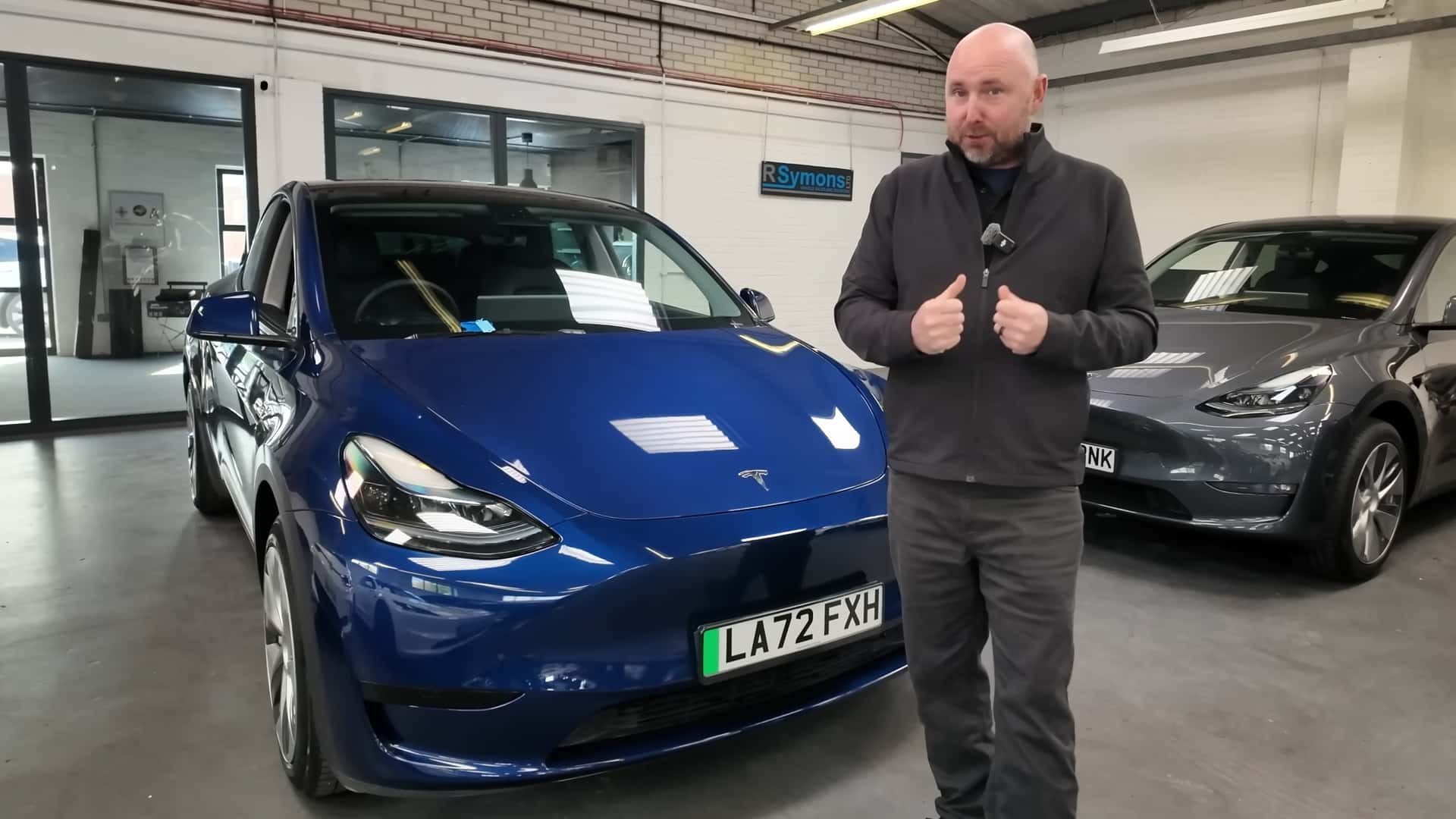
This particular Model Y, which served as a taxi, has accumulated an impressive 111,000 miles on its odometer. Its charging history presents a unique case study: it has been almost exclusively powered by DC fast chargers, with a mere 36 kilowatt-hours (kWh) of energy supplied via AC home charging. This stands in stark contrast to the typical EV owner’s routine, which often emphasizes home charging for daily use.
The Real-World Performance of a Heavily Fast-Charged Tesla
The owner of a used electric vehicle shop in the United Kingdom, Richard Symons (also known as “RSEV” on YouTube), acquired the Model Y and was keen to assess its battery’s state of health (SoH). Given its demanding usage as a taxi and its reliance on fast charging, the battery’s condition was a key point of investigation.
Diagnostic data retrieved from the vehicle revealed a significant charging distribution. Out of a total of 32,720 kWh consumed, an overwhelming 32,684 kWh came from DC fast charging. The remaining 36 kWh were attributed to AC home charging. This means the car’s battery has been subjected to the rigors of rapid charging for nearly its entire lifespan.
Following comprehensive battery health assessments from various providers, the pre-facelift Tesla Model Y demonstrated a remarkable 92% state of health. This indicates that the battery can still theoretically deliver 92% of its original driving range capacity, a testament to its resilience.
Comparing Degradation: Model Y vs. Model 3
This finding is particularly noteworthy when compared to other documented cases. For instance, another YouTuber tested a 2019 Tesla Model 3 Performance with a similar mileage. That vehicle, predominantly charged at home, showed a degradation of 21%, leaving it with a 79% state of health.

The significant difference in degradation between the two vehicles, despite similar mileage and differing charging habits, highlights the importance of battery chemistry. The Model Y in question is equipped with a Lithium Iron Phosphate (LFP) battery pack, whereas the Model 3 had a Nickel Manganese Cobalt (NMC) battery.
Understanding Battery Chemistries: LFP vs. NMC
LFP batteries, like the one in the tested Model Y, are recognized for their lower manufacturing costs and enhanced safety. A key advantage is their ability to be regularly charged to 100% without significant adverse effects on longevity, a recommendation often made for these packs. However, LFP batteries typically offer lower energy density compared to NMC cells and can be more sensitive to charging in very cold temperatures.
NMC batteries, on the other hand, provide higher energy density, allowing for greater range in a similar battery size. Despite this benefit, automakers often advise limiting NMC batteries to an 80% charge to preserve their lifespan, acknowledging their susceptibility to degradation from prolonged high charge states and fast charging.
The data from this Tesla Model Y suggests that LFP technology, in particular, may be more robust against the effects of frequent DC fast charging than previously assumed. While all battery chemistries experience natural degradation over time, the rate and factors influencing it are complex and dependent on various elements, including usage patterns and ambient conditions.

The Future of EV Battery Degradation
The automotive industry’s trajectory points towards batteries that are designed to outlast the vehicles they power. Battery degradation tends to be more pronounced in the initial phase of a battery’s life. Following this initial period, the degradation rate typically slows down significantly, allowing for many years of reliable service and usable driving range.
This real-world example of the 111,000-mile Tesla Model Y provides valuable insights for EV consumers and manufacturers alike. It challenges the notion that exclusively relying on fast charging is detrimental to battery health, suggesting that advancements in battery technology are increasingly mitigating such concerns. For potential buyers of used EVs, understanding the battery chemistry and charging history can offer a clearer picture of a vehicle’s long-term viability.
FAQ
Q1: Does fast charging significantly damage EV batteries?
While some studies suggest fast charging can accelerate degradation, real-world tests like this Model Y’s show that advanced battery chemistries (like LFP) can tolerate extensive fast charging with minimal long-term impact.
Q2: What is the battery health of the tested Tesla Model Y?
The 111,000-mile Tesla Model Y, which was used as a taxi and primarily fast-charged, maintains an impressive 92% state of battery health.
Q3: How much of the Model Y’s charging was done via fast chargers?
Out of approximately 32,720 kWh consumed, over 32,684 kWh (nearly all of it) came from DC fast chargers.
Q4: What type of battery does this Tesla Model Y have?
This pre-facelift Model Y is equipped with a Lithium Iron Phosphate (LFP) battery pack.
Q5: How does LFP battery technology differ from NMC?
LFP batteries are generally cheaper, safer, and can be charged to 100% regularly. NMC batteries offer higher energy density but often have charging limits (e.g., 80%) to preserve longevity.
Q6: Are EV batteries designed to last longer than the car?
Yes, modern EV batteries are increasingly designed to outlast the lifespan of the vehicle itself, with degradation slowing considerably after the initial usage period.
Q7: What does a 92% state of health mean for an EV battery?
A 92% state of health means the battery can still deliver 92% of its original maximum driving range compared to when it was new.
Q8: Should I avoid fast charging my EV altogether?
While prioritizing home charging is often recommended, this test indicates that for LFP batteries, frequent fast charging may not be as detrimental as commonly feared, especially with newer battery technology.