
India’s electric vehicle revolution is accelerating at an unprecedented pace, but a silent bottleneck threatens to slow it down: the charging infrastructure gap. While EV sales have soared past 271,682 units in May 2026 — marking a historic 11% market penetration — the public charging network is struggling to keep up. With only 27,737 registered public EV charging stations serving a rapidly expanding EV fleet, India’s charger-to-EV ratio stands at a stark 1:235, far behind the global benchmark of 1:6 to 1:20.
The Scale of India’s EV Charging Infrastructure Challenge
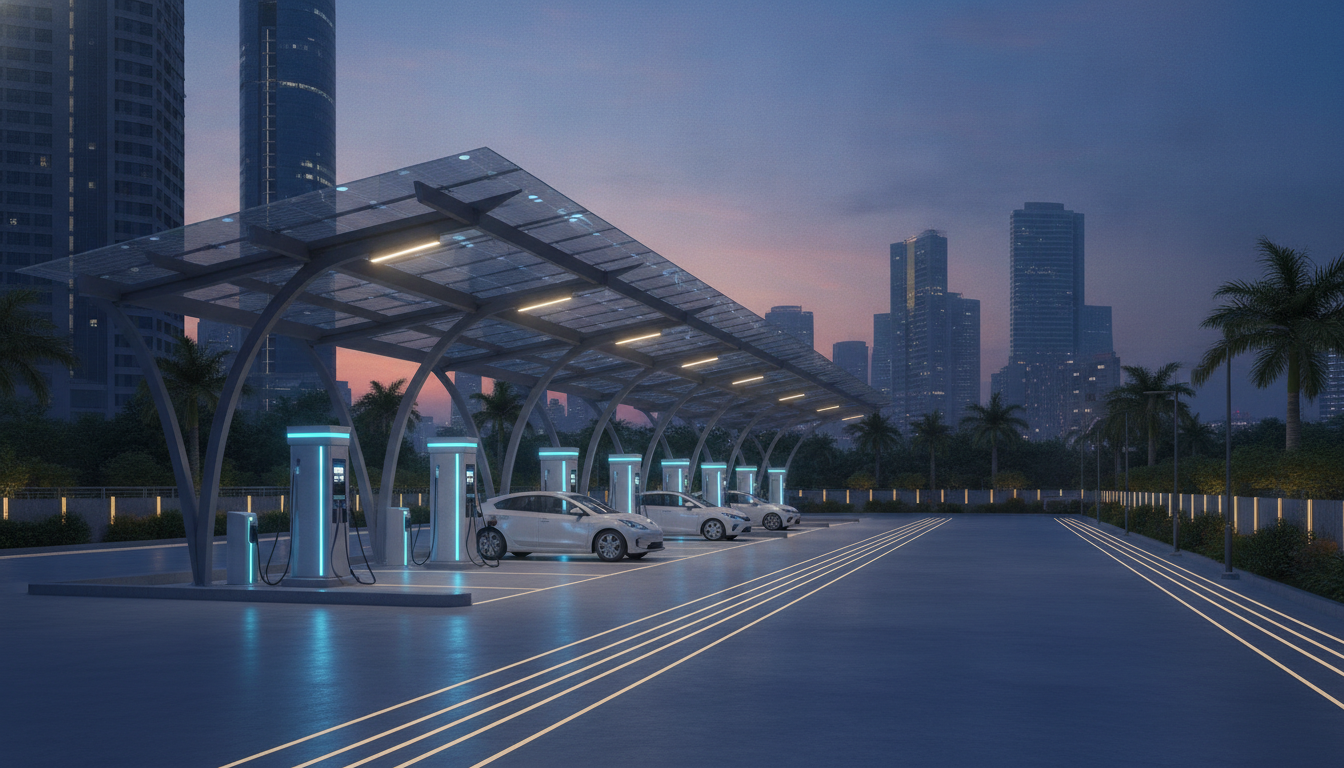
India’s public charging network, while growing, remains severely underdeveloped relative to the pace of EV adoption. As of mid-2026, the country has approximately 27,737 registered public charging stations. At first glance, this may seem substantial — but context tells a different story. For every 235 electric vehicles on the road, there is just one public charger available. The global standard considers 1 charger per 6 to 20 EVs as the minimum for a functional EV ecosystem.
The distribution of these charging points is equally concerning. An estimated 68% of all charging stations are clustered in just 10 major cities — primarily Delhi, Mumbai, Bangalore, Hyderabad, and Chennai. Rural India, Tier-2, and Tier-3 cities remain largely underserved, creating what experts call “charging deserts” — regions where EV adoption is stifled simply because drivers cannot charge their vehicles reliably.
The Three Core Problems Plaguing India’s Charging Network
1. Fragmentation and Interoperability Issues
India’s charging ecosystem is highly fragmented. Multiple private operators — including Tata Power EZ Charge, Fortum, Ather Grid, ChargeZone, Statiq, and BPCL’s EV charging network — operate with proprietary apps, payment systems, and connector standards. An EV owner may need to maintain accounts with 5-6 different platforms simply to ensure access to chargers across a journey. This friction significantly diminishes the consumer experience and discourages potential EV buyers.
2. AC Charger Dominance and Slow Charging Times
The overwhelming majority — approximately 85% — of India’s public charging infrastructure consists of slow AC chargers (Level 2, typically 3.3kW to 22kW). While adequate for overnight home charging, these chargers can take 4 to 8 hours to fully charge a mid-size electric car. For highway travel or urban drivers without home charging access, this is impractical. DC fast chargers (50kW to 150kW), which can charge a vehicle to 80% in under 30 minutes, represent only a fraction of the installed base.
3. Frequent Downtime and Reliability Concerns
A 2025 survey by the Society of Manufacturers of Electric Vehicles (SMEV) found that up to 30% of public chargers at any given time may be non-functional due to vandalism, grid connectivity issues, software glitches, or lack of maintenance. This “downtime problem” erodes consumer trust and reinforces range anxiety — one of the most cited barriers to EV adoption among Indian consumers.
PM E-DRIVE: The Government’s Bold Response
Recognizing the critical infrastructure gap, the Indian government launched the PM Electric Drive Revolution in Innovative Vehicle Enhancement (PM E-DRIVE) scheme with an outlay of Rs 10,900 crore. The scheme’s charging infrastructure component aims to deploy 72,300 new charging points across India by March 2028 — nearly tripling the current installed base.

Key Features of PM E-DRIVE Charging Expansion
Highway Charging Corridors
A primary focus of PM E-DRIVE is developing fast-charging corridors along 50 key national highways. The plan calls for charging stations every 25 kilometres on high-traffic intercity routes, enabling long-distance EV travel for the first time at scale. Priority corridors include the Delhi-Mumbai Expressway, Delhi-Chandigarh, Mumbai-Pune, and the Golden Quadrilateral.
Unified Interoperable Payment System
One of the most transformative elements of PM E-DRIVE is the mandate for a unified interoperable payment platform. Using OCPP (Open Charge Point Protocol) 2.0 as the technical standard, all PM E-DRIVE funded stations will be required to accept a single-platform payment system — similar to how UPI revolutionized digital payments. This would allow EV owners to use any single app to access any participating charging station nationwide.
Fleet and Commercial Vehicle Charging Hubs
PM E-DRIVE allocates dedicated funding for electric bus charging infrastructure at 37,000+ bus charging points for state transport corporations and electric truck fleet charging hubs for commercial logistics. This commercial focus is critical — e-buses and e-trucks account for disproportionately high energy consumption and require robust, high-power charging solutions.

DC Fast Charger Subsidies
To address the dominance of slow AC chargers, PM E-DRIVE provides capital subsidies of up to Rs 10 lakh per DC fast charger installation. The scheme prioritizes 50kW and 150kW DC chargers along highways and in metro cities, aiming to make sub-45-minute fast charging the norm rather than the exception for Indian EV owners.
The Road Ahead: Challenges and Opportunities
Despite PM E-DRIVE’s ambitious targets, significant challenges remain. Grid augmentation is essential — many proposed charging sites require substantial power distribution upgrades that depend on DISCOMS (distribution companies) improving their infrastructure. Land acquisition for large charging hubs in urban areas presents another bottleneck.
Private sector participation is crucial to bridging the gap. While PM E-DRIVE provides the policy backbone, achieving 72,300 charging points by 2028 will require private operators to invest alongside government funding. Analysts estimate that meeting India’s 2030 EV target of 30% electric passenger vehicle penetration would require at least 1.32 million public charging points — a goal that demands both public investment and a thriving private charging ecosystem.
The opportunity, however, is immense. India’s EV charging market is projected to grow to Rs 10,285 crore (approximately USD 1.2 billion) by 2030, driven by rising EV adoption, government incentives, and increasing consumer demand for reliable charging solutions. Companies that invest early in India’s charging infrastructure stand to capture a multi-decade growth opportunity.
What This Means for Indian EV Buyers Today
For consumers considering making the switch to electric in 2026, the charging situation presents a nuanced picture. Urban residents with dedicated parking and home charging access face minimal friction — home charging via a standard 15A socket or a dedicated AC wallbox meets the needs of daily commuting for most users. However, intercity travel remains challenging outside established corridors.
The PM E-DRIVE rollout is expected to materially improve the situation by mid-2027, with major highway corridors prioritized for early deployment. In the meantime, prospective EV buyers should carefully map charging access along their regular travel routes and consider vehicles with longer range to provide a buffer against charging uncertainty.
Conclusion
India’s EV charging network stands at an inflection point. The current 1:235 charger-to-EV ratio is unsustainable as EV adoption accelerates. PM E-DRIVE’s plan to deploy 72,300 charging points by March 2028, coupled with the unified interoperable payment system, represents the most comprehensive government intervention in EV infrastructure India has seen. If executed effectively, it could transform India from a country struggling with charging deserts to one with a world-class fast-charging network — unlocking the full potential of the country’s electric mobility revolution.
The coming 18-24 months will be decisive. India’s charging infrastructure must keep pace with its surging EV ambitions — and with PM E-DRIVE, the roadmap is in place. Now, execution is everything.