
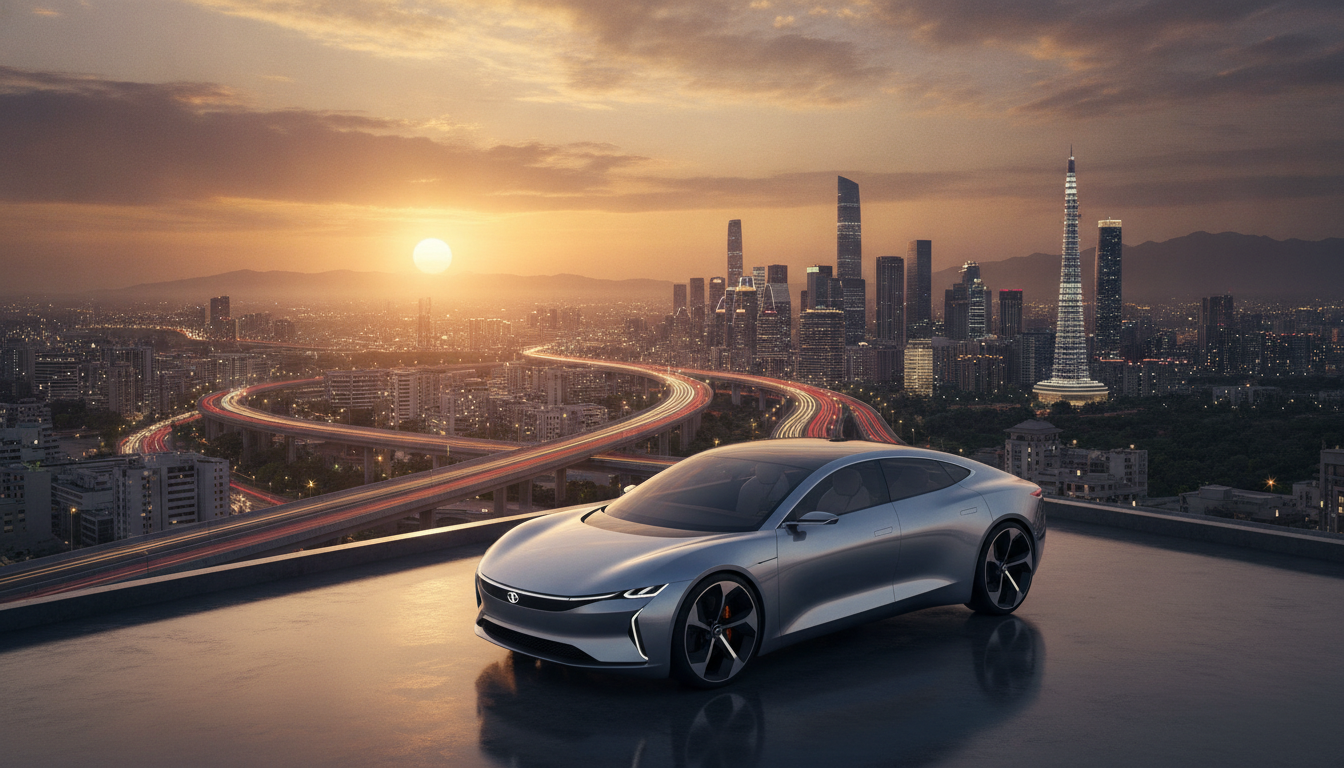
Tata Motors Pivots Avinya EV to Chery Platform: A Game-Changing Partnership
In a bold strategic shift, Tata Motors has announced a landmark partnership with China’s Chery Automobile to power its premium Avinya electric vehicle brand. The company has pivoted away from its earlier plans to use a JLR (Jaguar Land Rover) EMA platform, instead licensing Chery’s advanced EV platform for the Avinya lineup. The first production model — the Avinya X (internally codenamed P2) — is slated for a 2027 launch, positioning Tata Motors at the forefront of India’s rapidly evolving EV market.
Why Chery? The Technical Rationale Behind the Switch
Chery’s platform for the Avinya X is derived from the Freelander EV architecture, jointly developed with JLR. The platform features an advanced 800-volt electrical architecture, enabling ultra-fast DC charging at rates up to 350 kW. Expected battery capacities range from 65 kWh to 80 kWh, ensuring a competitive range for Indian premium buyers. Tata Motors plans to assemble the Avinya X locally at its newly commissioned TMPV-JLR facility in Panapakkam, Tamil Nadu. The vehicles will initially arrive as CKD (Completely Knocked Down) kits from China, with progressive localisation of components over time.

The decision to partner with Chery rather than rely exclusively on JLR’s European-designed EMA platform reflects Tata’s pragmatic approach to cost optimisation and production speed. By leveraging Chery’s manufacturing expertise and existing supply chain, Tata Motors aims to deliver a world-class premium EV at a more competitive price point than would have been possible with the original JLR-based plan.
Avinya EV: Premium Segment Ambitions
The Avinya brand represents Tata Motors’ vision for the premium segment of India’s EV market — a space currently dominated by international brands and high-priced luxury imports. With the Chery partnership, Tata aims to offer 800V charging capability, long-range performance, and sophisticated design at prices that will appeal to India’s growing aspirational middle class and premium buyers. The Avinya X is expected to compete directly with offerings from MG Motor, BYD, and potentially even entry-level Tesla models that may arrive in India in the coming years.
Tiago EV and Punch.ev: Refreshed Models with Lifetime Battery Warranty
Beyond the Avinya platform news, Tata Motors has also launched refreshed versions of its highly popular Tiago EV and Punch.ev models, further strengthening its presence in the mass-market EV segment. Both vehicles now come with a lifetime battery warranty for the first owner — a move that significantly addresses consumer concerns about long-term battery degradation and replacement costs.
The updated Tata Tiago EV starts at an accessible ₹6.99 lakh (or as low as ₹4.69 lakh via the Battery-as-a-Service scheme). Key upgrades include a 10.25-inch touchscreen infotainment system, a 360-degree camera, six standard airbags for enhanced safety, and DC charging speeds that are 40% faster than the previous generation. These improvements make the Tiago EV one of the most feature-rich affordable EVs in India.
The refreshed Tata Punch.ev starts at ₹9.69 lakh (or ₹6.49 lakh via BaaS). It now offers larger 30 kWh and 40 kWh battery pack options, ventilated front seats for India’s hot climate conditions, and an electric panoramic sunroof. These enhancements make the Punch.ev an even more compelling proposition in the competitive sub-compact EV SUV segment.
EV Booking Surge: 2.5x Growth Driven by Rising Fuel Prices
The timing of these product launches and partnerships couldn’t be better. Tata Motors is reporting a staggering 2.5 times surge in EV bookings, driven primarily by rising petrol and diesel prices that have made electric vehicles a far more economical choice for Indian consumers. The total cost of ownership equation has shifted dramatically in favour of EVs, particularly for daily commuters in urban areas.

To capitalise on this demand surge, Tata Motors is aggressively scaling up production capacity. The company plans to increase monthly EV output from approximately 10,000 units to 15,000 units within the next three to four months. This expansion involves ramping up operations at its existing plants while preparing the new Panapakkam facility for Avinya X production in 2027.
Market Share Battle: Tata vs. Mahindra
As of May 2026, Tata Motors holds a commanding 38.9% market share in India’s electric four-wheeler segment, making it the undisputed leader. However, Mahindra & Mahindra is mounting a serious challenge, with its market share rising 3.6 percentage points in May alone to reach 23.3%. The competition between these two Indian automotive giants is intensifying, with Mahindra’s new-generation electric SUV lineup gaining strong traction among buyers.
Tata Motors’ strategic moves — the Chery partnership for Avinya, refreshed mass-market models, lifetime battery warranties, and increased production capacity — represent a comprehensive response to Mahindra’s challenge. The company is simultaneously defending its position in the affordable segment while expanding into premium EVs to capture new market opportunities.
What This Means for Indian EV Buyers
For Indian consumers, the Tata-Chery partnership for the Avinya EV platform signals an exciting era of choice and competition in the premium EV segment. The 800V fast-charging capability means less time spent waiting at charging stations, while the locally assembled production model should translate to better pricing and after-sales support compared to fully imported alternatives.
Meanwhile, the refreshed Tiago EV and Punch.ev with lifetime battery warranties remove one of the last remaining concerns that potential EV buyers had about making the switch. With competitive pricing, improved features, and the peace of mind of a lifetime warranty, Tata Motors is making a compelling case for EV adoption across all income segments.
Outlook: Tata Motors’ EV Roadmap Through 2027 and Beyond
Looking ahead, Tata Motors has one of the most ambitious EV roadmaps of any Indian automaker. The Avinya X (Chery platform, 2027) is just the beginning — the company plans to roll out multiple variants under the Avinya brand, targeting different price points and use cases within the premium segment. Simultaneously, continued investment in its Nexon EV, Tiago EV, Punch.ev, and Harrier EV models ensures a strong presence across the entire EV price spectrum.
India’s EV market crossed the 10.7% penetration milestone in May 2026, and with fuel prices continuing to rise, the transition to electric mobility is accelerating faster than many analysts predicted. Tata Motors’ strategic partnerships, capacity expansions, and product upgrades position it well to remain the dominant player in India’s EV market — even as global and domestic competitors intensify their efforts.
Conclusion
The Tata Motors-Chery partnership for the Avinya EV platform is a watershed moment for India’s premium EV segment. Combined with the refreshed Tiago EV and Punch.ev launches featuring lifetime battery warranties, and a 2.5x surge in EV bookings, Tata Motors is demonstrating that it has a clear, executable strategy to lead India’s electric vehicle revolution through 2027 and beyond. With 800V charging technology, local assembly, and competitive pricing, the Avinya X has the potential to be a defining product in India’s EV story.