
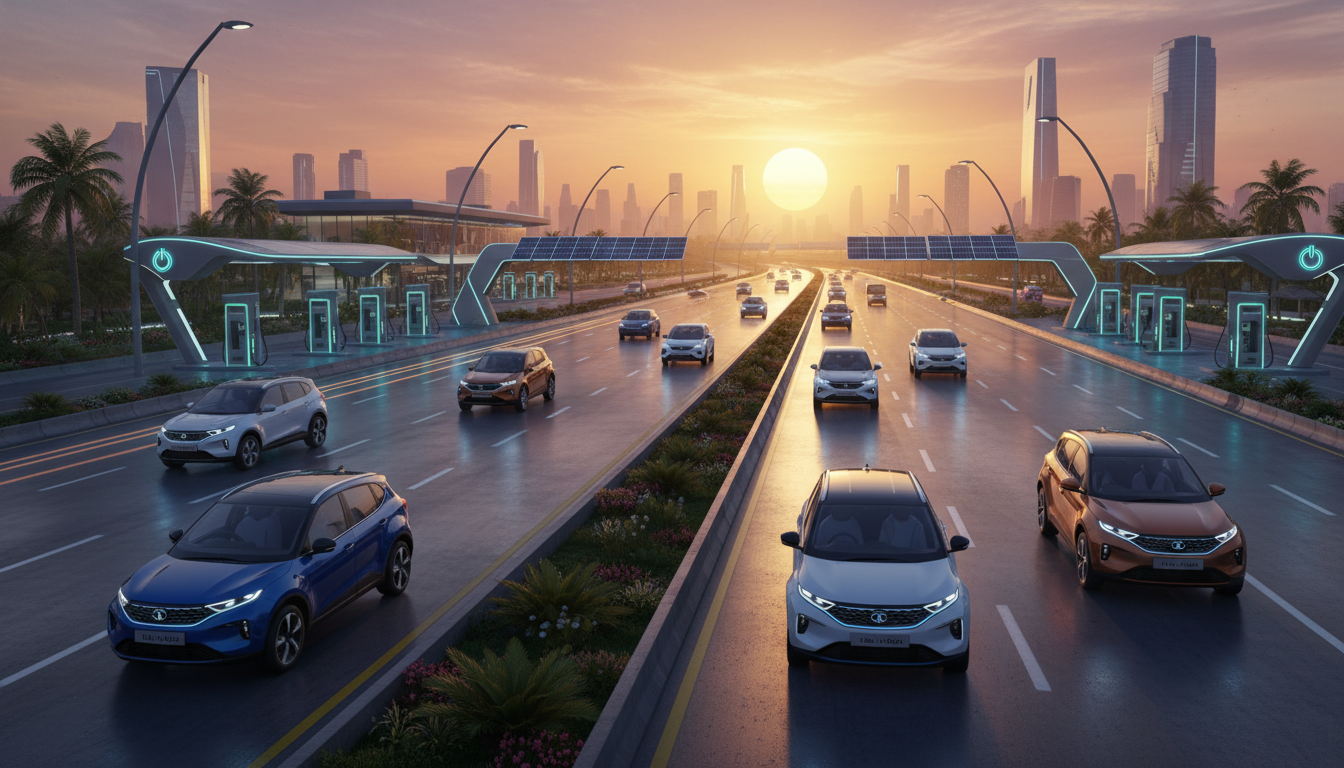
India’s electric vehicle (EV) market achieved a historic milestone in May 2026, recording a 10.7% EV penetration rate — the highest ever in the country’s automotive history. With 271,116 EVs sold during the month, representing a 45% year-on-year (YoY) growth, India has firmly established itself as one of the world’s fastest-growing EV markets. This remarkable achievement signals a transformative shift in India’s mobility landscape, driven by government policies, expanding charging infrastructure, and a surge in consumer confidence.
Record-Breaking EV Sales in May 2026
May 2026 will be remembered as a landmark month for the Indian EV industry. Total EV registrations crossed 2.71 lakh units, up from approximately 1.87 lakh units in May 2025. The 45% year-on-year growth rate is the strongest India has witnessed in a single month, underscoring the accelerating pace of EV adoption across all vehicle segments.

The 10.7% penetration rate means that more than one in every ten new vehicles registered in India last month was electric — a figure that would have seemed aspirational just two years ago. Analysts and industry experts have hailed this as a sign that India is on track to meet its ambitious electrification goals ahead of schedule.
Electric Two-Wheelers Lead the Charge
Electric two-wheelers continue to dominate India’s EV landscape, accounting for 62.9% of all EV sales in May 2026. With approximately 1.70 lakh units sold, the electric two-wheeler segment grew by 58% YoY. This explosive growth is being driven by several key players:
- TVS Motor Company leads the market with a 25% share, propelled by the TVS iQube’s widespread acceptance.
- Bajaj Auto holds 23% market share, with the Chetak EV and newer models performing strongly.
- Ather Energy and Hero MotoCorp are rapidly expanding their footprints with new models and wider dealer networks.
- New entrants like the Royal Enfield Flying Flea C6 and Yamaha EC-06 are generating significant excitement among urban commuters.
The affordability factor remains critical: electric scooters in India now offer total cost of ownership (TCO) parity with petrol alternatives over a 3–4 year period, making the switch financially compelling for millions of middle-class buyers.
Electric Passenger Cars Surge 79% YoY
While two-wheelers led by volume, the electric passenger car segment posted an even more impressive growth rate of 79% year-on-year, with 26,319 units sold in May 2026. This acceleration reflects growing consumer confidence in four-wheeler EVs and an expanding model lineup across price points.
Tata Motors continues to dominate the electric car segment, supported by the updated Tiago EV (starting at Rs 6.99 lakh) and the relaunched Punch EV (from Rs 9.69 lakh). Mahindra’s XEV 9e and BE 6e have also captured significant market attention since their launch earlier this year. New entrants from global giants are adding momentum:
- Toyota Urban Cruiser Ebella — priced at Rs 23.60 lakh with a 543 km range — has brought Japanese reliability to the Indian EV space.
- Tesla Model Y Premium RWD — priced at Rs 50.89 lakh — officially started deliveries in July 2026, signalling Tesla’s serious commitment to India.
Government Policies Fuelling EV Growth
India’s policy environment has been instrumental in driving EV adoption. The PM E-DRIVE scheme, which replaced the FAME India programme in March 2024, has provided a structured framework for EV incentives with a total outlay of Rs 10,900 crore. Key highlights include:
- Two-wheeler subsidies of Rs 5,000 per vehicle, available until July 2026.
- Three-wheeler incentives extending through March 2028.
- A dedicated budget for EV charging infrastructure deployment.
The scheme targets the deployment of 72,300 new public charging points by March 2028, addressing the infrastructure gap that has historically been a barrier to EV adoption. As of March 2026, India had 27,737 public charging stations — a number that is expected to triple in the next two years.
Challenges on the Road Ahead
Despite the record numbers, India’s EV journey is not without challenges. The current charger-to-EV ratio stands at 1:235, far behind the global benchmark of 1:6 to 1:20. Urban charging infrastructure, particularly for apartment dwellers without dedicated parking, remains a significant hurdle.
Battery supply chains, semiconductor availability, and the need for skilled technicians in Tier 2 and Tier 3 cities are also areas requiring sustained attention. Additionally, while private two-wheelers and commercial three-wheelers benefit from central subsidies, private passenger cars remain excluded from the PM E-DRIVE scheme — a policy gap that could slow growth in the higher-value segment.
India’s EV Market Outlook for 2026–2027
Industry analysts project that India’s EV penetration could exceed 15% by the end of 2026, with total annual EV sales potentially crossing 30 lakh units. The rapid growth of electric buses and electric three-wheelers in urban commercial transport is also expected to contribute significantly to overall penetration numbers.
The convergence of falling battery costs (lithium-ion battery prices have dropped 40% over the past three years), rising petrol prices, and improving consumer awareness is creating a powerful flywheel effect for EV adoption. India’s young, tech-savvy population — many of whom are making their first vehicle purchase — are increasingly choosing electric as their default option.
Conclusion
India’s record 10.7% EV penetration in May 2026 is more than a statistic — it represents a fundamental shift in how Indians are choosing to move. With government support, strong domestic manufacturers, and growing consumer appetite for clean mobility, India is on a clear trajectory to become one of the world’s top three EV markets by 2030. The road ahead is electric, and May 2026 has shown that India is ready to take the driver’s seat.
Stay updated with the latest EV news and analysis on EVToday.in — India’s leading electric vehicle news portal.