
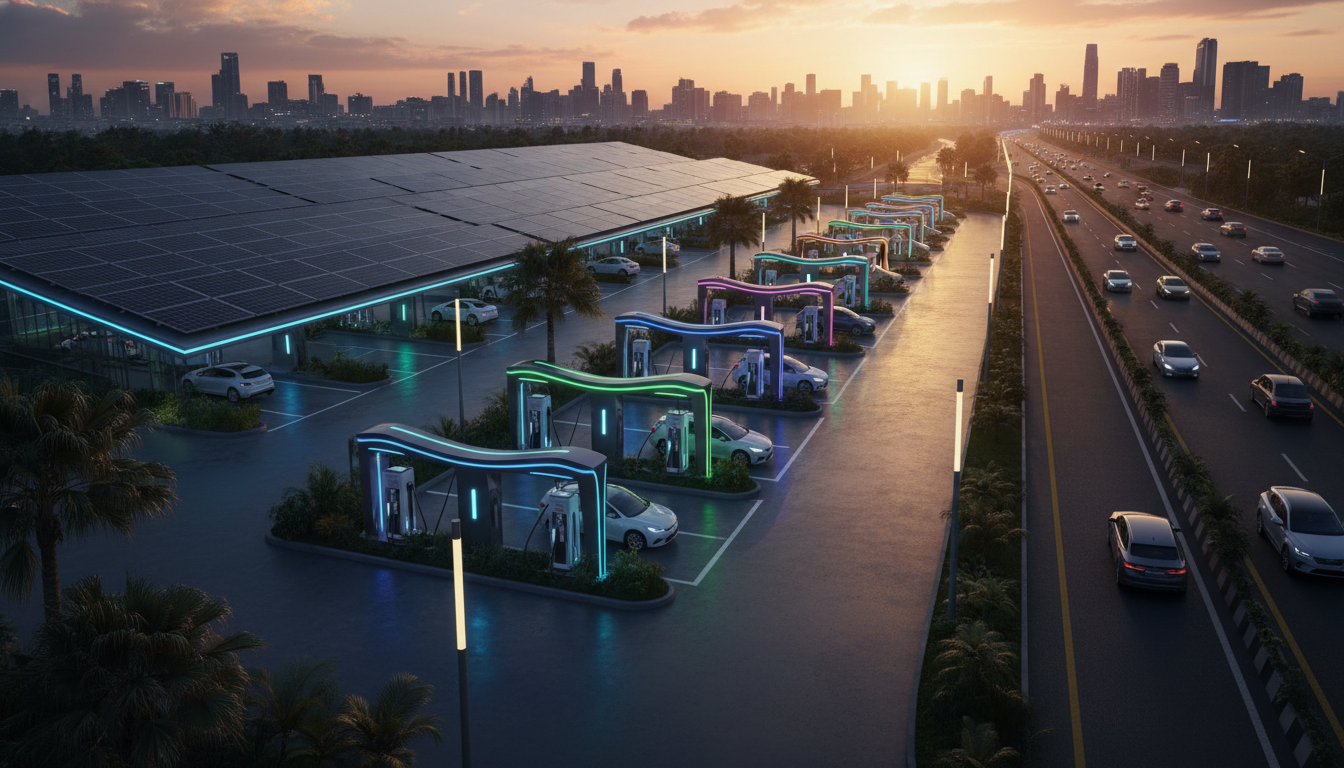
India is accelerating its transition to electric mobility with one of the most ambitious charging infrastructure programs in the world. The PM E-DRIVE (Electric Drive Revolution in Innovative Vehicle Enhancement) scheme has allocated Rs 2,000 crore specifically to build a robust, interoperable public EV charging network across the country. Here is everything you need to know about this transformative initiative.
What Is the PM E-DRIVE Scheme?
Launched by the Government of India’s Ministry of Heavy Industries, the PM E-DRIVE scheme is a comprehensive incentive program designed to accelerate EV adoption across India. With a total outlay exceeding Rs 10,900 crore, the scheme covers subsidies for electric two-wheelers, three-wheelers, buses, and ambulances — as well as a dedicated Rs 2,000 crore corpus for EV charging infrastructure.

The charging component of PM E-DRIVE is perhaps the most critical for long-term EV adoption. India currently has approximately 27,737 public EV charging stations as of March 2026, of which around 22,753 are operational. The government aims to more than double this to 72,300 public charging stations by 2028.
Scale of the Charging Infrastructure Push
The Rs 2,000 crore allocated under PM E-DRIVE for charging is broken down as follows:
- 48,400 chargers for electric two-wheelers and three-wheelers
- 22,100 fast chargers for electric passenger cars and SUVs
- 1,800 high-capacity chargers for electric buses
A recent update revealed that Rs 503.86 crore has already been sanctioned for the deployment of 4,874 new chargers across priority corridors and urban centres, marking the beginning of the rollout phase.
The Bharat Charging Standard (BCS): A Game-Changer for Interoperability
One of the most significant policy changes accompanying the PM E-DRIVE rollout is the introduction of the Bharat Charging Standard (BCS). New charging stations that want to qualify for government subsidies must comply with official standards including Bharat AC-001 and Bharat DC-001 connectors.
More importantly, the BCS mandates:

- 95% minimum uptime for all subsidized chargers — addressing the major pain point of unreliable public chargers
- UPI-native payments via static QR codes at every charger — making payment frictionless for any EV owner
- Full interoperability — any EV, regardless of brand, must be able to use any compliant charger
These mandates are a direct response to widespread consumer frustration with charging infrastructure that has historically been fragmented, unreliable, and difficult to use.
The Unified Bharat e-Charge (UBC) Platform
The government is developing the Unified Bharat e-Charge (UBC) platform — described as a “UPI for EV charging.” Built on the open-source Beckn Protocol, the UBC enables seamless discovery, booking, and payment across all public and private charging networks through a single interface.
Key features of the UBC platform include:
- Real-time availability tracking of chargers across all networks
- Single app access — eliminating the need for separate apps for different charging operators
- Third-party integration — maps and navigation apps will be able to show charger availability and allow in-app payments
- Operator-agnostic — works with all compliant charging networks from Tata Power, ChargeZone, BPCL, HPCL, and more
The official Bharat Charge app is expected to launch in July 2026, though the interoperable network itself is designed to work with any compliant application.
Challenges and Current Bottlenecks
While the PM E-DRIVE scheme represents a massive step forward, there are real-world challenges that need to be addressed:
Grid Connectivity
The single biggest bottleneck for scaling EV charging infrastructure in India is grid connectivity and utility connections. Fast chargers (DC fast chargers above 50 kW) require dedicated high-tension connections from state electricity boards. Delays in sanctioning these connections are the primary reason why deployed charger counts lag behind installation targets.
Land and Right-of-Way
Setting up highway charging corridors requires coordination between the National Highways Authority of India (NHAI), state highway authorities, and private landowners. Streamlining these approvals will be critical to meeting the 2028 target.
Uptime Enforcement
The 95% uptime mandate is ambitious but essential. Enforcement mechanisms are still being developed, and charging operators will need to invest significantly in remote monitoring systems and field maintenance teams to meet this standard.
Impact on EV Adoption in India
India’s EV market has grown remarkably in 2026, with penetration reaching a historic 10.7% in May 2026 and total EV sales surging 45% year-on-year. However, range anxiety — the fear of running out of charge — remains a key barrier for consumers considering electric cars and long-distance electric two-wheelers.
The PM E-DRIVE charging infrastructure push is designed to directly address this. When completed:
- India will have a charger approximately every 25 km on major highways
- All tier-1 and tier-2 cities will have comprehensive urban charging networks
- Fleet operators, particularly electric bus operators, will have dedicated high-capacity charging depots
Key Milestones and Timeline
| Milestone | Target Date |
|---|---|
| Rs 503.86 crore sanctioned for 4,874 chargers | Completed (2025-2026) |
| Bharat Charge unified app launch | July 2026 |
| 72,300 public EV charging stations | 2028 |
Conclusion
The PM E-DRIVE scheme’s Rs 2,000 crore investment in charging infrastructure is a pivotal step in transforming India’s EV ecosystem. By combining massive scale expansion with quality standards through the Bharat Charging Standard, and delivering user-friendly access via the Unified Bharat e-Charge platform, the government is creating the foundation that EV adoption at scale requires.
For EV buyers and potential buyers, this is an important signal: India’s charging infrastructure is being built out systematically and at scale. The question is no longer whether India can support EVs — it is how quickly the 2028 targets will be met and whether the private sector will invest ahead of that curve.
Stay tuned to EV Today for the latest updates on India’s EV charging infrastructure, government policies, and electric vehicle launches.