
India’s EV Market Hits Historic 10.7% Penetration in May 2026
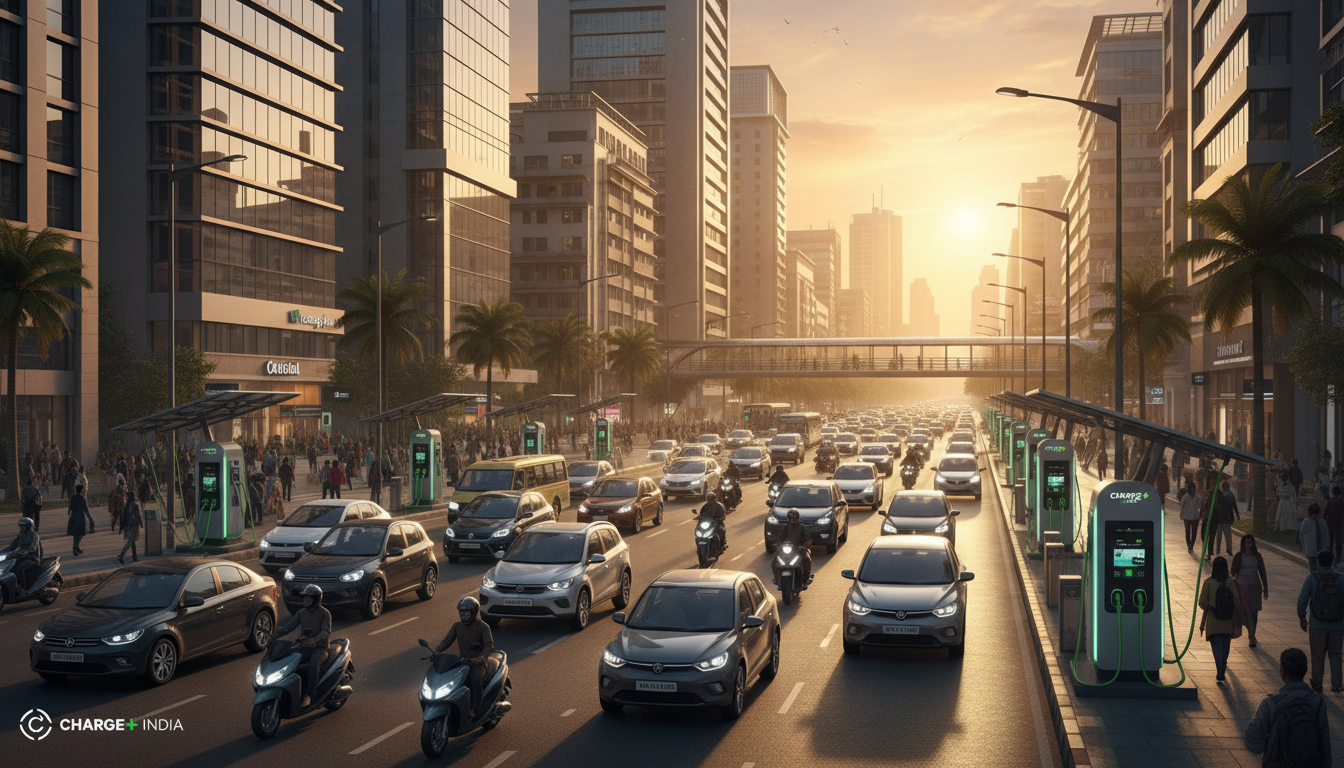
India’s electric vehicle market achieved a landmark milestone in May 2026, recording an all-time high penetration rate of 10.7% across all vehicle segments. Total EV sales surged to over 271,000 units — a staggering 45% year-on-year increase — marking a turning point for the country’s clean mobility transition. This historic figure confirms that India has firmly entered the mainstream EV era, moving beyond early adoption into mass-market territory.
The achievement signals a fundamental shift in how Indian consumers perceive and purchase vehicles. Just three years ago, EVs accounted for barely 3% of total vehicle sales. The acceleration to 10.7% in May 2026 underscores the combined impact of government policy, infrastructure investment, rising fuel prices, and an expanding portfolio of affordable electric models.

Electric Two-Wheelers Lead the Charge
The biggest driver of India’s EV growth story is the electric two-wheeler segment, which alone accounted for nearly 63% of all EV sales in May 2026 — approximately 170,730 units. Electric scooters and motorcycles have struck the perfect chord with Indian commuters who prioritise running cost savings over upfront price.
- TVS Motor Company — Market leader with a dominant 25% share, driven by the iQube range and aggressive pricing.
- Bajaj Auto — Runner-up at 23% share with the popular Chetak EV, which saw strong demand in Tier 2 and Tier 3 cities.
- Ather Energy — Holds 17% share, maintaining a premium positioning with performance-focused scooters.
- Ola Electric — Market share declined to 9% amid rising competition, prompting a renewed product strategy.
- Japanese entrants — Honda, Suzuki, and Yamaha have all entered the Indian EV two-wheeler space in 2026, signalling global confidence in the market.
Monthly electric two-wheeler registrations touched 1.70 lakh units in May 2026, a new monthly record. The average selling price of electric scooters has dropped to approximately Rs 85,000–1,10,000 for mainstream models.
Electric Cars: 82% Year-on-Year Growth
India’s electric passenger car segment registered an extraordinary 82% year-on-year growth in May 2026, reflecting both pent-up demand and a wave of new product launches across price segments. The electric car category contributed approximately 45,000 units to the overall EV sales figure.
- Tata Motors — The Nexon EV remains the best-selling electric car, with the Punch.ev gaining rapid traction in the Rs 10–14 lakh segment.
- Mahindra — The XUV 3XO EV and BE.05 are expanding Mahindra’s electric footprint.
- Toyota — Launched its first India-specific EV, the Urban Cruiser Ebella.
- Tesla — Slashed Model Y prices by Rs 9 lakh to intensify competition.
- MG Motor & Hyundai — The Windsor EV and Creta Electric continue to attract buyers seeking value.
Key Drivers Behind India’s EV Boom
Several converging factors have propelled India’s EV market to record heights in 2026:
1. Rising Fuel Prices
Petrol and diesel prices in India have climbed consistently, with petrol crossing Rs 110–115 per litre in major cities by mid-2026. This has dramatically improved the economic case for EVs, particularly for high-mileage commuters and fleet operators. Electric two-wheeler owners report fuel savings of Rs 40,000–60,000 annually.
2. Government Policy and Incentives
The PM E-DRIVE scheme has been a pivotal catalyst, providing direct purchase subsidies on electric two-wheelers and three-wheelers while funding the expansion of public charging infrastructure. State-level FAME III extensions and EV-specific road tax exemptions in 18 states further reduce the total cost of ownership.
3. Expanding Charging Infrastructure
India’s public EV charging network has grown to over 27,737 stations as of early 2026, with an ambitious target of 72,300 stations by 2028. The new Bharat Charging Standard (BCS) mandates 95% uptime and UPI-based payments, addressing range anxiety concerns.
4. New Affordable Model Launches
The Indian EV market in 2026 has seen an unprecedented diversity of new models across all segments and price points. From Rs 80,000 electric scooters to Rs 30 lakh premium electric SUVs, consumers now have genuine options at every budget.
India EV Sales Breakdown: May 2026
| Segment | Units Sold (May 2026) | YoY Growth | EV Penetration |
|---|---|---|---|
| Electric Two-Wheelers | 1,70,730 | +52% | ~19% |
| Electric Cars | ~45,000 | +82% | ~8% |
| Electric Three-Wheelers | ~45,000 | +30% | ~60% |
| Electric Buses and Others | ~10,270 | +25% | ~12% |
| Total EVs | 2,71,000+ | +45% | 10.7% |
What This Milestone Means for India
Crossing the 10% EV penetration threshold is widely regarded by industry analysts as the tipping point beyond which mainstream adoption becomes self-sustaining. India is now on track to meet its target of 30% EV penetration across all vehicle categories by 2030.
Outlook: What to Expect in the Second Half of 2026
- Battery prices continuing to fall, driven by domestic LFP cell production under the ACC PLI scheme
- New models from Hyundai, Kia, BYD, and premium European brands entering the under-Rs 20 lakh segment
- Fleet electrification accelerating as ride-hailing platforms mandate EV targets
- Bharat Charge unified app expected to launch in Q3 2026, improving the charging experience
- Extended FAME III subsidies keeping two-wheeler and three-wheeler prices competitive
India’s EV revolution is no longer a future aspiration — it is a present-day reality. The record 10.7% penetration in May 2026 is a testament to the collective effort of policymakers, manufacturers, consumers, and infrastructure developers who have worked together to reshape India’s mobility landscape.
Stay tuned to EV Today for the latest news, analysis, and reviews on India’s electric vehicle market.